Fuel 19lbs EV6 fuel injectors, what fuel pressure???

Yep thats it, I know if I blow the vent hose and goes into the tank, all I need to know is if air comes out oe the ven line blowing thru the filling tube, Thanks
And here I just did a one person test so there is no one way valve it is just a bypass valve, fumes come out of the tank and air comes in, and it makes sense
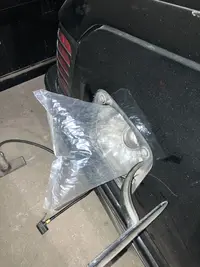
IMG_3234.webp IMG_3235.webp
 
Last edited:
You need to do some research. Several threads on here and the Corral with this very thing discussed.

For example, see post #4 and Michael is well respected in the Mustang community:

 
  • Like
Reactions: PonyGTrider
You need to do some research. Several threads on here and the Corral with this very thing discussed.

For example, see post #4 and Michael is well respected in the Mustang community:

Will do that,
Thanks
 
I was just reading an article related to this concept and now I'm not sure what is a fact.
"I did a little research and found that the tank breathing valve allows first the relieve (Exhale) vapors caused by motion and heat but also it is a breathing valve (Inhale) air as the fuel tank gets empty to avoid implotion" So is it a one way or a bypass valve??? I'm confused :(


It's a roll over valve. It closes when upside down to prevent gas from leaking out of the tank in an accident. You can blow either way through it until you flip it upside down. Or mostly upside down.
 
Do I took my own advice and did some searching as what nicholase posted got me thinking. I found this description on CJ Pony Parts for the "Fuel Tank Vapor Valve"

"This Ford E7DZ-9B593-A Fuel Tank Vapor Valve is designed to be a direct fit replacement for 1980-1998 Mustangs. The Fuel Tank Vapor Valve vents to the carbon canister. The Vapor Valve mounts in a rubber grommet on the fuel tank. A vapor space between the fuel level and the tank upper surface is combined with a small orifice and float shut-off valve in the vapor valve assembly to prevent liquid fuel from passing to the carbon canister. The vapor space also allows for thermal expansion of the fuel."

So this makes sense and in a roll over or an overfill situation the float should stop the fuel from going down the vapor line. So with that if the charcoal canister or the vapor line between the tank and the canister have fuel in them then I would still say the valve is not working properly.

This is from a post by Saleen0679 on a Corral thread:

From the manual:

Pressure/Vacuum Relief Fuel Cap

WARNING: FUEL TANK MAY BE PRESSURIZED. TO REMOVE, ROTATE OVER ONE-HALF TURN COUNTERCLOCKWISE. IF CAP IS VENTING FUEL OR A HISSING SOUND IS HEARD, WAIT UNTIL THE CONDITION STOPS BEFORE CONTINUING TO TURN THE CAP. IF THESE PRECAUTIONS ARE NOT FOLLOWED, FUEL MAY SPRAY AND CAUSE PERSONAL INJURY.


The fuel cap contains an integral pressure and vacuum relief valve. The vacuum valve acts to allow air into the fuel tank to replace the fuel as it is used. The vacuum relief valve opens after a vacuum of -3.4 kPa (-0.5 psi). The pressure valve acts as a backup pressure relief valve in the event the normal venting system is overcome by excessive generation of internal pressure or restriction of the normal venting system. The pressure relief is 11 kPa (1.6 psi). Fill cap damage or contamination that stops the pressure vacuum valve from working may result in deformation of the fuel tank. Care should always be taken to use a proper fill cap in good working order.

The fuel cap is a threaded screw-on design with a pre-vent feature that allows the tank to vent for the first three-quarter turn before unthreading. All fuel caps are attached to the vehicle with a tether using the filler pipe-to-housing screw at the three to four o'clock position. The fuel cap assembly provides pressure and vacuum relief functions and should be replaced with the proper pressure/vacuum relief cap to prevent possible system malfunction


I do not know what "manual" he is talking about but my guess is the owner's manual. I went to look for mine and cannot find it so I cannot verify that all of the above came from a 86-95 Mustang manual. I am going to be a little upset with myself if I have somehow or another lost my manual...

The more I read on this my assumption is that our gas caps are "non-venting" which by definition means they do not relieve vacuum or pressure. I removed the gas cap on my Coupe and its has a pretty substantial seal where the cap comes to rest on the filler neck. I grabbed a picture of the gas cap off of LMR, what is the purpose of the holed and whatever is in the end of the gas cap if this thing is non-venting? It looks like a way for the cap to relieve to me but I am not taking mine apart to confirm.
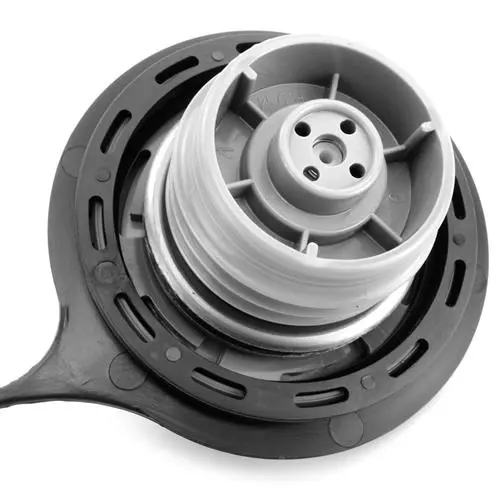
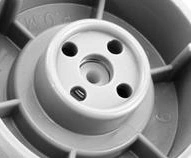
1721402614308.webp
1721402785737.webp


I went out and looked at the charcoal canister on the Coupe as I seemed to remember caps on top of it and confirmed they are there. Does anyone know how the canister functions air flow wise? I understand how charcoal absorbs hydrocarbons and that the line from the tank goes to the canister and then a line comes off of it to the solenoid that is then connected to the upper intake. What I want to know is how the air moves in the charcoal canister itself is what I want to know. Curious to know if the vents on top of the canister will allow air leave but not get sucked in or what.

I have gone far enough down this rabbit hole over lunch so hopefully someone else can add to this as there does not seem that anyone really knows how each piece in the system functions just that they are all part of the system and vapors go from the tank to the motor.
 
  • Like
Reactions: PonyGTrider
Somebody holler out if/when he drops the tank.

I'm also reminded of a video that was going around for a while, about cavitation in the tank from high volume fuel pumps.

I and others, have not encountered the issues laid out in the video but we all don't live in the same conditions so...

Might we worth taking a look at how "violent" your normal return fuel volume is. It sounds as if maybe a lot of excess vapor could be contributing to your issue.

The fix in the video was to extend the return line to reduce all the splashing from the return fuel.

Ah! I found it:

 
  • Like
Reactions: PonyGTrider
Yeah I’ve been thinking about injectors upgrade to at least 24lbs, and no doubt tuning would narrow me to the best and optimum performance.
Unfortunately I’m too late for a Moates Quarterhorse, unless I put my hands on a used good condition unit somehow.
Thanks for the ideas

Decipha at efidynotuning.com still has some for sale, along with chips and chip burners.
 
  • Like
Reactions: PonyGTrider
Do I took my own advice and did some searching as what nicholase posted got me thinking. I found this description on CJ Pony Parts for the "Fuel Tank Vapor Valve"

"This Ford E7DZ-9B593-A Fuel Tank Vapor Valve is designed to be a direct fit replacement for 1980-1998 Mustangs. The Fuel Tank Vapor Valve vents to the carbon canister. The Vapor Valve mounts in a rubber grommet on the fuel tank. A vapor space between the fuel level and the tank upper surface is combined with a small orifice and float shut-off valve in the vapor valve assembly to prevent liquid fuel from passing to the carbon canister. The vapor space also allows for thermal expansion of the fuel."

So this makes sense and in a roll over or an overfill situation the float should stop the fuel from going down the vapor line. So with that if the charcoal canister or the vapor line between the tank and the canister have fuel in them then I would still say the valve is not working properly.

This is from a post by Saleen0679 on a Corral thread:

From the manual:

Pressure/Vacuum Relief Fuel Cap

WARNING: FUEL TANK MAY BE PRESSURIZED. TO REMOVE, ROTATE OVER ONE-HALF TURN COUNTERCLOCKWISE. IF CAP IS VENTING FUEL OR A HISSING SOUND IS HEARD, WAIT UNTIL THE CONDITION STOPS BEFORE CONTINUING TO TURN THE CAP. IF THESE PRECAUTIONS ARE NOT FOLLOWED, FUEL MAY SPRAY AND CAUSE PERSONAL INJURY.


The fuel cap contains an integral pressure and vacuum relief valve. The vacuum valve acts to allow air into the fuel tank to replace the fuel as it is used. The vacuum relief valve opens after a vacuum of -3.4 kPa (-0.5 psi). The pressure valve acts as a backup pressure relief valve in the event the normal venting system is overcome by excessive generation of internal pressure or restriction of the normal venting system. The pressure relief is 11 kPa (1.6 psi). Fill cap damage or contamination that stops the pressure vacuum valve from working may result in deformation of the fuel tank. Care should always be taken to use a proper fill cap in good working order.

The fuel cap is a threaded screw-on design with a pre-vent feature that allows the tank to vent for the first three-quarter turn before unthreading. All fuel caps are attached to the vehicle with a tether using the filler pipe-to-housing screw at the three to four o'clock position. The fuel cap assembly provides pressure and vacuum relief functions and should be replaced with the proper pressure/vacuum relief cap to prevent possible system malfunction


I do not know what "manual" he is talking about but my guess is the owner's manual. I went to look for mine and cannot find it so I cannot verify that all of the above came from a 86-95 Mustang manual. I am going to be a little upset with myself if I have somehow or another lost my manual...

The more I read on this my assumption is that our gas caps are "non-venting" which by definition means they do not relieve vacuum or pressure. I removed the gas cap on my Coupe and its has a pretty substantial seal where the cap comes to rest on the filler neck. I grabbed a picture of the gas cap off of LMR, what is the purpose of the holed and whatever is in the end of the gas cap if this thing is non-venting? It looks like a way for the cap to relieve to me but I am not taking mine apart to confirm.

1721402614308.webp
1721402785737.webp


I went out and looked at the charcoal canister on the Coupe as I seemed to remember caps on top of it and confirmed they are there. Does anyone know how the canister functions air flow wise? I understand how charcoal absorbs hydrocarbons and that the line from the tank goes to the canister and then a line comes off of it to the solenoid that is then connected to the upper intake. What I want to know is how the air moves in the charcoal canister itself is what I want to know. Curious to know if the vents on top of the canister will allow air leave but not get sucked in or what.

I have gone far enough down this rabbit hole over lunch so hopefully someone else can add to this as there does not seem that anyone really knows how each piece in the system functions just that they are all part of the system and vapors go from the tank to the motor.
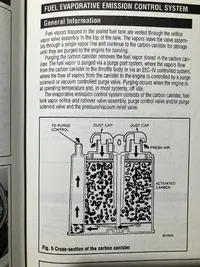
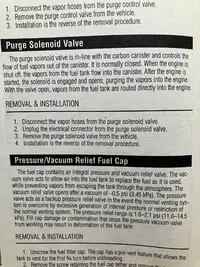
Getting complicated. Here portions of a chilton’s book which many people think is garbage but I’m sharing it anyways
IMG_3244.jpeg IMG_3243.jpeg
 
Last edited:
Somebody holler out if/when he drops the tank.

I'm also reminded of a video that was going around for a while, about cavitation in the tank from high volume fuel pumps.

I and others, have not encountered the issues laid out in the video but we all don't live in the same conditions so...

Might we worth taking a look at how "violent" your normal return fuel volume is. It sounds as if maybe a lot of excess vapor could be contributing to your issue.

The fix in the video was to extend the return line to reduce all the splashing from the return fuel.

Ah! I found it:

That makes some sense. Would a 190 mph pump create excessive cavitation?
Decipha at efidynotuning.com still has some for sale, along with chips and chip burners.
Thank you, I'll look into that
 
I have an update; I just ran a test trying to find out if the EVAP purge solenoid valve is operating correctly. Here's what I did and if did something the wrong way please correct me:
I removed the solenoid valve and test it with 12V and a ground and it opens and closes fine.
I then tested the voltage at the valve connector and I got 12V at the wire coming from pin # 37 of the ECU. I got no ground signal (Normal since this ground is provided by the ECU) from the wire coming from pin #31 of the ECU.
After this I plugged the solenoid valve and connected it the vacuum hose going to the intake manifold. Capped off the valve's inlet port and piggy back/connected an LED test light and took it to the cabine. I took a ride to see if the computer would open the purge solenoid valve sometime during cruising. NO ground from the ECU, NO light on the test light.
So my conclusion is that the purge solenoid valve never opens and that's the reason for the charcoal canister being soaked with gas.
I openned the charcoal canister and in did the carbon pellets were wet in gas. I reactivated the charcoal and but the canister back together, no more fuel smell but I don't want to install it back until I' completely sure the ECU is managging the purge solenoid valve correctly

So what do you guys think? did I do the test on the purge solenoid valve correctly? How the ECU senses the existense of fuel vapors stored in the carcoal canister? Is pin # 31 on the ECU dead? how to test or verify that? At what point in the ECU strategy sends the ground signal to the purge valve? All I red was that the valve opens at cruising speed.... HELP IS NEEDED :(
 
Cavitation will most likely only happen at idle being that is when most of the fuel is being returned. Problem some have reported is issues tuning at idle or just off idle with a low fuel level.

I cannot see this happening with a full to below half a tank of fuel just due to the amount of Kiel around the pump. If it is happening then the lower the fuel level gets in the tank I would think the easier it would be for this condition to happen. Again if it is happening then the lower the fuel level gets the longer the cavitation would affect fuel getting to the injectors which would affect the tune. Not sure this is something you could tune for as lack of fuel is just that.

All the above is predicated on if the condition is happening. I decided to change pickups when I reworked the fuel system on my car but it made sense to do it then as I changed just about everything from the tank to the injector rails.
 
1721566255200.webp


Isn’t an accurate picture / drawing of our charcoal canisters in that there is flow from the tank into the canister and then flow out of the canister to the intake. It’s missing the flow from the tank.

My guess is when there is flow from the tank and the solenoid valve is not open the fumes are pushed through the charcoal and out the vents. When there is flow through the solenoid valve the vapors from the tank are sucked into the upper intake. This also leads me to think that when the solenoid valve is open fresh air is also drawn through the vents and down through the charcoal to reactivate it and this air enters into the upper intake. This would be unmetered air but I don’t know how that would affect the ECU.
 
If your canister is soaked in fuel your over filling the tank or you have a constant strong vacuum on it sucking fuel from a valve stuck open. Once there soaked its replacement time. Has the car ever been hard to fill with an auto shut off pump and you having to hold the gas Pump handle so it doesnt trigger and shut off early?

Haven't looked at a fox body canister in years or think I ever opened one up, but most of them that vent to atmosphere will be a one way valve or another selonid controlling the vent. We got them all the time working when I was in dealerships, mostly because once it's jacked they can't fill thier tanks with out the auto trigger nozzle shutting off from pressure build up, either plugged with fuel, or failed valves. Your going to need someone with a bin dump for the ecu to see programming for the purge on fox body stuff. Those system are way dumber then modern day obd2 so most people ignored or bypassed the systems by plugging lines or removing it all together. I only run them to deal with fumes and use newer model ones mounted by the tank.
 
Cavitation will most likely only happen at idle being that is when most of the fuel is being returned. Problem some have reported is issues tuning at idle or just off idle with a low fuel level.

I cannot see this happening with a full to below half a tank of fuel just due to the amount of Kiel around the pump. If it is happening then the lower the fuel level gets in the tank I would think the easier it would be for this condition to happen. Again if it is happening then the lower the fuel level gets the longer the cavitation would affect fuel getting to the injectors which would affect the tune. Not sure this is something you could tune for as lack of fuel is just that.

All the above is predicated on if the condition is happening. I decided to change pickups when I reworked the fuel system on my car but it made sense to do it then as I changed just about everything from the tank to the injector rails.
Yeah I agree with your assumptions I will look into all of those scenarios. Thank you
 
1721566255200.webp


Isn’t an accurate picture / drawing of our charcoal canisters in that there is flow from the tank into the canister and then flow out of the canister to the intake. It’s missing the flow from the tank.

My guess is when there is flow from the tank and the solenoid valve is not open the fumes are pushed through the charcoal and out the vents. When there is flow through the solenoid valve the vapors from the tank are sucked into the upper intake. This also leads me to think that when the solenoid valve is open fresh air is also drawn through the vents and down through the charcoal to reactivate it and this air enters into the upper intake. This would be unmetered air but I don’t know how that would affect the ECU.
You’re correct the incoming fuel vapors fitting is behind than fitting on the upper left side, but generally that’s the way it looks.
My understanding is that they’re always some fumes coming out of the fuel tank usually more during hot days and when low level fuel is in constant motion. Now the volume of the fuel tank obviously is no the same as the tiny volume of the charcoal canister vapors chamber so when the vapor are excessive they enter the charcoal canister travel thru the charcoal pellets and clear air exits to the atmosphere thru the two upper venting ports and the vapors stay in the chamber to be vacuumed to the intake manifold to be burned when the purge solenoid valve opens.
My main question is WHEN DOES THE PURGE SOLENOID VALVE GETS THE GROUND SIGNAL FROM THE ECU? I ran a test and never saw a ground delivered by the ECU thru pin 31. Is pin 13 dead??? How to verify if it is working or not?
During my test I used a DVM and a test light and no voltage and no light at idle or when cruising, so the purge valve never opens and that’s in my opinion why the charcoal canister is soaked with fuel vapors.
So when the ground signal comes out thru pin 31 to activate the purge valve????