666 and engine NUTS

D.Hearne said:
The reason why your chevy with 13.5 to 1 comp won't run very well without the spark, isn't because the spark is missing, it's because the ignition of the fuel/air mixture isn't being controlled, as it is in a diesel. In a diesel, the fuel is injected at just the opportune moment when the air temperature is right to ignite it. With your carbed gas motor, the fuel's being lit at the wrong time. Worth's idea wouldn't be feasable even if it did work due also to the logistics in balancing all those moving parts, not to mention the extra friction created by said parts. The picture that comes to mind in trying to visualize such an engine is mass confusion. :D

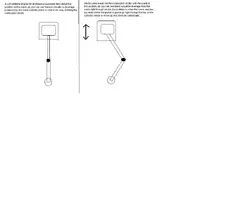
It's really not as complex as you would think, I drew it up and it isn't any more complicated that a dual overhead cam engine, and less complicated than most diesel setups.
 
hey worth, do a search for napier nomad on google or yahoo and you'll find all kinds of info on "compound diesel engines" which is what that engine was, it had moving pistons and cylinders and it was a 2-stroke diesel (haha) see i told you were building one of those funky cool 2-stroke diesels, only this thing is turbocharged too, it was making something like 3500 HP :nice:
 
WORTH, I think this might be your answer.

HistoricMustang
www.historicmustang.com

12-Cyl-1.jpg


12-Cyl-2.jpg


12-Cyl-3.jpg


12-Cyl-4.jpg
 
There is some leverage on the crank in a conventional engine, the piston's pin is slightly offset to one side to provide that little bit of thrust to get the motion started, but the motion is really only necssary when the engine is first started. The energy stored in the flywheel gives this motion after it's running.
 
D.Hearne said:
There is some leverage on the crank in a conventional engine, the piston's pin is slightly offset to one side to provide that little bit of thrust to get the motion started, but the motion is really only necssary when the engine is first started. The energy stored in the flywheel gives this motion after it's running.


Yes i realize that, but do i have the general idea of what worth is getting at here????


-gbm-
 
Yea, I know what he's thinking but instead of having thrust on the crank from the top of it's travel to the bottom, he's gonna have the thrust shortened considerably. He'd also have to have a faster burning fuel which translates to sharper thrust loads imposed on the crank and bearings, which means more stress on the whole thing. I don't see the advantage in that. Instead of a "push" on the crank, you'll have the eqivalent of someone "hammering" on it. Somewhat akin to the stesses that top-fuel motors are subject to. And we all know that they put out massive amounts of power, but have very short life spans. :shrug:
 
D.Hearne said:
There is some leverage on the crank in a conventional engine, the piston's pin is slightly offset to one side to provide that little bit of thrust to get the motion started, but the motion is really only necssary when the engine is first started. The energy stored in the flywheel gives this motion after it's running.

it's not the motion I'm after. What I'm after is firing the fuel when the leverage is better. Therefore producing more power with the same amount of fuel.
 
Well I did a slight redesign to make it simpler to build, instead of moving the cylinder/head combination I am going to build a floating head with piston rings so the cylinder can remain in place. It will also make my moving weight less.

I think I will build it out of a 4 hp briggs. that way I only have to make one cylinder work. Alot cheaper for a prototype.

The other advantage is I have a benchmark to start with, so a simple dyno run will tell if there was an improvement or not, unless the sucker just blows up :D