

You are using an out of date browser. It may not display this or other websites correctly.
You should upgrade or use an alternative browser.
You should upgrade or use an alternative browser.
Paint and Body Fox Body Painting 101
- Thread starter Davedacarpainter
- Start date


Hey Dave,
So I called my paintshop to see what a gallon would cost me of my paint. I went over that I'm using a urethane high build primer over bare metal. He then said I needed to make sure I put on a etching solution before i primed the bare metal. I told him when I bought it from their shop that hey informed me I could put this on bare metal. He said that means I needed to add the etching solution ($28.95) over the metal. Something that just wipes over the metal? Does this sound right?
So I called my paintshop to see what a gallon would cost me of my paint. I went over that I'm using a urethane high build primer over bare metal. He then said I needed to make sure I put on a etching solution before i primed the bare metal. I told him when I bought it from their shop that hey informed me I could put this on bare metal. He said that means I needed to add the etching solution ($28.95) over the metal. Something that just wipes over the metal? Does this sound right?
Depends, we have a primer that etches to metal and is high build. If it doesn't have etch in it already, then yes, the bare metal needed to be etched first.Hey Dave,
So I called my paintshop to see what a gallon would cost me of my paint. I went over that I'm using a urethane high build primer over bare metal. He then said I needed to make sure I put on a etching solution before i primed the bare metal. I told him when I bought it from their shop that hey informed me I could put this on bare metal. He said that means I needed to add the etching solution ($28.95) over the metal. Something that just wipes over the metal? Does this sound right?

So I'm blocking the epoxy I sprayed a couple weeks ago trying to get the shell worked over (filled in some dents on the quarters, sharpened the style line, sanding down some newbie runs etc). Everything's been pretty much straight forward and going fairly smooth. The roof though is another issue, and I'm not sure if I need to go as far as skim coating with bondo (probably) or if 2 more coats of epoxy and 2-3 coats of high build will take care of this. I'm guessing the former (which probably means buying another can of bondo  ) but am hoping for the latter (haven't sprayed the surfacer yet, so don't know how thick it is for real).
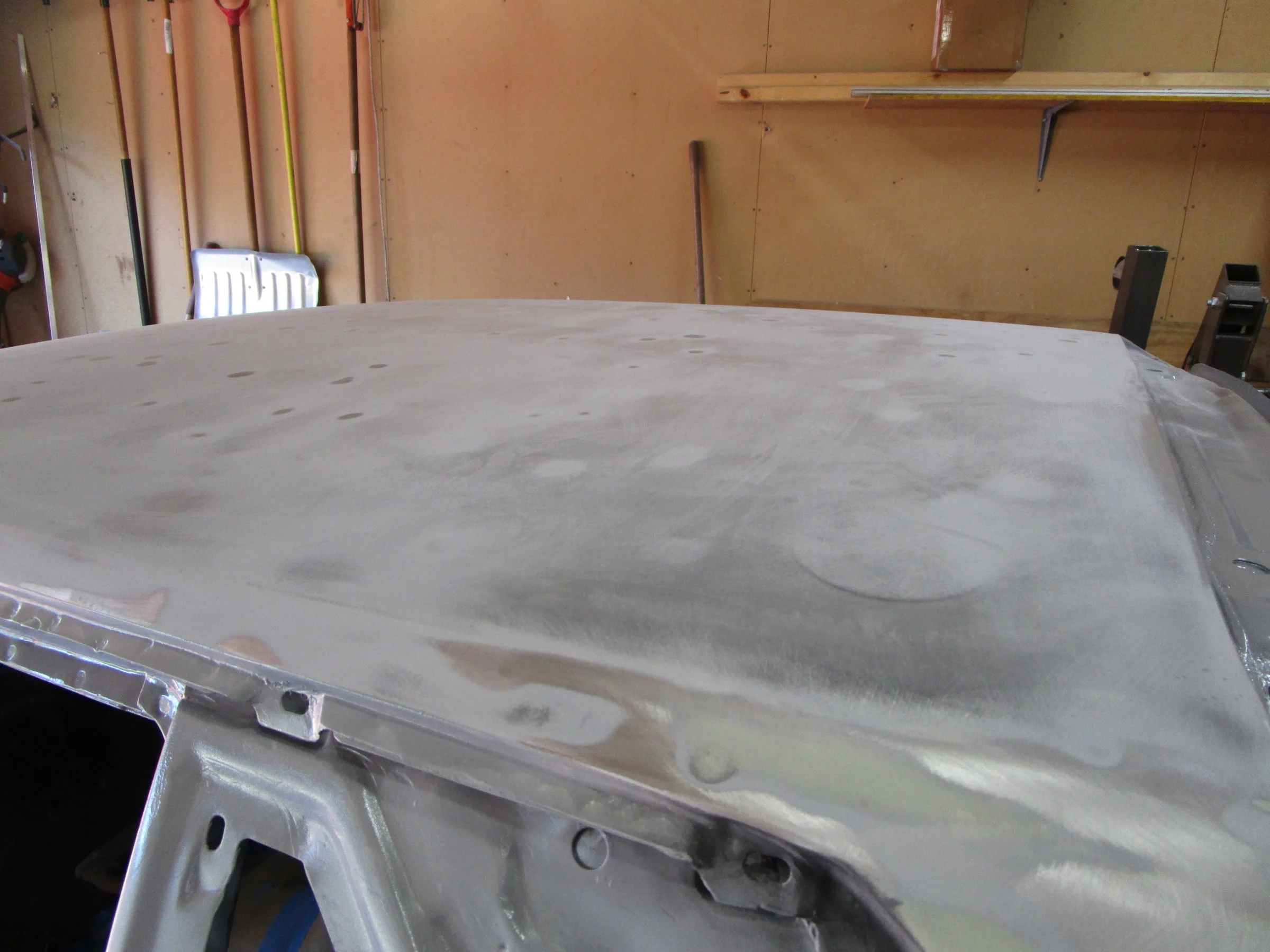
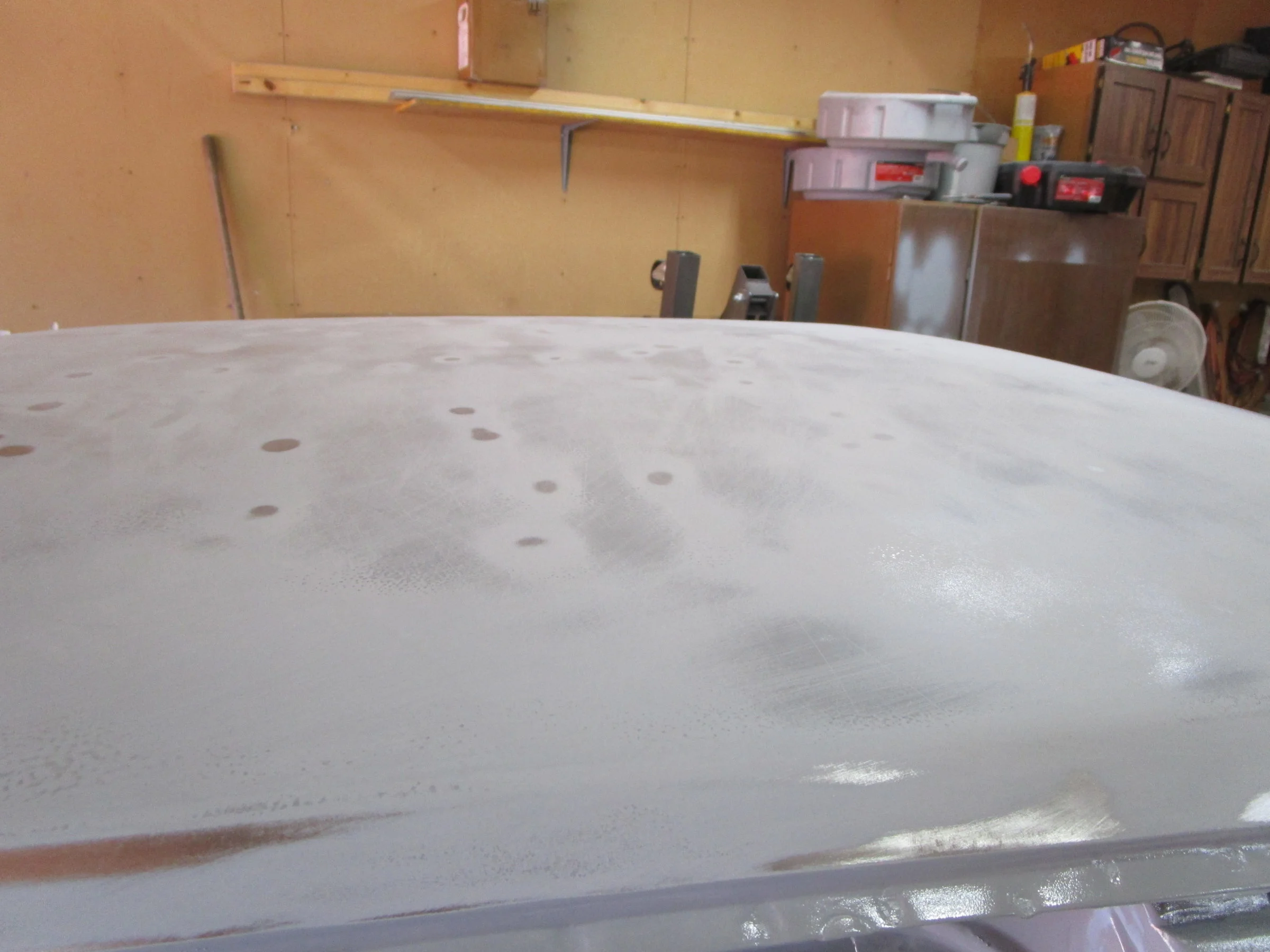
Yeah....just from the pictures? I would say you should lay a thin coat of mud on it.
It's hard for me to be dogmatic about that though, pictures don't really accurately show the depths of your waves and dents.
It's hard for me to be dogmatic about that though, pictures don't really accurately show the depths of your waves and dents.
i just went and sanded real light with the 80 on the da to knock it down and sprayed some guide paint on, going to go block with 180 in a min and see where its really at. wanted to try to get it recoated this weekend but don't know if i have enough filler and the local place is $20+ more/gallon than summit/amazon 
in case you were wondering, im 99% sure thats all hail damage, or the remnants of it. car was hit with it pretty good before i bought it.
in case you were wondering, im 99% sure thats all hail damage, or the remnants of it. car was hit with it pretty good before i bought it.
Yeah I don't get that either, don't know if the peaks are hammered out craters, or the lows are craters. I'm thinking the former, don't really trust much of what that shop did.
Off to find some non-bondo bondo, block wouldn't even touch the guide coat in the valleys so Yay.
Off to find some non-bondo bondo, block wouldn't even touch the guide coat in the valleys so Yay.

Steel1
Mustang Master
Hey Dave,
Due to an in unfortunate event in my garage I will be repainting the top only of my 93GT passengers fender ( had a metal car ramp fall on it!!!!)
Since the top of the fender is almost a 90* degree angle to the side of the fender could I just mask up to
the bend in the fender and spray my paint/clear or do I need to back mask/blend that edge?
I know if it where in the middle of the panel I would have to do some blending but the top to side angle
on the fender is very sharp, fyi fender has been removed from car. Thanks in advance!
Just thinking about this more I would imagine the best thing for me to do would be to sand,bodywork and prime the top of the fender where the damage is, sand/scuff the vertical surface of the fender, paint top of fender, then clear the whole fender. This would eliminate having to worry about blending clear and having a noticeable tape line.
Due to an in unfortunate event in my garage I will be repainting the top only of my 93GT passengers fender ( had a metal car ramp fall on it!!!!)
Since the top of the fender is almost a 90* degree angle to the side of the fender could I just mask up to
the bend in the fender and spray my paint/clear or do I need to back mask/blend that edge?
I know if it where in the middle of the panel I would have to do some blending but the top to side angle
on the fender is very sharp, fyi fender has been removed from car. Thanks in advance!
Just thinking about this more I would imagine the best thing for me to do would be to sand,bodywork and prime the top of the fender where the damage is, sand/scuff the vertical surface of the fender, paint top of fender, then clear the whole fender. This would eliminate having to worry about blending clear and having a noticeable tape line.
Last edited:
Frame machines. What do they do, how do they work?
Simplistically they, through hydraulic force pull bent/dented/twisted metal close to their original measurements.
I'll use the one I used for my blue car as an example.
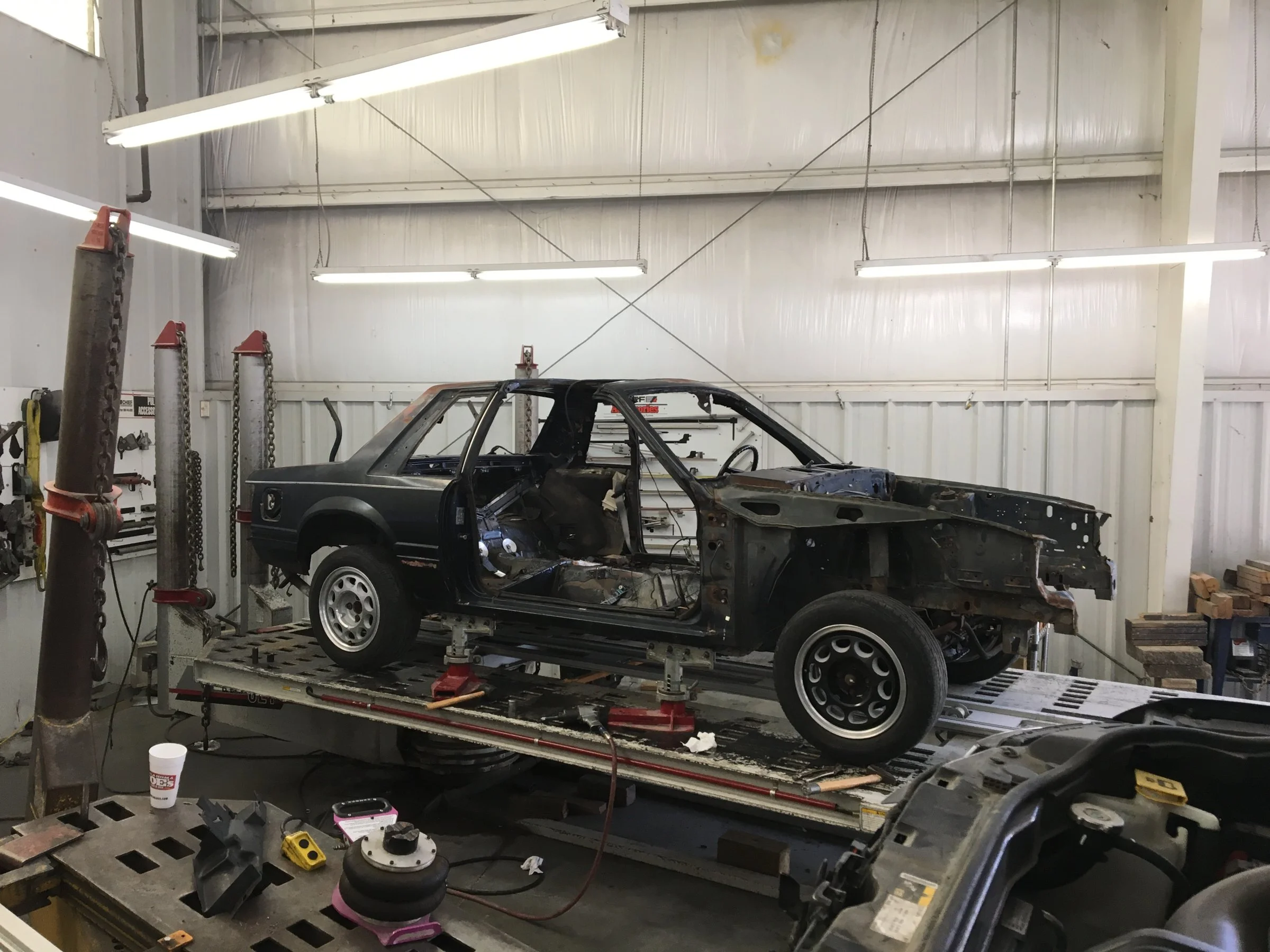
First off, loading a vehicle is done with the rack in it's loading position, meaning it's angled down so you can drive the vehicle onto the base. Once on there, the base is leveled out with a push of a button.
Look at the rocker pinch weld area. There are two clamps on each side to hold the vehicle solid. These clamps are bolted to the base of the frame machine.
You also see the four booms that are around the base. These glide into position and lock in place.
This particular frame machine is rated at ten tons of sustained pulling pressure (actually a little over 22k). In short, it could rip my car apart. I won't need anything like it's capacity for my little tweak.
I actually had to use one of the booms with a different clamp to pull the rear of the pinch weld straight on the left rear just so I could hook up the main clamp. A hammer wouldn't budge it. 60 seconds later and it is straight as can be.
This is a computerized measuring frame machine, though of course we do have the older hangers and rods for doing manual measurements as well. We also have a laser measurement system that we use as well.
Look directly under the car between both sides of the base and you'll see a sled that has the computerized flexible measuring arm on it. This is used to measure your base measurements prior to pulling at predetermined points on the vehicle. These points are all found in the computer. So when you move the pointer to one of those points and push a button, the computer loads that and begins to determine what your frame looks like as you measure to the other various points, then compares that to factory measurements. It tells you exactly where the measurements are off the factory specs. Luckily our computer still has a complete listing of measurements for fox chassis cars! Yay me!
If you ever have collision work done on your vehicle and it needs frame time, you'll see a separate time for setup. Setup means putting the vehicle on the frame machine, locking it down with the clamps, bringing up the base measurements and comparing them to what your vehicle measures. In the case of my car, that took longer than the actual pull.
For my car the right rear had received a hit down low at one time in it's life, that knocked the right rear frame rail up about 22mm above the left rear subframe, almost an inch, and pushed it out 5mm, less than 1/4".
To bring it closer to being even and to pull out the buckle in the right quarter/sail panel area the right rear subframe needed to be pulled down and in a bit.
The frame rail itself was tweaked starting at the forward bend toward the front of the wheel tub area. Easy peasy pull. I attached an additional chain to the right torque box to the base, then hooked up the boom to the rear of the frame rail. I angled the boom chain to pull slightly down and inward.
The hydraulics are electronically assisted, so all i had to do to make the pull is press a button. I pulled in short blips and kept remeasuring as I bumped the hydraulics. When it was slightly past both points I was wanting, I realeased the pressure to allow the metal to do it's springing back and remeasured.
Bringing it inboard was easy and quick and the first pull brought it back to exactly where it should be. Bringing it down required a couple more times. When I got within 7mm, I decided that was good enough. The buckle in the sheet metal disappeared and 1/4" is nothing on a fox mustang. When they were new they would be tweaked more than that at times.
Let's say the frame rail had been crushed, what's to be done then?
While you have the rail under tension the crushed area can be heated with a torch and adjusted with a bfh. This is done slowly since the frame machine can exert enough force to rip my little car in two. Now, if it were really compromised in it's integrity I would remove the subframe and replace it.
The wonderful thing about technology here is that to check the measurements while pulling is so simple. I release the pressure, swing the measuring arm over to the original measuring point and the computer tells you what you've done. It takes about five seconds to release the pressure and swing the measuring arm over.
Once I replace the right front frame rail I'll bring Scuby back to the shop to check what I've done and adjust it if necessary.
If you got any other questions concerning frame machines, let me know.
Simplistically they, through hydraulic force pull bent/dented/twisted metal close to their original measurements.
I'll use the one I used for my blue car as an example.
First off, loading a vehicle is done with the rack in it's loading position, meaning it's angled down so you can drive the vehicle onto the base. Once on there, the base is leveled out with a push of a button.
Look at the rocker pinch weld area. There are two clamps on each side to hold the vehicle solid. These clamps are bolted to the base of the frame machine.
You also see the four booms that are around the base. These glide into position and lock in place.
This particular frame machine is rated at ten tons of sustained pulling pressure (actually a little over 22k). In short, it could rip my car apart. I won't need anything like it's capacity for my little tweak.
I actually had to use one of the booms with a different clamp to pull the rear of the pinch weld straight on the left rear just so I could hook up the main clamp. A hammer wouldn't budge it. 60 seconds later and it is straight as can be.
This is a computerized measuring frame machine, though of course we do have the older hangers and rods for doing manual measurements as well. We also have a laser measurement system that we use as well.
Look directly under the car between both sides of the base and you'll see a sled that has the computerized flexible measuring arm on it. This is used to measure your base measurements prior to pulling at predetermined points on the vehicle. These points are all found in the computer. So when you move the pointer to one of those points and push a button, the computer loads that and begins to determine what your frame looks like as you measure to the other various points, then compares that to factory measurements. It tells you exactly where the measurements are off the factory specs. Luckily our computer still has a complete listing of measurements for fox chassis cars! Yay me!
If you ever have collision work done on your vehicle and it needs frame time, you'll see a separate time for setup. Setup means putting the vehicle on the frame machine, locking it down with the clamps, bringing up the base measurements and comparing them to what your vehicle measures. In the case of my car, that took longer than the actual pull.
For my car the right rear had received a hit down low at one time in it's life, that knocked the right rear frame rail up about 22mm above the left rear subframe, almost an inch, and pushed it out 5mm, less than 1/4".
To bring it closer to being even and to pull out the buckle in the right quarter/sail panel area the right rear subframe needed to be pulled down and in a bit.
The frame rail itself was tweaked starting at the forward bend toward the front of the wheel tub area. Easy peasy pull. I attached an additional chain to the right torque box to the base, then hooked up the boom to the rear of the frame rail. I angled the boom chain to pull slightly down and inward.
The hydraulics are electronically assisted, so all i had to do to make the pull is press a button. I pulled in short blips and kept remeasuring as I bumped the hydraulics. When it was slightly past both points I was wanting, I realeased the pressure to allow the metal to do it's springing back and remeasured.
Bringing it inboard was easy and quick and the first pull brought it back to exactly where it should be. Bringing it down required a couple more times. When I got within 7mm, I decided that was good enough. The buckle in the sheet metal disappeared and 1/4" is nothing on a fox mustang. When they were new they would be tweaked more than that at times.
Let's say the frame rail had been crushed, what's to be done then?
While you have the rail under tension the crushed area can be heated with a torch and adjusted with a bfh. This is done slowly since the frame machine can exert enough force to rip my little car in two. Now, if it were really compromised in it's integrity I would remove the subframe and replace it.
The wonderful thing about technology here is that to check the measurements while pulling is so simple. I release the pressure, swing the measuring arm over to the original measuring point and the computer tells you what you've done. It takes about five seconds to release the pressure and swing the measuring arm over.
Once I replace the right front frame rail I'll bring Scuby back to the shop to check what I've done and adjust it if necessary.
If you got any other questions concerning frame machines, let me know.
Last edited:
Sorry I just noticed your post, life has been a little hectic for me lately. Loosing focus on some things.Hey Dave,
Due to an in unfortunate event in my garage I will be repainting the top only of my 93GT passengers fender ( had a metal car ramp fall on it!!!!)
Since the top of the fender is almost a 90* degree angle to the side of the fender could I just mask up to
the bend in the fender and spray my paint/clear or do I need to back mask/blend that edge?
I know if it where in the middle of the panel I would have to do some blending but the top to side angle
on the fender is very sharp, fyi fender has been removed from car. Thanks in advance!
Just thinking about this more I would imagine the best thing for me to do would be to sand,bodywork and prime the top of the fender where the damage is, sand/scuff the vertical surface of the fender, paint top of fender, then clear the whole fender. This would eliminate having to worry about blending clear and having a noticeable tape line.
I would recommend clearcoating the whole fender. Burn in lines come back to haunt you if you keep your vehicle for any time.
Steel1
Mustang Master
Ok thanks that's what I thought.
Got the top of the fender body worked and in primer, plan on getting paint and clear on it next weekend.
Got the top of the fender body worked and in primer, plan on getting paint and clear on it next weekend.
I'm used to dealing with +/- .005" every day, a freaking 1/4" tolerance????The buckle in the sheet metal disappeared and 1/4" is nothing on a fox mustang. When they were new they would be tweaked more than that at times.


My 93 convertible body feels very wiggly. Like it's twisting about mid point. Mostly at speeds between 20 and 40 mph. At highway speeds I dont really feel it. I need to get the rear tires balanced before I conclude there's something bigger wrong. If tire balancing doesn't fix it I might be taking it to a local who's very familiar with these cars. This car has sub frame connectors but only on the back half of the uni-body. My 92 hatch feels solid compared to this convertible. Maybe I need full length sub frames on this vert too.
Meanwhile, where on this convertible underside should I look for signs of stress? What typically might I find?
Meanwhile, where on this convertible underside should I look for signs of stress? What typically might I find?
I don't remember what you do. Help me here.I'm used to dealing with +/- .005" every day, a freaking 1/4" tolerance????
Twisting wise? Man, not much will be obvious unless you have more serious problems.My 93 convertible body feels very wiggly. Like it's twisting about mid point. Mostly at speeds between 20 and 40 mph. At highway speeds I dont really feel it. I need to get the rear tires balanced before I conclude there's something bigger wrong. If tire balancing doesn't fix it I might be taking it to a local who's very familiar with these cars. This car has sub frame connectors but only on the back half of the uni-body. My 92 hatch feels solid compared to this convertible. Maybe I need full length sub frames on this vert too.
Meanwhile, where on this convertible underside should I look for signs of stress? What typically might I find?
Cracks in the floorboard where the the rear of the front seat bolts down.
Full length sfc's to me would be a must on a vert.
Last edited:
Prolly gonna go for the full length sfc's with seat brackets. Funny thing is, when I was a passenger in the car (wife driving) I didnt feel the body flex. Maybe you have to be connected to the steering column to notice it. As a passenger with arms relaxed, hardly noticeable.
MachinistI don't remember what you do. Help me here.
Similar threads
- Replies
- 8
- Views
- 362

- Replies
- 6
- Views
- 807

- Replies
- 9
- Views
- 788

- Replies
- 38
- Views
- 1K


