Fuel fuel neck filler pipe

jim Rogers

Active Member
Mar 6, 2016
91
49
28
Nova Scotia- Canada
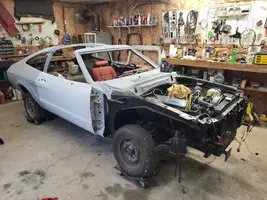
Hi guys i have been slowly restoring a 1978 mustang-top -302 ,4 speed.ill post some pics soon. I have a question about the fuel pipe to the gas tank.is there suppose to be a rubber gasket between the the fender body and the fuel pipe so water doesn't leak by .Thanks
 

Attachments

  • thumbnail_20241117_124121.webp
    thumbnail_20241117_124121.webp
    359.1 KB · Views: 90
Last edited:
  • Hell Yeah!
Reactions: LILCBRA
H i guys i have been slowly restoring a 1978 mustang-top -302 ,4 speed.ill post some pics soon. I have a question about the fuel pipe to the gas tank.is there suppose to be a rubber gasket between the the fender body and the fuel pipe so water doesn't leak by .Thanks

Yes there is. I'm not sure if they're reproduced or if one from another car would work (I'm sure something would....). IIRC, it was basically just rubber. So I'm sure if you're not able to find anything you may be able to find something like a motorcycle inner tube and cut a gasket out of it and make it work.
 
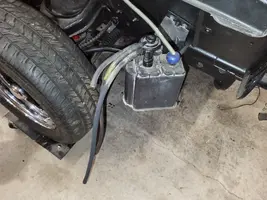
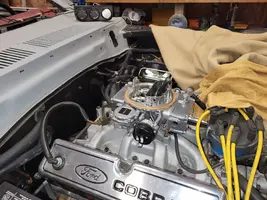
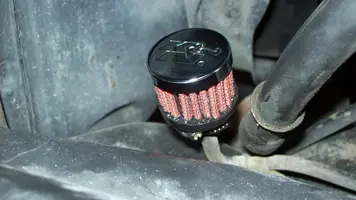
Thanks ya i was excited to hear it run for the first time.i tried to attach a vid,ill try again later.I hope someone can help me with another question ran a line from the top of the gas tank up to the charcoal canister, under the fender. Now i dont know what to do with it,the old lines i believe were hooked up to the old breather some how. also dont know how to tell if the old charcoal canister is even anygood.so if i hook my line into that canister i wouldn't smell gas fumes, but how does it allow air back into the tank.i heard some guys that did away with the old canister just put on a differential valve ,so it it builds up presser it releases. some guys use something like this pick.looks like an air filter. Any help would be appreciated.
 

Attachments

  • 20241126_161158.webp
    20241126_161158.webp
    398.7 KB · Views: 80
  • thumbnail_20241126_161205.webp
    thumbnail_20241126_161205.webp
    298.9 KB · Views: 83
  • tube vent 4.webp
    tube vent 4.webp
    156.3 KB · Views: 94
I believe that canister is designed to work with a purge valve that is enabled by the ECU to pull the gas fumes into the engine. I’m not sure it will work in the way you’re intending. Look at the one for a 73 Mustang (just for reference); that will illustrate how a vapor recovery system, that doesn’t use a purge valve, etc could work.
 
It's has been many many years but disconnected all emission stuff and plugged any open lines. I did end up fixing the gas cap so it would release pressure. I never have/had a gas smell.
 
I think Mcmahst is right. That looks very similar to the cannister on my 95, which is connected to an evap solenoid that is controlled by the PCM, using a vacuum line to open and close it.
 
  • Like
Reactions: Mcmahst
came across another problem i am trying to figure out, do all the mustang two's with a clutch pedal have a return spring. This is a pic of mine .I never noticed one not being there until i hooked it up to the clutch cable. I loosened up the adjuster on the fire wall because i thought there should be some play when depressing the pedal.if i have all the slack taken up its real hard to push down on the clutch pedal,maybe thats the way it is supose to be. Any one run across this. Thanks
 

Attachments

  • 20241130_140328.webp
    20241130_140328.webp
    466.3 KB · Views: 96
I don't have a return spring on my pedal. One thing to note: if you're having to use what feels like excessive force to engage the pedal you may need to replace the pivot bushings. They used the same bushings as the older cars, so they're available.

20241130_160302.webp
 
Thanks for the reply.i think my pivot bushing is good.i just found out that there is no return spring down at the clutch pedal,the only spring is the one down where the cable hooks into the fork.may have to do more adjustment at the firewall.how much play is in your pedal before you start to feel resistance.and do you push yours all the way to the floor. Someone told me where its all new should only have to push the pedal half way to disengage the clutch plate.dont know if that is the way it should be.
 
Thanks for the reply.i think my pivot bushing is good.i just found out that there is no return spring down at the clutch pedal,the only spring is the one down where the cable hooks into the fork.may have to do more adjustment at the firewall.how much play is in your pedal before you start to feel resistance.and do you push yours all the way to the floor. Someone told me where its all new should only have to push the pedal half way to disengage the clutch plate.dont know if that is the way it should be.

I'm not sure how accurately I'll be able to answer your question.... I guess there's a couple inches of travel before it starts resisting, and the pedal travels to the floor. It starts to engage probably a couple inches from the floor as well....

The best answer I think I can give is to adjust it to something that feels right. I'm not sure I've seen a spec called out for it, although I'm sure there has to be one somewhere. I'll have to dig into my Haynes or Chiltons and see what I can find.
 
ok,yes that does help. so now just want to make sure iam applying enough force. Might not be able to tell until i try it, once i put my drive shaft on. Does you clutch pedal go all the way to the floor for it to disengage the clutch plate

No it doesn't. Again, it's going to be kind of hard to describe accurately, but it probably starts to disengage the clutch after coming off the floor about an inch or 2. And when engaging the clutch, it's the same - it doesn't start to engage until it's probably an inch or 2 from fully released. To me, it acts like any other clutch pedal I've ever driven. :shrug:

But, like I said, it used to be a really heavy clutch until I pulled the pedal assembly down and replaced the bushings. I knew they were shot though, you could hear it as well as feel it. Now, though, it's "normal" as far as I can say. My Camry's clutch is a lot lighter, but it's also a hydraulic clutch. My vert is also lighter, but it's also 10 years newer. I just think it might be the nature of the beast since it's as old as it is, so I don't think it's fair to compare it to anything newer.
 
Jim, going back to the filler seal question - I was flipping through my fuel injection thread and forgot I took pictures of pulling the fuel tank out of the car to add a fuel pump. I have the auxiliary tank which has the seal incorporated. Here's the post with pics of it all, the first pic is really all we're talking about here though.

I'm sure there's a way, but I figured this would be a good use for rivnuts since I have the tool now. I used 2 button head cap screws on the passenger side through the spare tirewell as studs. I welded them in place today as well as installed the rivnuts on the driver side. I also buttoned up the fuel pump installation as well as installed an early Fox fuel level sender and swapped the plug ends to match. I was out there a good part of the day doing all of this and nearly got it all buttoned up. The only thing left is to re-mount the bumper, then it's on to installing the O2 sensor in the passenger side bank (driver side already has the O2 for my A/F gauge), then run the wire harness before I can try to fire it up. :D Too bad the forecast calls for rain again....

20240314_114955.webp
20240314_115005.webp
20240314_142912.webp
20240314_142917.webp
20240314_142924.webp
20240314_142938.webp
20240314_142957.webp
20240314_143010.webp
20240314_165056.webp
 
Wasn't there an issue with some after market clutch cables having too much spring on the end and needing to clip a few rings off?
 
  • Like
Reactions: LILCBRA