NikwoaC's "Commitment Issues" Engine Build

As for the rear main seal-

I'm pretty sure I learned this trick here on StangNet- carefully drive a screw into the old seal and use it to pull it out. Works great.
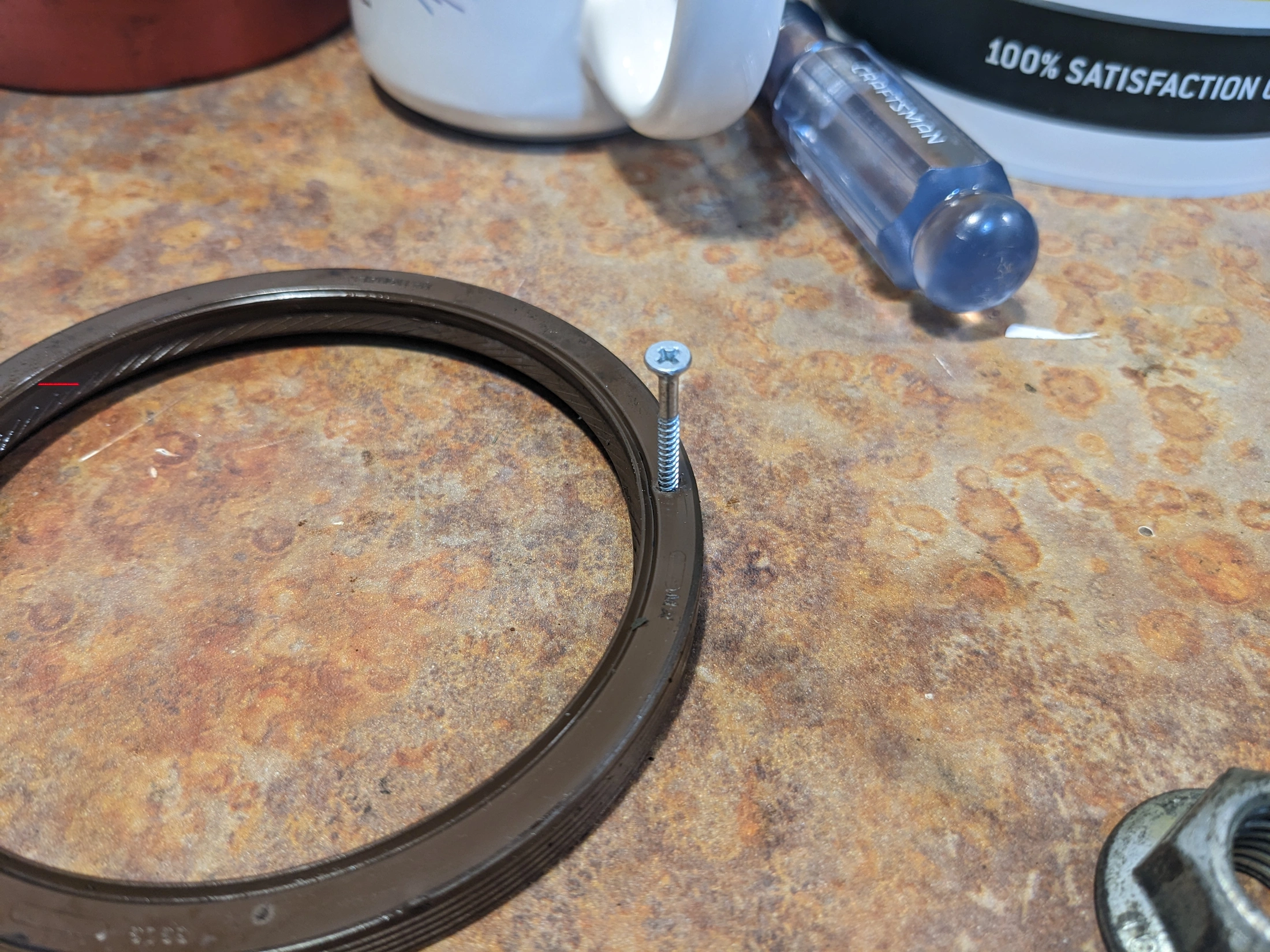
PXL_20250316_132802196.webp


The crank surface at this point is almost 40 years old and with 130K-ish miles, it has some light grooves where the rear main seal makes contact. So, I put one of those Fel-Pro crankshaft sleeves on it (part No. 16250) with a thin skin of anaerobic sealant. I didn't care to spend the money on the elusive install tool, so I modeled one up and printed it. Worked beautifully. If any of you guys are into 3D printing, the model is on my Printables page. https://www.printables.com/@NC_Fabrikation (it's free, this isn't a marketing post)
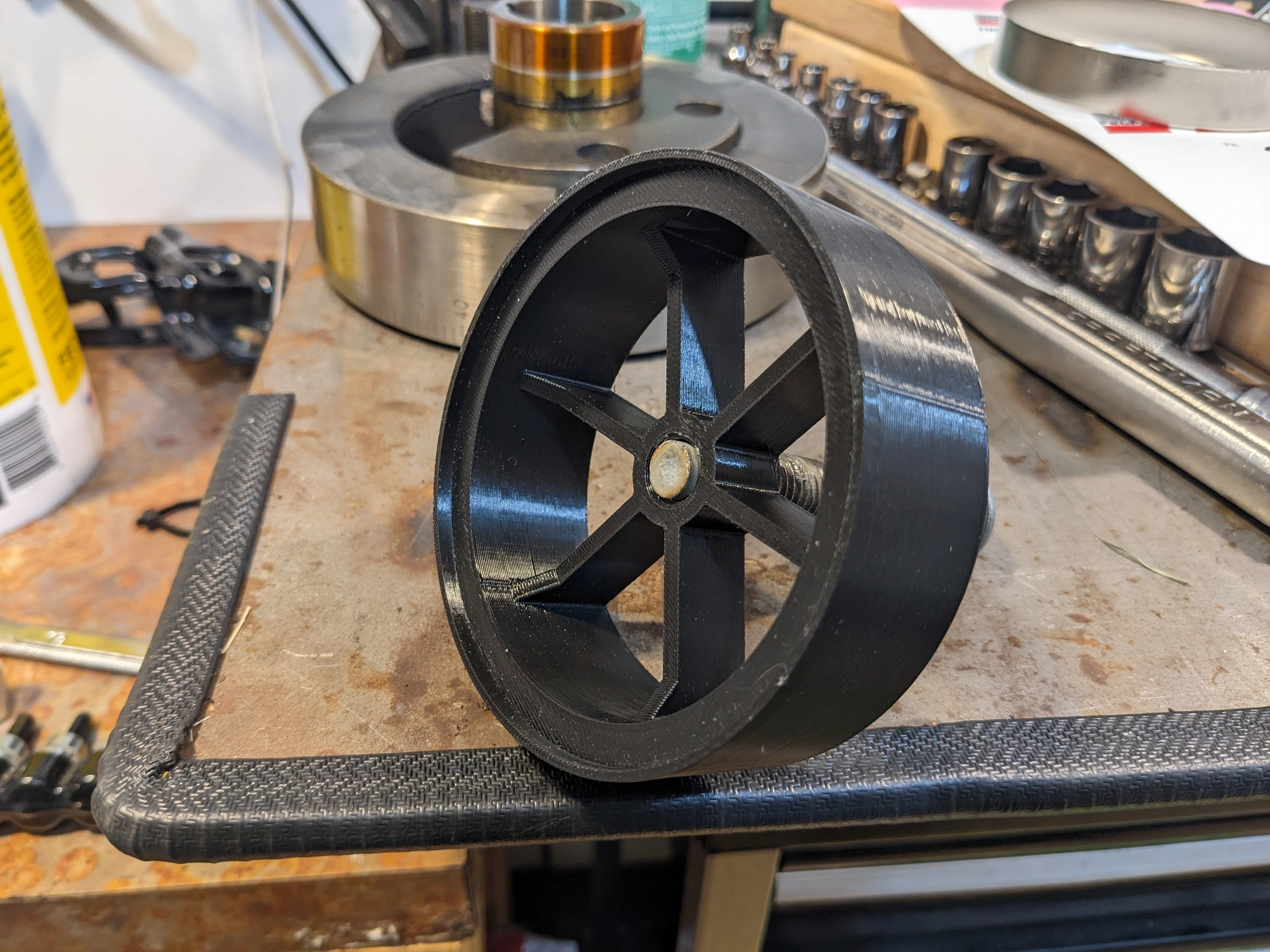
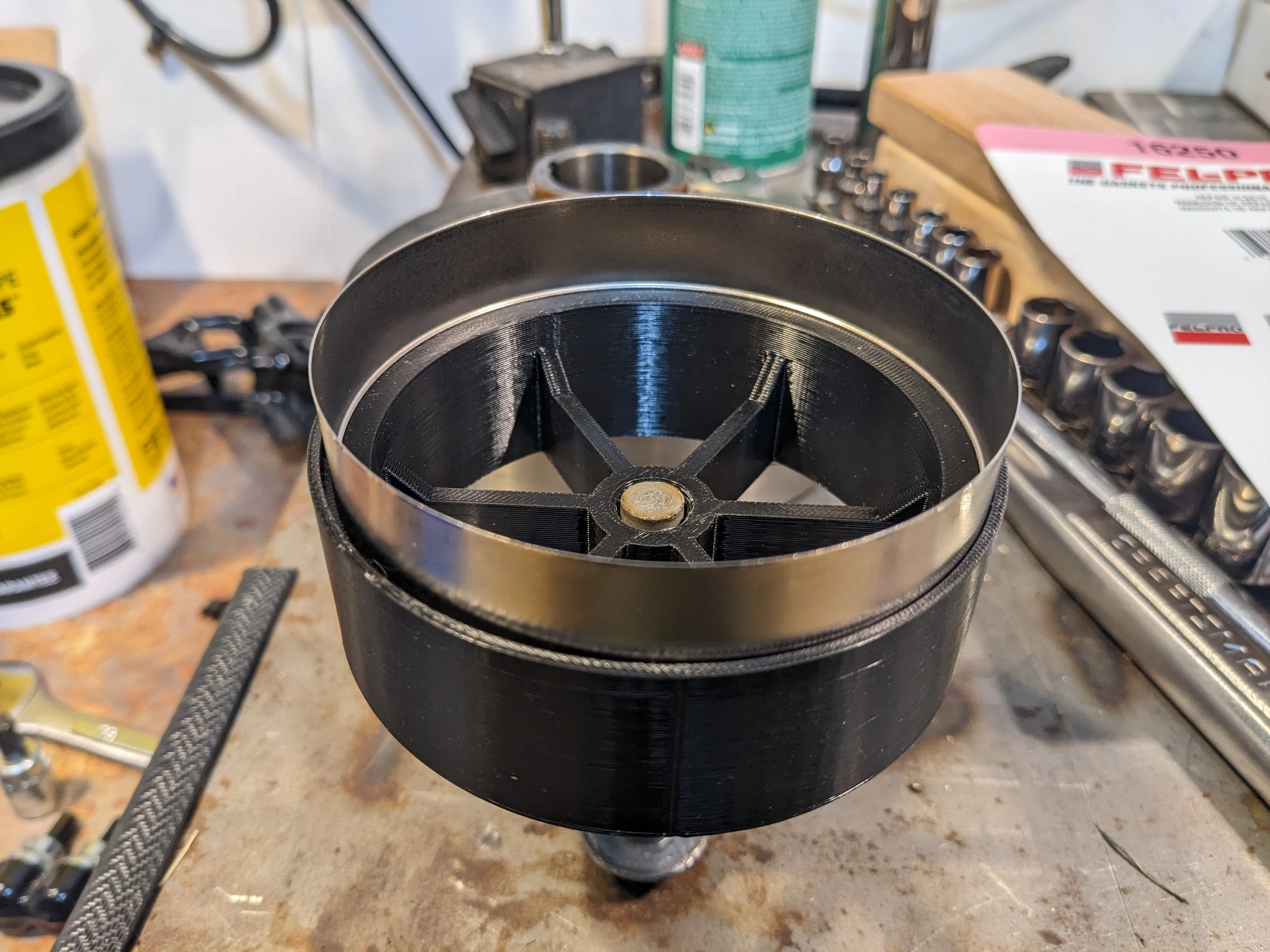
PXL_20250316_195656619.webp


PXL_20250316_195749024.webp
 
Nothing too exciting, but here is the front end of the engine with the new gaskets installed. I have had issues over the years with coolant leaks causing timing cover and water pump bolts to rust, so this time I went all stainless. This tiny mom and pop shop out of PA called Totally Stainless sells a really nicely organized and comprehensive kit with the same wacky studs you need for this install. It's a bit pricey but worth it, IMO.

PXL_20250323_202537263.webp
 
Making slow but steady progress...

Got the new flywheel in and dialed in the concentricity of the TKO bellhousing. This took ENTIRELY too long. As you can see in the video below, it was originally ~.022-.024" (indicator reading) out. About .011-.012" off center. So, I bought .014" eccentric dowel pins from Summit. In theory, this should put me within .002-.003 on center. However, the Summit pins were about .004 undersize (.496" vs the OE .500"). This made it basically impossible to get consistent, repeatable readings when the pins were installed with their eccentric axis parallel to each other. At this point, I should have returned the pins, but I was impatient and wanted it done, so I played around with clocking the pins at different angles relative to each other and found that, at about 45 degrees apart, it took enough slop out of the assembly that I was able to consistently get the indicator reading within the required .005". It's maybe a little hack, but it worked.

Video with OE pins (yes, my dial indicator only barely fits :cheers: )

 
  • Like
Reactions: RaggedGT
Some pics of the new flywheel and old clutch (with new friction disc) reinstalled.

1000000190.webp

1000000192.webp


And finally, with the new bell. I also replaced the pilot and throwout bearings while I was in here. I'm reusing the 39 year old fork and pivot... They are still somehow totally serviceable :)

1000000208.webp
 

Attachments

  • 1000000208.webp
    1000000208.webp
    910.8 KB · Views: 46
But wait, there's more...!

Not actually much more. But, for some of my upcoming plans for the car, I'm installing aftermarket fuel rails. Not so much because I'll need the fuel flow, but because I need the clearance on the throttle body side.

Unfortunately, the Anderson Ford Motorsport rails that are supposed to be the best for intake manifold clearance... Aren't. My Trick Flow long runner R upper has zero chance of clearance. I'd need a 1" spacer to make this work.

1000000202.webp


It's kind of frustrating, but AFM doesn't own Trick Flow, so I can't fault them. These are super nice rails and they do clear the OE distributor. I'll be keeping them for future use.

1000000203.webp