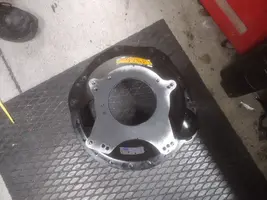
Hello everyone,
I have an interesting problem with my new TKX and I'm trying to find the solution and I would appreciate anyone's thoughts or opinions. I installed a new TKX transmission last year with a new Quicktime bellhousing, Malwood under dash clutch pedal setup and hydraulic clutch and the transmission doesn't shift well. It always shifts odd going into 3rd. It isn't a full grind, but it's as if it hits one tooth each time. Not a full grind, but certainly enough for you to know it's not right. If you shift at a very low RPM, around 1,000 - 1,500 RPM, it doesn't make a noise, and when you're at a high RPM I don't notice it, but I may just be shifting fast enough to not notice. It almost feels as if you are trying to shift without stepping on the clutch where you can do it if you time everything correctly. It feels as if this transmission is decades old with hundreds of thousands of miles instead of being brand new My Top-Loader that came out shifted nicer than my new transmission and that shouldn't be the case. It also seems to make a whining noise, especially in 3rd, but I'm not sure if I'm looking for problems now that it doesn't shift well.
I have posted this on other forums as well in case you see it elsewhere.
Setup:
306 from DSS, stock crank
Quicktime bellhousing
Centerforce Dual Friction clutch with their pilot bearing
Tremec TKX transmission, stock shifter
Malwood under-dash clutch pedal
Malwood Cherry-bearing throw-out bearing
Strange Engineering driveshaft yoke and driveshaft
I shimmed the bellhousing to the engine and I'm within 0.0015 inches all the way around.
I centered the bellhousing to the crank and I'm within 0.004 inches of center
The fingers of the clutch diaphragm are within tolerances of each other for Centerforce specs. I believe it was 0.020.
I'm at 3.5 degrees drive-line angle, which isn't perfect, but any higher and the transmission hits the floor, but I don't think this is my issue anyway.
I originally tried a slave cylinder with a clutch fork from a fox-body setup, but I changed to a regular hydraulic throw-out bearing to try and solve this without a change. It was shimmed to the tighter side of the acceptable spectrum, but within spec. The release point is right at the top of the pedal and high off the floor.
I sent the transmission back to Tremec and they said it was good without any flaws and they sent it back.
I can idle the car at 1,000 - 1,200 rpm in neutral, clutch out, and shift into to reverse after 2 seconds, so I think the input shaft has slowed down, which makes me believe the clutch is releasing and the pilot bearing is not bound up in anyway.
I put the transmission in last year and drove it 500 miles on Dex as recommended and changed to Tremec oil as recommended. Nothing large came out, there was a little something in the bottom of the pan. If the transmission shifted fine, I wouldn't have though much of it and would have thought it was just part of owning a brand-new transmission and the parts meshing together. I drained the oil again to send back to Tremec and didn't notice anything out of the ordinary again. I've had the problem since the very first shift and have been battling this every step of the way.
I can shift the car fine with the engine off and not moving, which I know you're not supposed to do, but I'm just testing.
With the engine running and not moving, I can still shift fine
With the engine running and the car moving, it doesn't shift well, and I always get that grind into 3rd. 2nd to 3rd is the worst. All gears changes are not smooth. My 4-
speed shifted beautifully compared to the TKX and it had never been taken apart.
With the engine off and the car moving, if I clutch in, push it into gear, then take it out, and put it back in, it grinds every time. Horribly. I never tried doing this in another car, and I don't have another manual car to test on to see if this happens to all manual transmissions.
I had a Centerforce Dual Friction on this engine with my Top-loader and it worked great, so I went with the same brand and model, but obviously a different part number to work with the TKX.
With the bellhousing being centered and parallel, the being sent back to Tremec for a clean bill of health, and trying a slave cylinder and a hydraulic throw-out bearing to make sure the clutch is disengaging I'm out of ideas and I'm asking for help. Being that I can pull the choke, have the car idle smoothly at 1,000-1,200 RPM clutch out in neutral, then clutch in and shift into reverse 2 seconds later makes me believe the input shaft has stopped spinning so the pilot bearing isn't tight, and the clutch has released. At one second, it will grind in reverse, but 2 seconds is enough time to get it into reverse. I tried this over and over and it always works at 2 seconds.
I've contacted Tremec, Centerforce, Quicktime, and Malwood about this, and everyone has been helpful, but no solutions.
I'm lucky to have another car and a place to store it and as so many can understand, driving this car is my moment of relief and joy. I count my blessings to have this be the problem I have, but life has been crazy, with my wife battling cancer again, having young kids, and I don't have a lot of time or energy to keep fighting so any help would be greatly appreciated.
Thank you all very much.
-Kevin
I have an interesting problem with my new TKX and I'm trying to find the solution and I would appreciate anyone's thoughts or opinions. I installed a new TKX transmission last year with a new Quicktime bellhousing, Malwood under dash clutch pedal setup and hydraulic clutch and the transmission doesn't shift well. It always shifts odd going into 3rd. It isn't a full grind, but it's as if it hits one tooth each time. Not a full grind, but certainly enough for you to know it's not right. If you shift at a very low RPM, around 1,000 - 1,500 RPM, it doesn't make a noise, and when you're at a high RPM I don't notice it, but I may just be shifting fast enough to not notice. It almost feels as if you are trying to shift without stepping on the clutch where you can do it if you time everything correctly. It feels as if this transmission is decades old with hundreds of thousands of miles instead of being brand new My Top-Loader that came out shifted nicer than my new transmission and that shouldn't be the case. It also seems to make a whining noise, especially in 3rd, but I'm not sure if I'm looking for problems now that it doesn't shift well.
I have posted this on other forums as well in case you see it elsewhere.
Setup:
306 from DSS, stock crank
Quicktime bellhousing
Centerforce Dual Friction clutch with their pilot bearing
Tremec TKX transmission, stock shifter
Malwood under-dash clutch pedal
Malwood Cherry-bearing throw-out bearing
Strange Engineering driveshaft yoke and driveshaft
I shimmed the bellhousing to the engine and I'm within 0.0015 inches all the way around.
I centered the bellhousing to the crank and I'm within 0.004 inches of center
The fingers of the clutch diaphragm are within tolerances of each other for Centerforce specs. I believe it was 0.020.
I'm at 3.5 degrees drive-line angle, which isn't perfect, but any higher and the transmission hits the floor, but I don't think this is my issue anyway.
I originally tried a slave cylinder with a clutch fork from a fox-body setup, but I changed to a regular hydraulic throw-out bearing to try and solve this without a change. It was shimmed to the tighter side of the acceptable spectrum, but within spec. The release point is right at the top of the pedal and high off the floor.
I sent the transmission back to Tremec and they said it was good without any flaws and they sent it back.
I can idle the car at 1,000 - 1,200 rpm in neutral, clutch out, and shift into to reverse after 2 seconds, so I think the input shaft has slowed down, which makes me believe the clutch is releasing and the pilot bearing is not bound up in anyway.
I put the transmission in last year and drove it 500 miles on Dex as recommended and changed to Tremec oil as recommended. Nothing large came out, there was a little something in the bottom of the pan. If the transmission shifted fine, I wouldn't have though much of it and would have thought it was just part of owning a brand-new transmission and the parts meshing together. I drained the oil again to send back to Tremec and didn't notice anything out of the ordinary again. I've had the problem since the very first shift and have been battling this every step of the way.
I can shift the car fine with the engine off and not moving, which I know you're not supposed to do, but I'm just testing.
With the engine running and not moving, I can still shift fine
With the engine running and the car moving, it doesn't shift well, and I always get that grind into 3rd. 2nd to 3rd is the worst. All gears changes are not smooth. My 4-
speed shifted beautifully compared to the TKX and it had never been taken apart.
With the engine off and the car moving, if I clutch in, push it into gear, then take it out, and put it back in, it grinds every time. Horribly. I never tried doing this in another car, and I don't have another manual car to test on to see if this happens to all manual transmissions.
I had a Centerforce Dual Friction on this engine with my Top-loader and it worked great, so I went with the same brand and model, but obviously a different part number to work with the TKX.
With the bellhousing being centered and parallel, the being sent back to Tremec for a clean bill of health, and trying a slave cylinder and a hydraulic throw-out bearing to make sure the clutch is disengaging I'm out of ideas and I'm asking for help. Being that I can pull the choke, have the car idle smoothly at 1,000-1,200 RPM clutch out in neutral, then clutch in and shift into reverse 2 seconds later makes me believe the input shaft has stopped spinning so the pilot bearing isn't tight, and the clutch has released. At one second, it will grind in reverse, but 2 seconds is enough time to get it into reverse. I tried this over and over and it always works at 2 seconds.
I've contacted Tremec, Centerforce, Quicktime, and Malwood about this, and everyone has been helpful, but no solutions.
I'm lucky to have another car and a place to store it and as so many can understand, driving this car is my moment of relief and joy. I count my blessings to have this be the problem I have, but life has been crazy, with my wife battling cancer again, having young kids, and I don't have a lot of time or energy to keep fighting so any help would be greatly appreciated.
Thank you all very much.
-Kevin


 ressure plate was actually bent and was not engaging correctly...