Mustang II One Wire Alternator Conversion?

3djedi

Member
Aug 24, 2022
10
4
13
Kansas
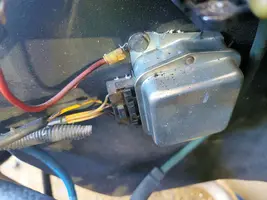
I'm new to your forum and excited to be here. I inherited a 1980's 1957 Thunderbird kit car from my late father. This car has a custom tubed frame and used a Mustang II donor (unsure which year) for parts (including the front end, electrical, brakes, gas tank, etc.). The original 1967 289 expired last year and I recently replaced it with a built late '80s 302 roller. I replaced the original alternator with a ProForm GM Style 1 wire. Now unsure how to deal with/wire the existing Mustang II alternator harness and voltage regulator to complete the build (see images attached). Any help/suggestions/tips would be greatly appreciated. Thank you in advance!

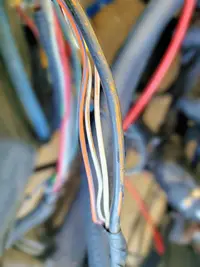
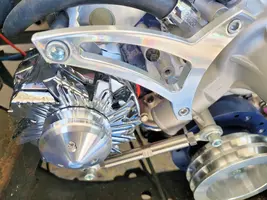
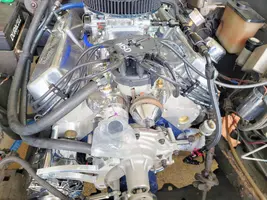
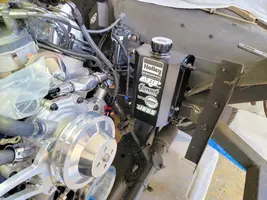
20220824_090445A.webp 20220824_090613A.webp . 20220824_090530A.webp
 
Good news and better news...

Good news: I've done the GM 1-wire conversion on a Mustang II (well, it was badly done when I bought it and I fixed it).

Better news: The Mustang II's alternator wiring was no different than any other Ford with a 1G alternator.

Even better news: There's a better way than 1-wire conversion that's actually cheaper:


If you really want to use the GM-style alternator though, you simply unplug the external voltage regulator, and run a wire from the output post on the alternator to the positive battery terminal. This will, however, cause your amp gauge (if you have one) to be inoperative and leave any warning light for the charging system you currently have illuminated. There's a jumper wire on mine to keep that from happening, and if I get time later I'll take a picture of it.

That said, when I re-wire my car and put A/C in it, I'll be going Ford 3G or a 1-wire converted Ford 3G for simplicity's sake.
 
Good news and better news...

Good news: I've done the GM 1-wire conversion on a Mustang II (well, it was badly done when I bought it and I fixed it).

Better news: The Mustang II's alternator wiring was no different than any other Ford with a 1G alternator.

Even better news: There's a better way than 1-wire conversion that's actually cheaper:


If you really want to use the GM-style alternator though, you simply unplug the external voltage regulator, and run a wire from the output post on the alternator to the positive battery terminal. This will, however, cause your amp gauge (if you have one) to be inoperative and leave any warning light for the charging system you currently have illuminated. There's a jumper wire on mine to keep that from happening, and if I get time later I'll take a picture of it.

That said, when I re-wire my car and put A/C in it, I'll be going Ford 3G or a 1-wire converted Ford 3G for simplicity's sake.
Thank you for the quick reply and all makes sense and financially committed to the GM 1-wire conversion. This is what I purchased and can't return now (Proform Alternator), If the external voltage regulator is unplugged then how does the internal fuse block get powered
 
I've seen those alternaotrs before. I can't say I'm a fan of the design. I know BMW sometimes uses water cooled alts, somewhat due to compact placementn in some of their smaller cars. Muscle cars sometimes have a little more volume to work with. Is that a water cooled alternator or sierra marine alternator? or marine alt? I don't see much room for venting.
Here is the new alternator I have: (Proform Alternator) Same footprint as stock 60 amp that was in place before. I am upgrading for several reasons:
  1. Clean/Dress up the engine bay
  2. Need more amps to power the electric fuel pump and 3000 CFM electric fan
 
I just unplugged the harness and removed the regulator. The gauge doesn't work but they have never been useful on the II anyway. I have been in multiple II's and the voltmeter barely moved in any of them. .
 
  • Like
Reactions: Adieu
I've seen those alternaotrs before. I can't say I'm a fan of the design. I know BMW sometimes uses water cooled alts, somewhat due to compact placementn in some of their smaller cars. Muscle cars sometimes have a little more volume to work with. Is that a water cooled alternator or sierra marine alternator? or marine alt? I don't see much room for venting.
You're not a fan of what? The Ford 1G or the GM CS/1-wire?

I'll give you a hint, they're remarkably similar, so much so that a CS will fit in place of a 1G with a few washers shimming it.

This guy's replacing his 1G alternator with a modified CS. There's no liquid cooling (see the big fan on the front?), and it's roughly the same size as what he took off, just prettier, simpler, and more powerful.
 
  • Like
Reactions: IICrew
Thank you for the quick reply and all makes sense and financially committed to the GM 1-wire conversion. This is what I purchased and can't return now (Proform Alternator), If the external voltage regulator is unplugged then how does the internal fuse block get powered

I just unplugged the harness and removed the regulator. The gauge doesn't work but they have never been useful on the II anyway. I have been in multiple II's and the voltmeter barely moved in any of them. .
@IICrew is correct. Just unplug the regulator. I knew there was a wire connected to one pin of my regulator's connector, but I just went out to the car and looked, and it's actually the ignition hot for my MSD 6 box.

The internal fuse block is powered when the key is turned (ignition switch is on top of the steering column in these cars, and actuated by a rod from the ignition lock cylinder).
 
@IICrew is correct. Just unplug the regulator. I knew there was a wire connected to one pin of my regulator's connector, but I just went out to the car and looked, and it's actually the ignition hot for my MSD 6 box.

The internal fuse block is powered when the key is turned (ignition switch is on top of the steering column in these cars, and actuated by a rod from the ignition lock cylinder).
Thank you so much for your help! Did you happen to take a pic so can better understand the bridge wire to make the aftermarket volt gauge work?
 
Any 12v circuit is fine for most aftermarket gauges. As Matt said they usually draw a tiny amount of power. I would not use a radio circuit but any other switched source should be fine. If your alternator requires a separate ground make sure it's done. I have a lot of noise in my stereo at mid to low volumn with the 1 wire. This noise was not present with the factory alternator. Otherwise I am very happy with the upgrade. I used a noise suppressor for a week but it went bad and let the radio stay on for 20 minutes. For now I just listen to the hum of the engine or crank it up and drown the noise out.
 
I did not. I unplugged the pigtail from the connector near the alternator and removed that portion. I removed the voltage regulator itself but not the wiring. I am not too worried about appearance under the hood. I did tuck the respective harnesses out of the way but have them intact just in case I need to change back.
 
The design I mean, it just looks like it would get too hot and burn up IMO. I have a 200 amp high output I have been using recently. Stock one is too underpowered. My stock was maybe 130 amp or so. Then I moved up to 150 or something. Now I'm on my second 200 amp high output alternator. At one point I I thought I wasn't on the right path and took it back to Ford. They said they'll fix it right up and put what the car needs in it... I trusted dealership 1 time and car died about 9 months later with the stock alternator back in. It was under warranty, but unfortunately the labor is not. I decided to take my chances with another alt and another shop for way cheaper than paying dealership labor and free replacement of a crappy part.

How well does that fan cool? It looked more like a fancy covering to protect from liquid or something, had no idea it was a fan. The entire thing looks pretty sealed tho compared to other alternators I have used. I can hardly see the coils or whatnot. Sorry missed edit time
Have you never looked under the hood of an American car built before 1995 or so? Virtually everything GM or Ford built ran an alternator that looked like that from the 1960s until then, and AMC and Chrysler even got on board in the 1970s.
 
The power to the car is supplied by a wire on the solenoid. I believe it will be a yellow wire with a fusible link. You should have a heavy gauge wire on the solenoid running to the main harness. It will be on the same terminal as your positive battery cable. I have a remote battery so I ran the 1 wire from the alternator to the solenoid. Installed a ground and called it a day.
 
  • Like
Reactions: Adieu
We are talking a 50's Thunderbird replica. He is upgrading from what was probably a 60 amp alternator to at least a 100 amp. It will never be worked hard in this application unless he has a lot of electrical goodies added on. Heat will not be an issue. This style alternator has a proven track record of 50 plus years. He has nothing to worry about.

You on the other hand. If your going through alternators like that you have one hell of a draw, :poo:ty luck or a wiring issue causing the alternator to fail. I have been working on cars since the early 80's and have never had any car need that many alternators. I spent a couple decades in dealerships and or service shops in various roles and have never had a car eat alternators like that. Most cars the past 25 years or so go their entire lives on the factory alternator. I have several 90's cars with 200k plus on original alternator here in my driveway. Two of which I bought with under 30k miles on them. I have a 2000ish impala I bought from the original owner with just over 300k now. Original engine, trans, and alternator. He only replaced brakes, tires and battery. Your car has an issue or you have horrible luck.
 
Google this: "Mustang 2008 check charging system", or 2006, 2007. You will see hundreds of people posting about it. I have spent so much time reading everything there is about it. No one can find the problem. And even if someone claims to find the problem, they are usually back saying it hasn't actually fixed the problem. I have tried just about every solution possible. My current solution is charging the car every night now. I do have the shaker 500 sound system that came with the pony package, and I do crank up my music and listen to some heavy loud. But a long time ago I had a car with 2 12's in the back that was probably 100x louder than what I currently have with no alternator issues. So I don't think my music volume is the problem. I'm thinking it's a computer thing and the electrical engineer who worked on the designs overlooked something. If I don't drive the car every day it strains the alternator. And 200 amp alt won't fully fix the problem. I may just start putting a new battery in every 2 years to see if I can get a jump on the problem. Trust me I am frustrated. I am actually going to start learning how to start fixing my own alternators. I already have 2 burnt ones that I can fix up lol. Hopefully I can get them running before my new one fails. Or maybe the smart charger will take care of the issue for me. May look into a capactitor or something too.

I guess I forgot what year the car was. Anything past 2005 has so much computer crap drawing power now. 2005-2009 mustangs eat alternators, I'm not the only one. Especially if you have the pony package with the shaker 500 sound system.
I've had a 2009 and a 2010 (mechanically identical to the 2009, but different interior and some body revisions). Neither had a single alternator problem, and the '09 had the Shaker system. My best friend had an '05 for three years and we put one alternator on it.

I'm also a former Ford dealer tech (I work for GM now, worked for CarMax and BMW in between the two), and could count on one hand the number of alternators I've installed on S197 Mustangs.

If you're replacing alternators constantly, you're either installing low quality rebuilds or the problem is something else and the alternator failures are actually a symptom and not the root cause.
 
The power to the car is supplied by a wire on the solenoid. I believe it will be a yellow wire with a fusible link. You should have a heavy gauge wire on the solenoid running to the main harness. It will be on the same terminal as your positive battery cable. I have a remote battery so I ran the 1 wire from the alternator to the solenoid. Installed a ground and called it a day.
Thank you for the great info. Looks like I can remove the alternator harness completely then without fear.