CARB CONVERSION PLAN.

SCORPIO72

New Member
Aug 29, 2009
16
0
0
ILLINOIS
SWAPPING OUT EFI FOR CARB SET UP. CHASING THE WIRING FOR ALL THE GAUGES HAS BEEN A SUCCESS. JUST NEED TO KNOW IF I CAN UTILZE FUEL PUMP IT HAS IN IT ALREADY, AND IF SO WHAT DO I NEED TO DO TO GET IT WORKING PROPERLY? RIGHT NOW NO MATTER WHAT I DO I CANT EVEN GET THE PUMP TO KICK ON.
 
Do not use an EFI in tank fuel pump with a carb. A carb requires 6-8 PSI and the EFI pump puts out 40+ PSI. You will never get the pressure/flow regulated properly. If the add on regulator fails, the resulting overpressure will flood the carb and wash all the oil off the cylinder walls. Engine seizure and death will quickly follow. Either remain EFI or use a tank/fuel pump/fuel lines out of an 84 or earlier Stang. Fabricating your own setup is possible but there are some snags to overcome.

Do not attempt to leave the EFI in place in an attempt to control either the electric fuel pump or ignition. Doing so qualifies you for the “Road Kill Mechanics Award”.

If you try to use your current tank, you will need to pull the fuel pump out and fabricate a pickup tube & strainer sock to replace the fuel pump. Or you can have a sump fabricated and welded onto you existing tank. Many welding shops will not weld fuel tanks because of the dangers involved if the tank isn't purged properly.

You will need an external electric fuel pump unless you change the timing cover for one with the mechanical fuel pump mount on it. Rip all the EFI wiring out, and the computer controlled fuel pump won't work. You will need to add a relay & switch and wire in the existing inertia switch for an external low pressure electric fuel pump. Do not try to wire the fuel pump without the relay. The 15-20 amps the pump pulls will overload the circuit. This will take power away from other items on the same circuit or cause the fuse or fuse link to blow.

attachment.php


You will need to run some new fuel feed lines or braided hose. The 3/8" aluminum tubing works well, but you will need a flaring tool and bending springs to fabricate the lines. Braided hose is easy to run and route, but is much more expensive. It is about $3.50-$4.00 a foot plus the end fittings, which are $3-$4 each. Fabricating hose assembles can be difficult, but anyplace that makes hydraulic hoses can do it for you for an extra charge. See Amazon Hose - Rubber, Hydraulic and Industrial Hose - since 1919 for more information.

For stainless steel braided hose and fittings for automotive use:

See Search Results for stainless - SummitRacing.com

stainless steel hose - JEGS High Performance

See Eaton's Aeroquip Products for more information on High performance automotive hose products

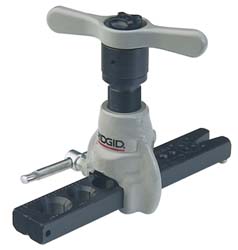
The fancy red & blue AN fittings require a 37 degree flaring tool. A standard automotive or household plumbing tool is 45 degrees and cannot be used with AN flare fittings. If you do, the flare is subjected to too much stress when the fitting is tightened, and is likely to fail or leak.

See Industrial Supply Equipment from MSC Industrial Supply , McMaster-Carr or for the flaring tool you will need . Prices start at $81 and go up

Browse the MSC Big Book
7478363-11.jpg


McMaster-Carr

2721ap1s.gif
 
jrichker - Bro, I hate to disagree with you, and I truely welcome any and all discussion of why it is thought that using the stock EFI pump is a bad idea.

Now to support my point of view.

I have used that particular regulator on a few cars, 1 being a 3rd gen camaro (82-92) and the two others being mustang related (one 86 and the other was a 1995).

On the 3rd Gen, the fuel injection lines run along the drivers side fuel rail, we used the feed and the return. Running from the outlet to a summit brand dual feed line (car had a 750 DP) we installed a Mr. Gasket 0-15PSI gauge in the gauge port of the feed line and set the fuel pressure @ 6.5PSI. never had a problem. The fuel pressure was constant and never failed. That was 2 years ago. It is a summer/ nice day car. Could be considered a daily driver if wanted.

The 86 was converted from EFI 302 to a carbed 351. Since the fuel lines run from under the passenger side frame rail, we cut the plastic flex portion of the line, used a heat gun to re-bend the lines and used new push style fittings for the regulator. Again used a simular feed line to the carb with a gauge set to 8 psi. It is a drag only car. Many passes with no isssues.

The 95 was a v6 car that we swapped in a carbbed 302. Since the lines come in from the corner near where the EFI harness comes through. We used the factory soft lines (like we did on the 86, used a heat gun, and new fittings to attach the regulator) and a pressure gauge set to 5psi. Just a beat on street car. the engine has been out more times than I can imagine.

On all three of these cars we set the pressure once. Never had a problem. With this particular regulator it is a bypass style. It is designed the same as a factory regulator. Deliver the fuel needed, return the rest to the tank. The carb will never see 40+ PSI. The holley reg. uses a stainless check ball and is physically contacted by the adjustment set screw. There is not a possible way for it to over pressure unless you set it wrong.

Please don't think that I am trying to be a prick. You saved my butt on the wiring diagrams. You have been a huge help to me on my project. I just think that things can be tackled a different way. I welcome your reply. If needed I will start a discussion thread devoted to this subject and we all can discuss this.

Sorry for the novel and the Hijack.

Back to our regularly scheduled program now already in progress....


Charlie
 
Im with JRichker on this one. The bypass regulator may "work" and even hold out for for some but if it were my car, I'd rather know that Im not sending 40 psi to a carb in the event of a regulator malfunction

Per Holley Website:

Part #: 12-803BP

Features
3/8” NPT ports (1 in, 1 out, 1 bypass or return)
Used in systems with a return line back to the fuel tank
Quieter fuel pump operation
Designed only for carburetor use
Preset to 7PSI
Adjustable from 4-1/2 to 9 PSI
Chrome Finish

I would imagine Holley would have mentioned something to the effect of "Suitable for stepping down EFI to carb pressures"

Again, some might run it and never have a problem, but there's always the chance you might be the one who gets the defective unit and have to pay the consequences

just my .02
 
The whole idea is to do it right the first time so that you don't spend double the time and money to fix it the second time if it breaks. No shortcuts, just the best quality work the first time around.