

You are using an out of date browser. It may not display this or other websites correctly.
You should upgrade or use an alternative browser.
You should upgrade or use an alternative browser.
Engine Engine rebuild suggestions
- Thread starter JulianR
- Start date
-
- Tags
- 302 rebuild 5.0 rebuild


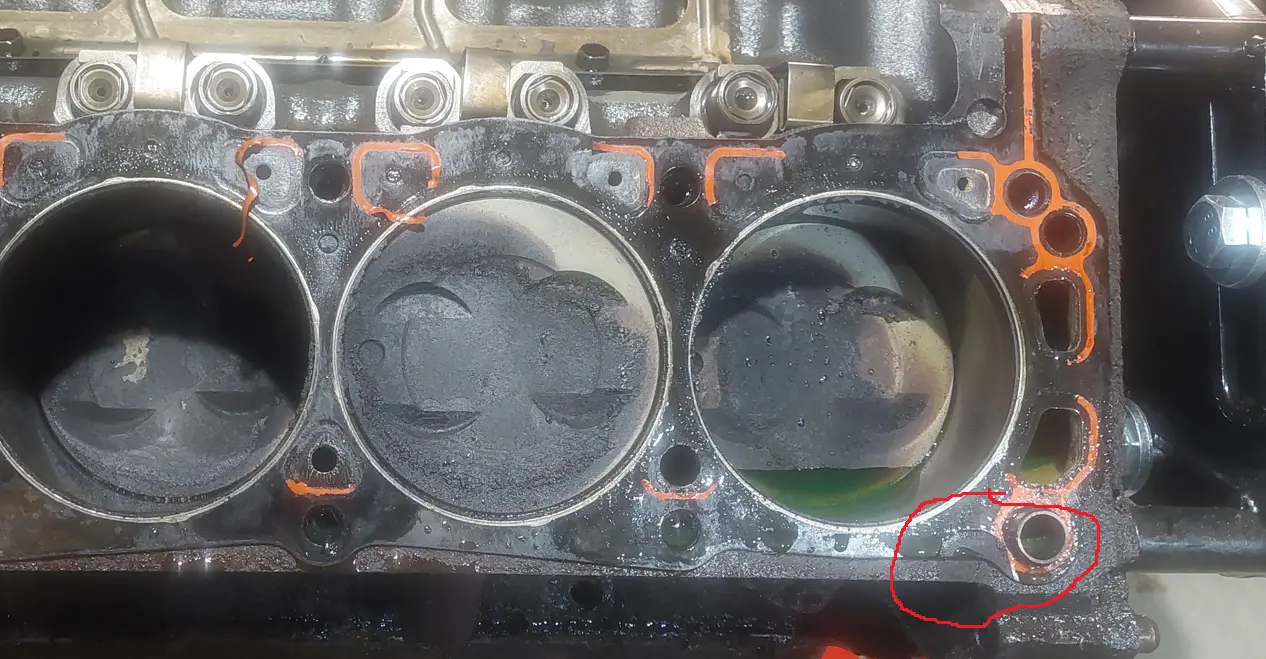
I did look closer at the gaskets today and found the part of the gasket circled in the photo below bubbled up. Also, the antifreeze in the cylinder I thought came from removing the head not that it burned antifreeze. I don't recall it blowing white smoke out the pipe, or having cloudy oil. Glad I'm tearing it apart.

keel
Active Member
I think that color in the coolant passages is likely from rust and corrosion due to using tap water in the cooling system, not necessarily from oil. The cast iron heads and block rust extremely easily. Did the coolant look normal when you drained it initially? I have drained engines that used tap water in the coolant and the antifreeze would come out orange and full of grit and all the passages in the block and heads would look yellowish/orange with rust, similar to yours.
Last edited:


This is are really good description of the coolant flow in a SBF:
The coolant is drawn from the bottom of the radiator by the water pump which delivers the coolant to the cylinder block thought the passages in the timing chain cover. The coolant then travels through the cored passages of the block from front to back on both sides to cool the entire length of each cylinder wall. Upon reaching the rear of the cylinder block the coolant is directed upward into the rear of the cylinder heads where it cools the combustion chambers, valves and valve seats as it moves through the cylinder heads to the front of the engine. The coolant from each cylinder head then flows through the water passages in the intake manifold to the thermostat housing. If the thermostat is open the coolant flows into the top of the radiator. If the thermostat is closed it stays in the block while a small portion of coolant is returned to the water pump for recirculation. Once the coolant reached the thermostat operating temperature it then flows into the radiator until colder coolant reached the thermostat and it closes.
The coolant is drawn from the bottom of the radiator by the water pump which delivers the coolant to the cylinder block thought the passages in the timing chain cover. The coolant then travels through the cored passages of the block from front to back on both sides to cool the entire length of each cylinder wall. Upon reaching the rear of the cylinder block the coolant is directed upward into the rear of the cylinder heads where it cools the combustion chambers, valves and valve seats as it moves through the cylinder heads to the front of the engine. The coolant from each cylinder head then flows through the water passages in the intake manifold to the thermostat housing. If the thermostat is open the coolant flows into the top of the radiator. If the thermostat is closed it stays in the block while a small portion of coolant is returned to the water pump for recirculation. Once the coolant reached the thermostat operating temperature it then flows into the radiator until colder coolant reached the thermostat and it closes.
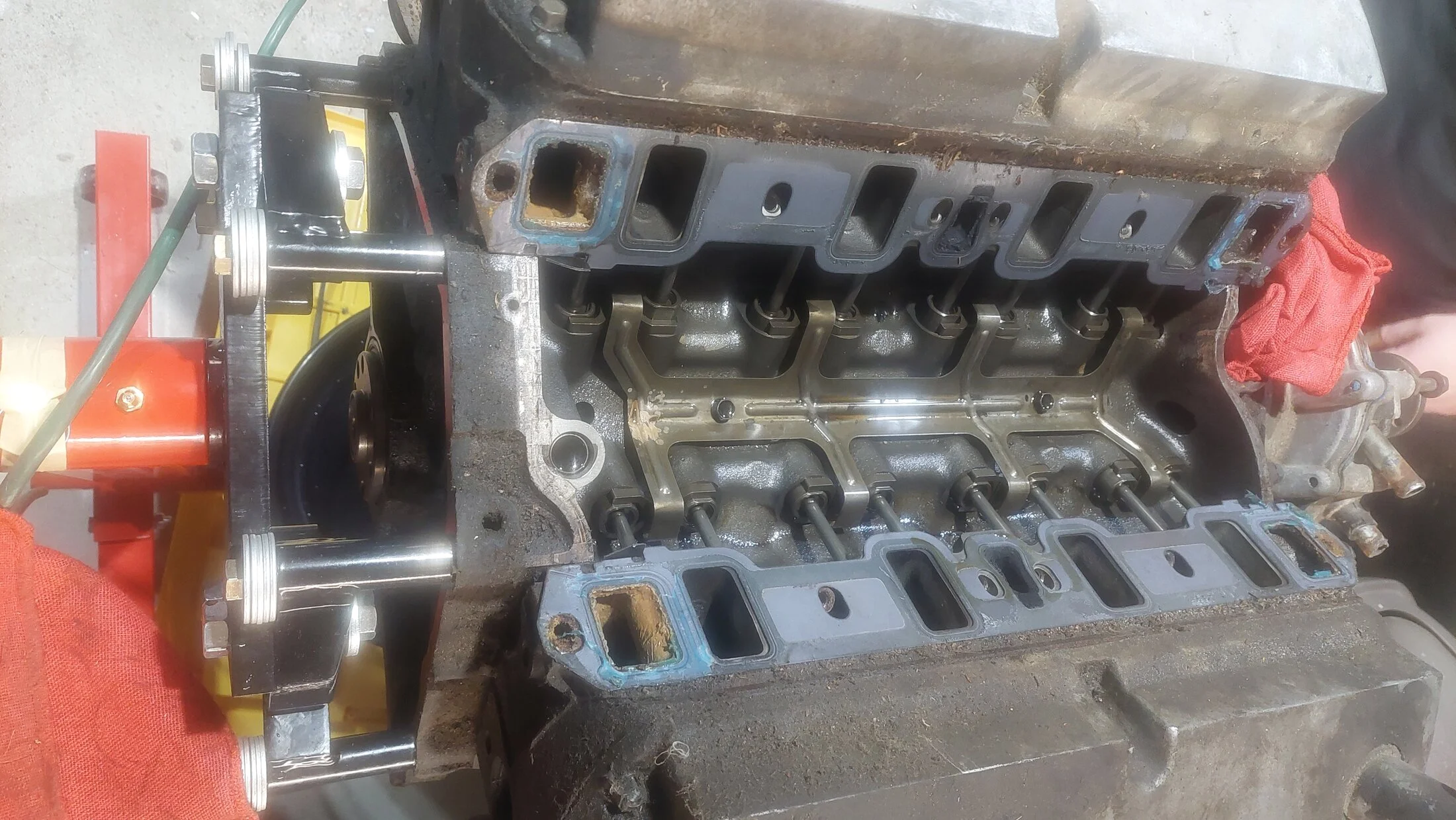
As for the discoloration in the front to water passages in the heads they are an odd light tan color which leds me to think a small oil leak into the coolant but I guess it could be rust but that is usually more redish brown. I cannot tell if there is any kind of build up on the walls of the passages so if its on there like a thin paint job then I would agree its probably rust or some other crap from lack of coolant maintenance. If its thicker and you can easily smear it then I would say oil.
Coolant always gets in the cylinders when you remove heads off a used engine especially if it is in the car as the heads will hold coolant even when you drain the motor. If you pull the motor, remove the water pump and then stand it up with that end pointing down you will most likely get all the coolant out and not have to deal with the coolant in the cylinders. I will say be sure to change the oil as the coolant will get down into the pan.
Coolant always gets in the cylinders when you remove heads off a used engine especially if it is in the car as the heads will hold coolant even when you drain the motor. If you pull the motor, remove the water pump and then stand it up with that end pointing down you will most likely get all the coolant out and not have to deal with the coolant in the cylinders. I will say be sure to change the oil as the coolant will get down into the pan.
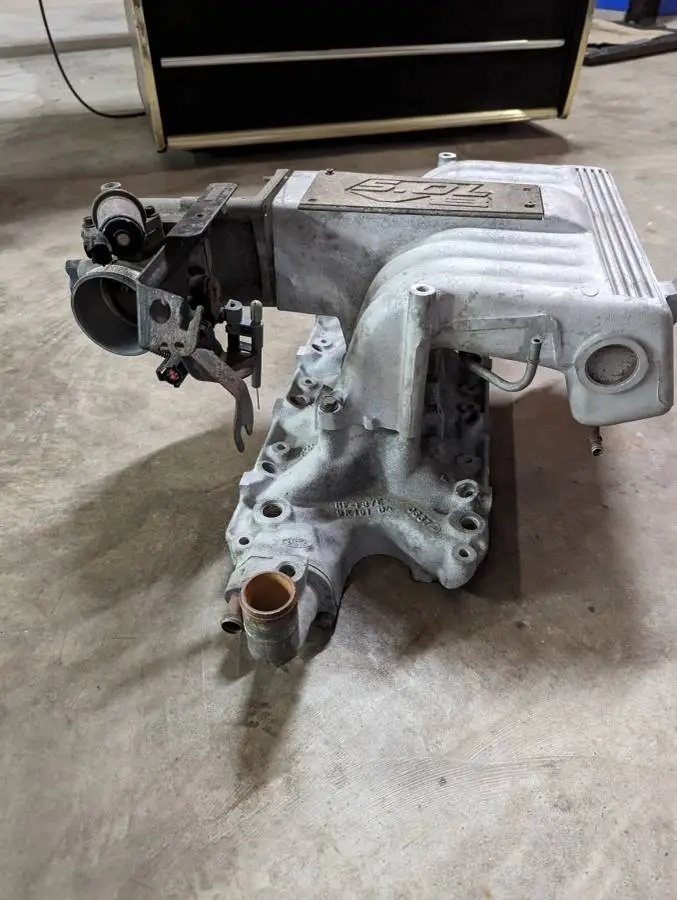
So, if you recall, I bought a Stage 1 Cam (new), found some used GT40P heads. Now I see an ad for an explorer intake-- upper/lower for $110. Should I get it? Will it work? Also, there's a cobra lower and upper for sale for $350, but can probably get it lower. One better than the other?
Last edited:


About the only thing the Cobra setup has over the Explorer is the ACT sensor location in the lower intake on the #5 cylinder runner is already there. You can drill and tap the Explorer lower. The other thing is whether or not you want an EGR as early Explorer (96 and some 97's) uppers had them and later on they do not. Cobra upper has the EGR provision cast into it.
Just to clarify this photo for other newbies reading this in the future, the far left passage and far right passage in the photo, on both heads, is actually a "water passage" I thought they were intake passages.One more question. When I took off the lower intake manifold, the 2 first passages on the left side of the photo looked yellow. Is that the antifreeze mixing with oil? What would cause it?


Been watching a bunch of videos on Piston To Valve Clearance. It seems pretty involved with calculations and swapping hydraulic lifters with solid lifters for the test. Calculating gasket thickness and swapping test springs.
So, my question is-- if this test is done to make sure valves don't hit the piston in your cam/head/valve combo, wouldn't you notice them hitting if you just spin the engine by hand on the stand? Or does running the engine make the hydraulic lifters the variable that makes a value open longer at different rpm?
So, my question is-- if this test is done to make sure valves don't hit the piston in your cam/head/valve combo, wouldn't you notice them hitting if you just spin the engine by hand on the stand? Or does running the engine make the hydraulic lifters the variable that makes a value open longer at different rpm?
keel
Active Member
Hydraulic lifters have some squish to them because they operate based on oil pressure inside of the lifter. This means they create more lift at higher RPM due to higher oil pressures, so spinning the engine over by hand will not create enough oil pressure in order to get an accurate piston to valve clearance reading.


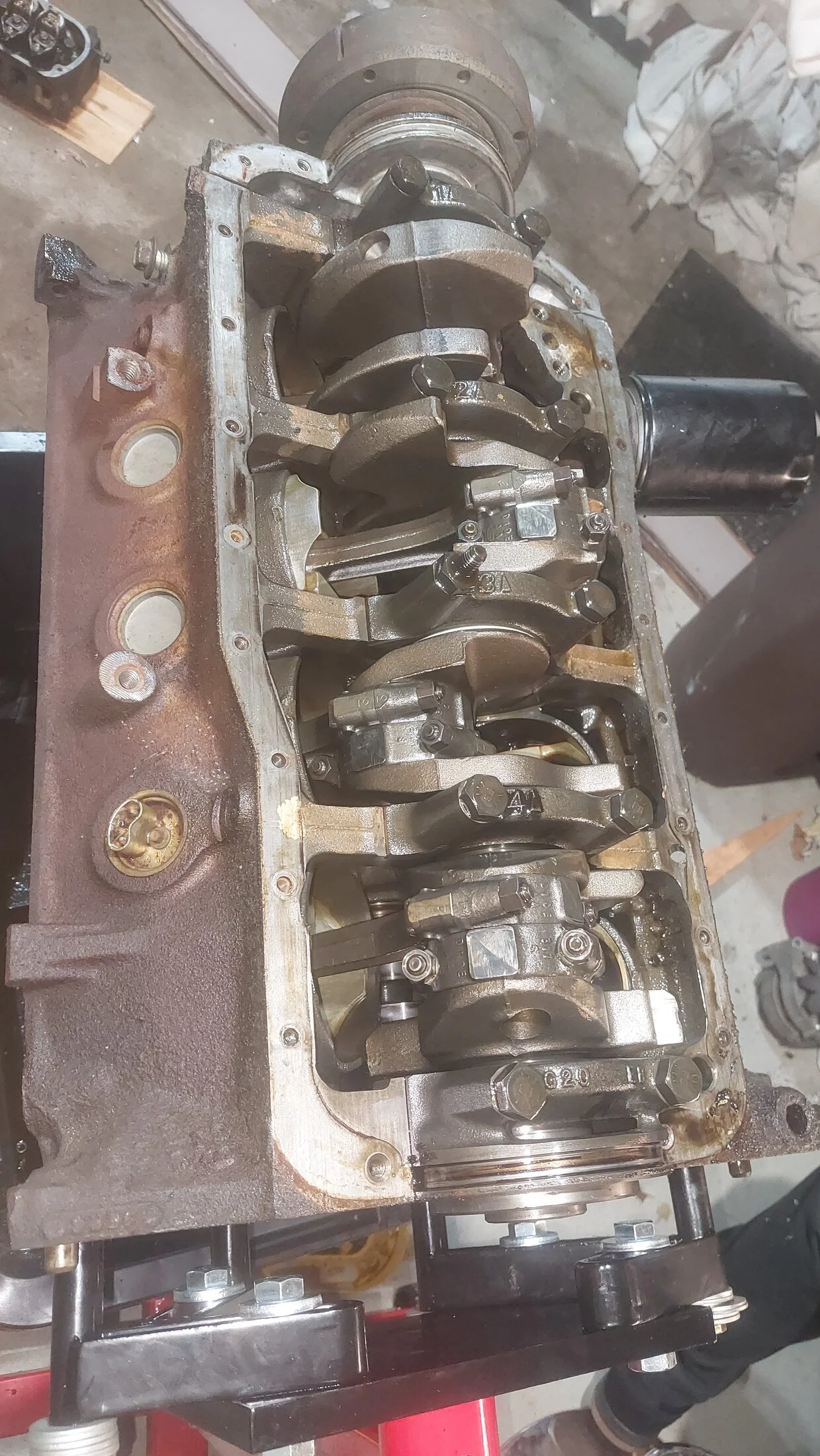
Things are progressing well! I found out that the caps and rods had cylinder numbers already stamped in to them which was very helpful. Not sure if it's from the factory or someone already dug in to the engine. Main caps are numbered too-- but that's factory.
The hydraulic lifter bores all look great. All the lifters came out smooth, no problem.
Haven't opened the main caps yet, but the piston cap and rod bearings all look great-- there's one or two where the copper color is showing slightly, but no gauges, or scrapes that I can feel with my nail.
The pistons all look uniformly worn with some wears on the sides, but no cracks/chips. The piston heads tilt easily on the rod. All the rings move freely.
The journals on the crank shaft look perfect.
The oil pan gasket was torn though-- perhaps over torqued or something. It was a black rubber gasket-- not sure if that was original from the factory.
All the gasket mating places look good and need minimal cleaning.
Only issue I see is on the passenger side of the block where the head goes, on the top side where I asked the question about the gasket 9 and 12 o'clock holes being blocked-- it looks like a casting defect. On one of the cylinders, there's an irregular area that's protruding cast iron-- not carbon. Almost looks like there was a hole there but was filled with a different material and not cleaned up. Doesn't look like a home job. Hole corresponds to the gasket hole. I was thinking of cleaning it up with a Dremmel to make it more flat with the rest of the surface. Thoughts?
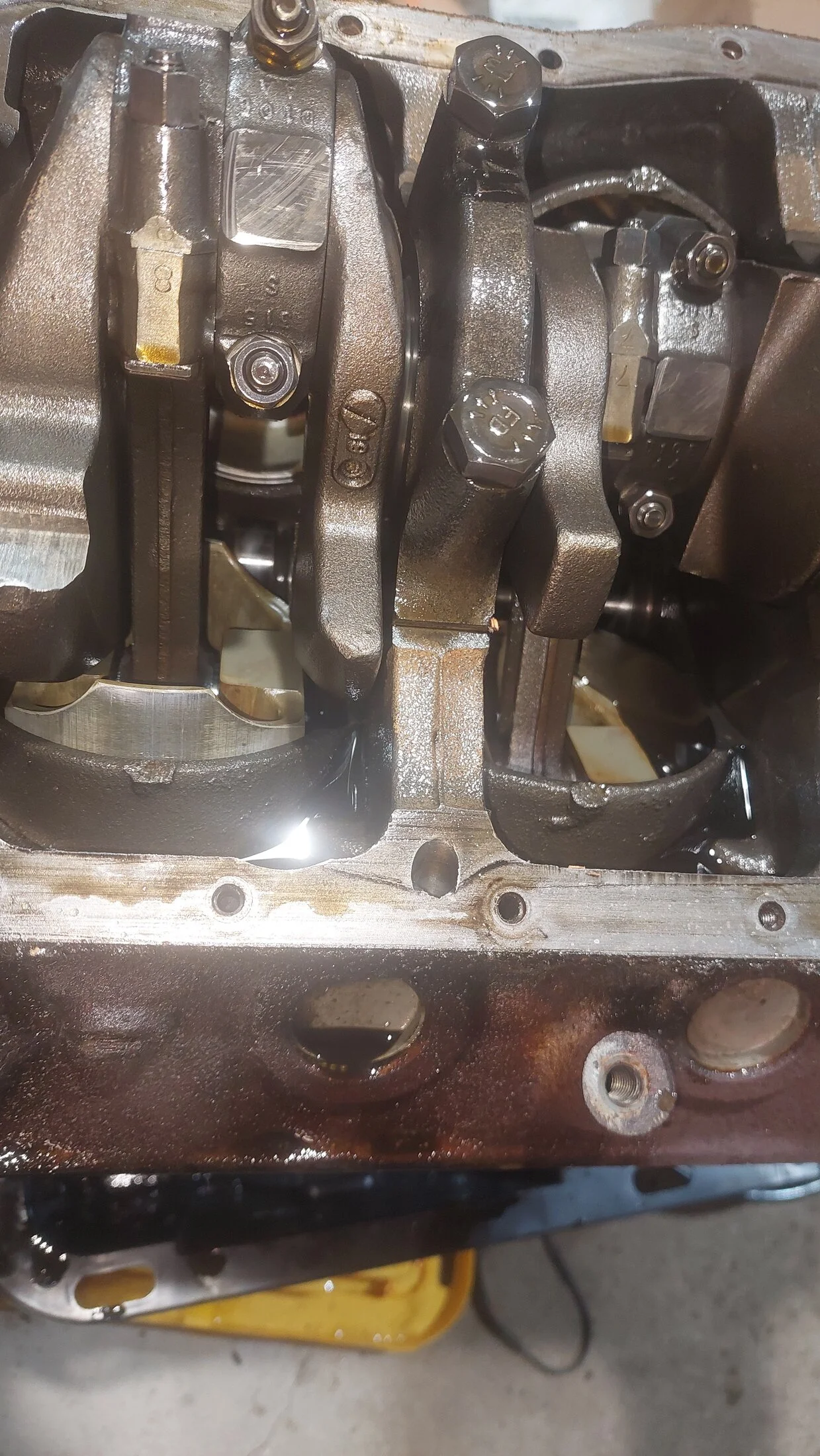
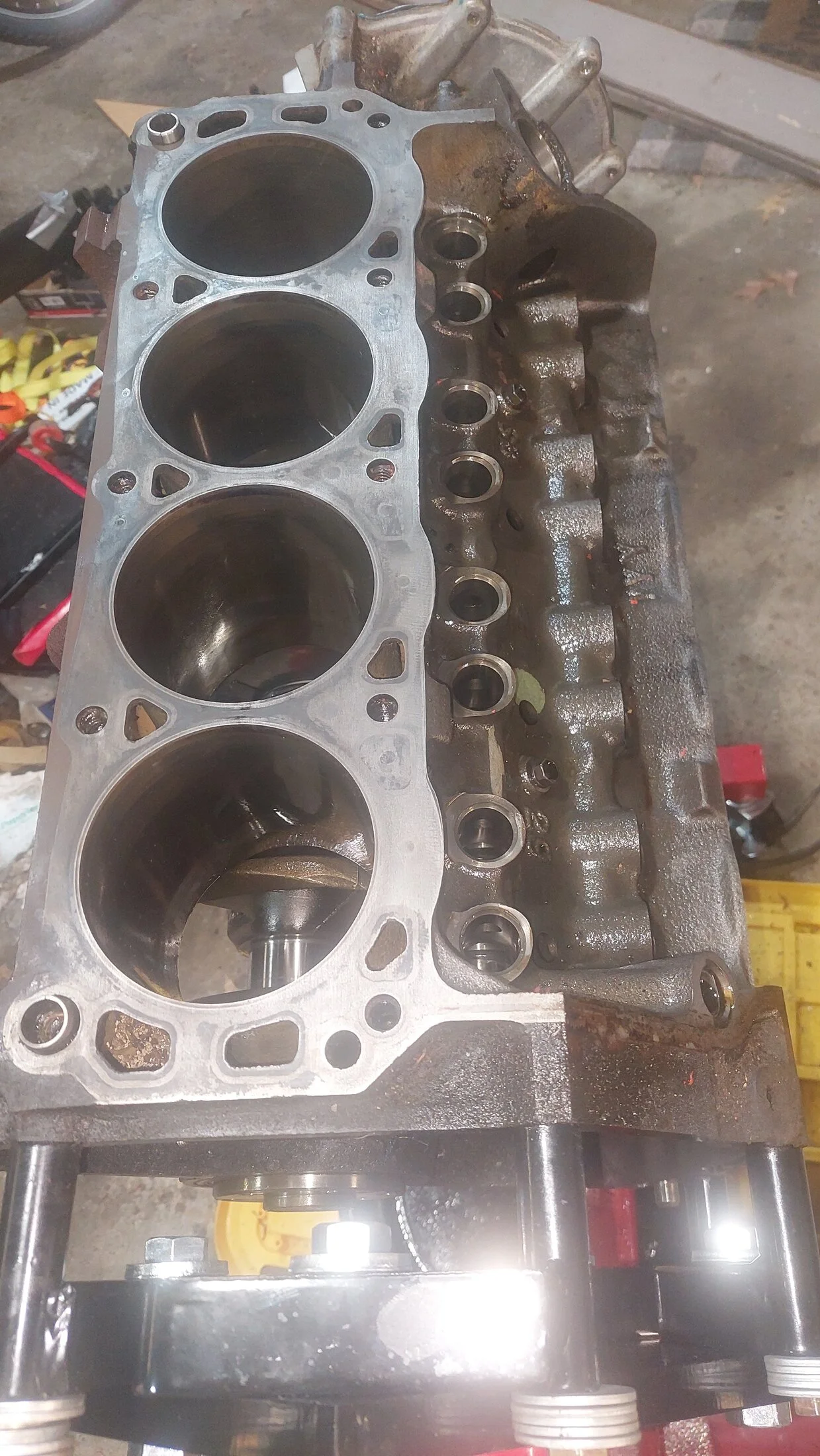
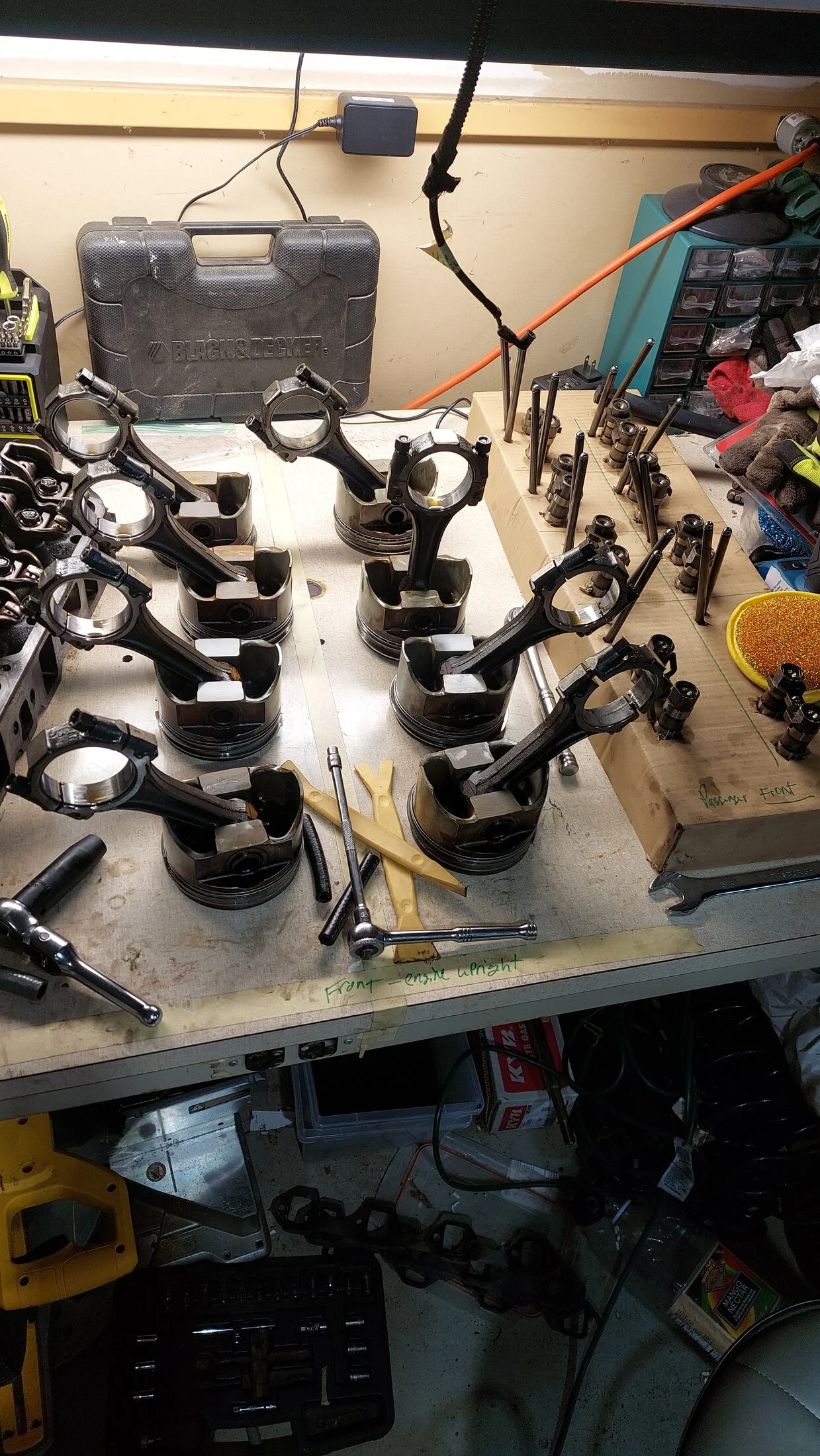
The hydraulic lifter bores all look great. All the lifters came out smooth, no problem.
Haven't opened the main caps yet, but the piston cap and rod bearings all look great-- there's one or two where the copper color is showing slightly, but no gauges, or scrapes that I can feel with my nail.
The pistons all look uniformly worn with some wears on the sides, but no cracks/chips. The piston heads tilt easily on the rod. All the rings move freely.
The journals on the crank shaft look perfect.
The oil pan gasket was torn though-- perhaps over torqued or something. It was a black rubber gasket-- not sure if that was original from the factory.
All the gasket mating places look good and need minimal cleaning.
Only issue I see is on the passenger side of the block where the head goes, on the top side where I asked the question about the gasket 9 and 12 o'clock holes being blocked-- it looks like a casting defect. On one of the cylinders, there's an irregular area that's protruding cast iron-- not carbon. Almost looks like there was a hole there but was filled with a different material and not cleaned up. Doesn't look like a home job. Hole corresponds to the gasket hole. I was thinking of cleaning it up with a Dremmel to make it more flat with the rest of the surface. Thoughts?
While taking photos, I tried using the feeler gauge to remove that spot and it seemed to work, so maybe there's hope for it yet- yesterday, break cleaner and nylon scraper didn't put a dent in it. However, you can still see the holes, on the one side of the block, look like they were filled with something at the factory.Would want to see a picture of the protrusion on the deck of the block before making any recommendations.
Attachments

Last edited:
Similar threads

- Replies
- 23
- Views
- 1K
- Replies
- 41
- Views
- 1K
- Replies
- 1
- Views
- 246

- Replies
- 17
- Views
- 534