Progress Thread Progress Thread- From6to8's 1994 Cobra Supercharger install

It should not be directly inline with another bung. You can move it past the connection too, if necessary.
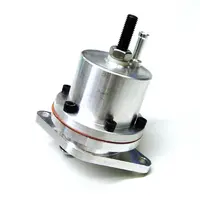
with this kirban style fuel pressure regulator that I have ( had it for quite some time), where would I tap in for the electric fuel pressure gauge that's going inside the car? I have a fp gauge at the fuel rails under the hood and don't see where on the fp regulator that I would tap in.

edit: disregard I will just remove the gauge at the fuel rail and put the sender there.

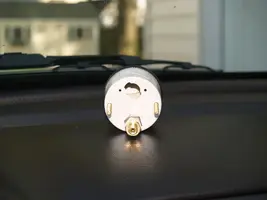
I do have another question about the boost gauge though. I've read do not use the plastic line that comes with the gauge but instead rubber or braided. It seems a lot use rubber and that's what I'll use. The pic is just in ref to my question about which brass nipple to use to connect? I saw an old thread from 2012 where a few said to use a brass nipple and with a barb.

Curious if the I.D. of the hose has to be the same as the plastic hose, looking at the inside of the stud on back of the gauge?
 

Attachments
  • Kirban and kirban style billet fuel pressure regulator.webp
    Kirban and kirban style billet fuel pressure regulator.webp
    35.1 KB · Views: 50
  • Rear of Boost gauge for reference using rubber hose and how to connect to vs using the plasti...webp
    Rear of Boost gauge for reference using rubber hose and how to connect to vs using the plasti...webp
    15.9 KB · Views: 57
Last edited:
saw another post somewhere where some said just get a hose size that will fit over the fitting on the guage. If I can run that to the front of my intake then that'll be perfect. There's a spot on the front of my upper that is capped.
 
I think that the "barb" you are talking about is this:


You run the hose from the back of the gauge to your intake manifold.

I did not use the clear hose. Instead, I used part of a roll of black vacuum line that I keep on-hand. I also included a small section of slightly larger hose that used to hold onto a metal orifice drilled out to 0.030 in. or something.

The barb in the link above includes this orifice and [Yes] you need a restrictor. Otherwise, your vac gauge becomes a vac leak.


There are different size orifices that allow you to 'tune' the gauge to make it smooth.

My gauge came [with] the tiny metal orifice.
 
I think that the "barb" you are talking about is this:


You run the hose from the back of the gauge to your intake manifold.

I did not use the clear hose. Instead, I used part of a roll of black vacuum line that I keep on-hand. I also included a small section of slightly larger hose that used to hold onto a metal orifice drilled out to 0.030 in. or something.

The barb in the link above includes this orifice and [Yes] you need a restrictor. Otherwise, your vac gauge becomes a vac leak.


There are different size orifices that allow you to 'tune' the gauge to make it smooth.

My gauge came [with] the tiny metal orifice.
is that restrictor only needed when not using the clear hose? Otherwise, I might just use the clear hose :D .

I don't need no extra headaches or things to worry about lol. Like tuning the gauge to make it smooth, finding the right orifice, ect.
 
is that restrictor only needed when not using the clear hose? Otherwise, I might just use the clear hose :D .

I don't need no extra headaches or things to worry about lol. Like tuning the gauge to make it smooth, finding the right orifice, ect.

I think you have to use it anyway. The hose is large enough to fit over the port on the gauge. That's too large [unless] the gauge has a restrictor already.

Refer to the instructions for the gauge.
 
is that restrictor only needed when not using the clear hose? Otherwise, I might just use the clear hose :D .

I don't need no extra headaches or things to worry about lol. Like tuning the gauge to make it smooth, finding the right orifice, ect.

I think you have to use it anyway. The hose is large enough to fit over the port on the gauge. That's too large [unless] the gauge has a restrictor already.

Refer to the instructions for the gauge.
 
I think you have to use it anyway. The hose is large enough to fit over the port on the gauge. That's too large [unless] the gauge has a restrictor already.

Refer to the instructions for the gauge.
Yeah I'll just do that and then call Auto meter with questions
 
That's why i was researching and no one said anything about having to run a restrictor. The first thread that I was in someone just said run a rubber hose and the guy asked just use a brass nipple and then the person replied yes .

No other information in that particular thread. Some of the other threads I didn't read anything special either
 
I think you have to use it anyway. The hose is large enough to fit over the port on the gauge. That's too large [unless] the gauge has a restrictor already.

Refer to the instructions for the gauge.
Just called autometer to ask them about using rubber or braided and he said they've been using the plastic for decades with no issues and they are designed for that environment. He also said they don't recommend rubber because they can collapse. Said folks use braided for I forgot what he said but that not for vacuum boost.

I guess all in all it's proof folks can and have used rubber with no issues but I'll stick with what comes with the gauge.. :D :D
 
Nothing wrong with the plastic tubing. Here you can see mine 't'd off from the B/R port. I coiled up the excess behind whatever that motor thing is:

Fox Boost Line.webp
Yes I'm going to run it. I just looked at my car and I was thinking about the port on the front of the intake but even if I were to do that running that plastic tube there would not work because it's going to kink I mean I would have to almost run it you know all over the front of the engine bay to where it would not kink and that will not work lol.

So your spot looks like the most logical and I did see some other people running it there earlier today when I did some research.

IMG_20251001_174738936_HDR.webp
 
The B/R port is usually capped off (not used), but that's where my FMU vacuum line goes to. Are you planning on running an FMU? If not, i think you can run the boost line off any other vacuum line (don't quote me on that though).
 
The B/R port is usually capped off (not used), but that's where my FMU vacuum line goes to. Are you planning on running an FMU? If not, i think you can run the boost line off any other vacuum line (don't quote me on that though).
No I'm not going to run an fmu. I was reading up on something where someone said there's a certain spot to run it to but I'm thinking Auto meters instructions should tell you which one to run it to or not necessarily? If not though I think that would be easy information to confirm
The B/R port is usually capped off (not used), but that's where my FMU vacuum line goes to. Are you planning on running an FMU? If not, i think you can run the boost line off any other vacuum line (don't quote me on that though).
You didn't want to cut that excess line?
 
Tbh ther instructions aren’t that great. More generalized not specific to the Mustang.

No I left excess lime just to be safe in case I damaged it or something.
 
Tbh ther instructions aren’t that great. More generalized not specific to the Mustang.

No I left excess lime just to be safe in case I damaged it or something.
Gotcha yeah I'll check it out real good when I go to install mine and see if I don't think it's going to be an issue I will probably just trim it. Matter of fact I might put something over that line to protect it I might put like a hard rubber hose line over it or something to kind of protect it a little bit. The portion that's going to be in the bay
 
The B/R port is usually capped off (not used), but that's where my FMU vacuum line goes to. Are you planning on running an FMU? If not, i think you can run the boost line off any other vacuum line (don't quote me on that though).

Is this where it tells you to run it?

Usually, the FMU goes [directly] to the manifold so that it's not affected by other things.
 
Is this where it tells you to run it?

Usually, the FMU goes [directly] to the manifold so that it's not affected by other things.
As for me though for mine I will see where the instructions tell me to run it if it even says or I will give them a call. I know reading up today a lot of guys have it ran where he has his but I'm not sure if they are running an fmu
 
Yes per the instructions the FMU goes to the vacuum tree B/R port.

@from6to8 good idea on wrapping the line that’s something I could do too.
Yeah definitely and now that I look at it again I definitely will have to wrap it with something. Even wrapping it with something something could still hit it and put pressure on it and break it so and I will even probably get a certain color too just to just so I will know. But definitely something like that means you can pretty much only work on your car and especially in that area because if anybody else ever does anything in that area or in general, they might not be as careful with it or you know it could inadvertently hit it and break it.

So I might even revisit actually using a rubber hose or braided line just to see but I will do a little more research