2 Questions......

Black Sun 5.0

Founding Member
Mar 23, 2002
1,337
0
36
L.I., N.Y.
So I've been hammering out a number of issues with my 90 GT. 2 quick questions:

1. What are the symptoms of a header gasket leak and how would I diagnose?
2. The charcoal canister has the gas tank line going into it, but there is no like going out. What does this connect to? Straight into intake?

Just as an FYI, the interior of the car wreaks of fumes when I drive it.

Thanks.
 
Charcoal canister plumbing - one 3/8" tube from the bottom of the upper manifold to the rubber hose. Rubber hose connects to one side of the canister solenoid valve. Other side of the solenoid valve connects to one side of the canister. The other side of the canister connects to a rubber hose that connects to a line that goes all the way back to the gas tank. There is an electrical connector coming from the passenger side injector harness near #1 injector that plugs into the canister solenoid valve. It's purpose is to vent the gas tank. The solenoid valve opens at cruse to provide some extra fuel. The canister is normally mounted on the passenger side frame rail near the smog pump pulley.

Connecting the gas tank vent line directly to the intake manifold will result in fuel vapor being constantly sucked into the intake manifold. There is unmetered fuel that the computer cannot adjust for. The result is poor idle and poor fuel economy.

attachment.php?attachmentid=58191&stc=1&d=1241921055.gif


It does not weigh but a pound or so and helps richen up the cruse mixture. It draws no HP & keeps the car from smelling like gasoline in a closed garage. So with all these good things and no bad ones, why not hook it up & use it?


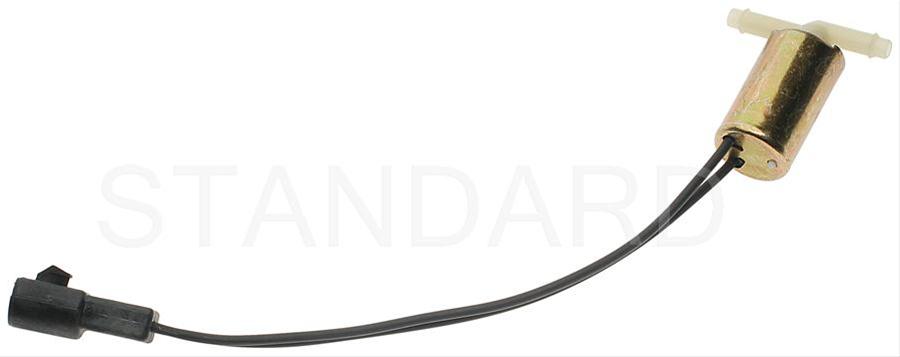
The purge valve solenoid connector is a dangling wire that is near the ECT sensor and oil filler on the passenger side rocker cover. The actual solenoid valve is down next to the carbon canister. There is about 12"-16" of wire that runs parallel to the canister vent hose that comes off the bottom side of the upper intake manifold. That hose connects one port of the solenoid valve; the other port connects to the carbon canister.

The purge valve solenoid should be available at your local auto parts store.

Purge valve solenoid:
smp-cp402_df_xl.jpg


The carbon canister is normally mounted on the passenger side frame rail near the smog pump pulley.
Carbon Canister:
903_AIRTEX%20_pct_2F%20WELLS_7310014_1.jpg
 
So I've been hammering out a number of issues with my 90 GT. 2 quick questions:

1. What are the symptoms of a header gasket leak and how would I diagnose?
2. The charcoal canister has the gas tank line going into it, but there is no like going out. What does this connect to? Straight into intake?

Just as an FYI, the interior of the car wreaks of fumes when I drive it.

Thanks.

symptoms of a Header gasket leak are
1. tapping/ticking noise coming from the area
2. car runs lean
3. Possible codes thrown for running lean
4. car can run hotter

Easiest way to tell is go to each side of the motor and listen for a noise that sounds like a ticking or tapping coming from the header. If you have room you can also take a piece of paper and place i around the header flange- if you have a leak the escaping gas will move the paper.

jrichker covered the charcoal cannister- you should hook the hose back up to the dedicated vacuum source on the intake with the solenoid.
 
Exactly what I was looking for. What size is the rubber hose? I'm hopeful that I'm onto solving the stink issue inside my car. Thanks.

Charcoal canister plumbing - one 3/8" tube from the bottom of the upper manifold to the rubber hose. Rubber hose connects to one side of the canister solenoid valve. Other side of the solenoid valve connects to one side of the canister. The other side of the canister connects to a rubber hose that connects to a line that goes all the way back to the gas tank. There is an electrical connector coming from the passenger side injector harness near #1 injector that plugs into the canister solenoid valve. It's purpose is to vent the gas tank. The solenoid valve opens at cruse to provide some extra fuel. The canister is normally mounted on the passenger side frame rail near the smog pump pulley.

Connecting the gas tank vent line directly to the intake manifold will result in fuel vapor being constantly sucked into the intake manifold. There is unmetered fuel that the computer cannot adjust for. The result is poor idle and poor fuel economy.

attachment.php?attachmentid=58191&stc=1&d=1241921055.gif


It does not weigh but a pound or so and helps richen up the cruse mixture. It draws no HP & keeps the car from smelling like gasoline in a closed garage. So with all these good things and no bad ones, why not hook it up & use it?


The purge valve solenoid connector is a dangling wire that is near the ECT sensor and oil filler on the passenger side rocker cover. The actual solenoid valve is down next to the carbon canister. There is about 12"-16" of wire that runs parallel to the canister vent hose that comes off the bottom side of the upper intake manifold. That hose connects one port of the solenoid valve; the other port connects to the carbon canister.

The purge valve solenoid should be available at your local auto parts store.

Purge valve solenoid:
smp-cp402_df_xl.webp


The carbon canister is normally mounted on the passenger side frame rail near the smog pump pulley.
Carbon Canister:
903_AIRTEX%20_pct_2F%20WELLS_7310014_1.webp
 
The hose that connects to the metal tube under the upper intake manifold is 3/8" and the hose that connects to the purge solenoid is 5/16". Go figure - you need a sleeve or something to make the 2different size pieces of hose to connect to each other...