
i have a 91 mustang with a 342. i am wanting to know if anybody can tell me what might be wrong. the problem i am having is at about 2000 rpm my car starts to sputter and then makes 2 loud pops from what sounds like its coming from the bottom of the motor and then just takes the heck off like it is suppose to. any suggestion would be appreciated. i want to maybe narrow down what it could be. and what should my timing be set at i have at 10* btdc
You are using an out of date browser. It may not display this or other websites correctly.
You should upgrade or use an alternative browser.
You should upgrade or use an alternative browser.
91 mustang pops at about 2000 rpm
- Thread starter rainey27
- Start date

5.0 Mustangs stock timing with 87 octane is 10*. You can use up to 14*, but in most cases, that will require a higher octane gasoline.
Carb or EFI?
If EFI, what size injectors are you running, what is the MAF size & make, is the MAF designed to work with the size injectors you have?
Fuel pump size, fuel pressure?
Cold Air Intake? Are you pulling air from the fenderwell or engine compartment?
Aftermarket ignition system?
Carb or EFI?
If EFI, what size injectors are you running, what is the MAF size & make, is the MAF designed to work with the size injectors you have?
Fuel pump size, fuel pressure?
Cold Air Intake? Are you pulling air from the fenderwell or engine compartment?
Aftermarket ignition system?
i am running 93 octane, efi, 30lb injectors, cold air intake in engine compartment, ford maf sensor was told it was a 70 mm but not sure. are you able to reprogram maf sensors? oh fuel pump is aftermarket at wot my fuel pressure is 40 because i have a stock fuel regulator on my fuel rail. I have a msd box, aftermarket coil pack, stock distributor.
Let me guess: you brough someone's project car that had a bargin price tag on it.
I hope that you have some automotive fixit smarts, 'cause I'm fixing to overflow your bucket if you don't.
Cold air intake that pulls air from the engine compartment is a problem. ALL cold air intakes need to pull air from the inner fenderwell. The air in the engine compartment isn't cold, it is hot. The turbulence from the fan causes airflow problems with the MAF, and that causes uneven changes in the air/fuel ratio. Car runs ragged and has odd spits and spurts.
There never has been a 70 MM Ford OEM MAF made to run with 30 LB injectors. Check the MAF housing and sensor for part numbers and post them
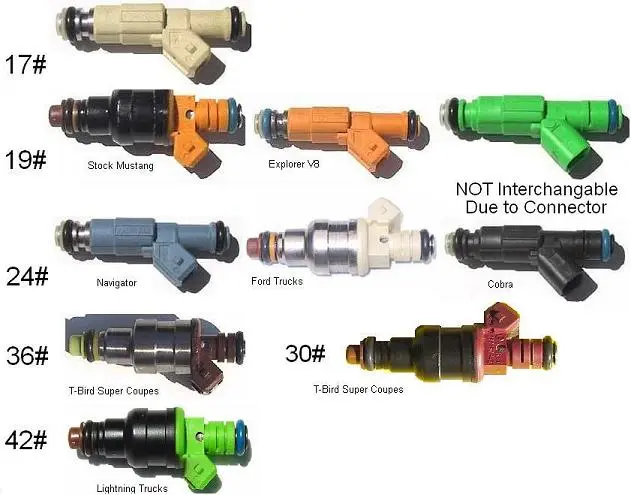
Check the injector colors against the following chart.
Fuel injector sizing & injector photos
Revised 20-May-2011 to add MAF and custom tune requirements for use with larger injectors
Injector HP ratings: divide flow rating by.5 and multiply the result by the number of injectors. This uses a 100% duty cycle. These ratings are for naturally aspirated engines at the flywheel.
Example:
19/.5 = 38, 38 x 8 = 304 HP
24/.5 = 48, 48 x 8 = 384 HP
30/.5 = 60, 60 x 8 = 480 HP
The preferred duty cycle is about 85% maximum, so for a safety factor multiply the final figure times .85.
19/.5 = 38, 38 x 8 = 304 HP x .85 = 258 HP
24/.5 = 48, 48 x 8 = 384 HP x .85 = 326 HP
30/.5 = 60, 60 x 8 = 480 HP x .85 = 408 HP
Remember that the above ratings are at 39 PSI. Increasing the pressure will effectively increase the flow rating. Example: a 19 lb injector will flow 24 lbs at 63 PSI, and a 24 lb injector will flow 30 lbs at 63 PSI.
See Automotive Performance Software / Interactive Calculators to get the calculators used in these examples.
Here's the duty cycle explanation. Duty cycle is how much of the time the intake is open the injectors are turned on. The 85% figure means that for 85% of the time the intake valve is open, the injectors are spraying. The idea is that you want some percentage of the duty cycle left over so that you have some room to grow the process.
If you are at 100% and you need more fuel, all you can do is turn up the fuel pressure. That means the whole fuel curve from idle to WOT is affected. Maybe you are already too rich at idle, and turning up the fuel pressure makes it worse. If you had some injector duty cycle left to play with, a custom tune could use that where it is needed. That would not over richen the whole range from idle to WOT.
With larger than stock injectors or higher that stock fuel pressure, you will need an aftermarket MAF that matches the injector size. The MAF ’lies” to the computer to get a fuel delivery schedule that meets the engine’s needs and isn’t too rich or too lean. The best strategy is an aftermarket MAF and a custom tune to insure the best air/fuel ratio over all the RPM range.
Don't forget to increase the fuel pump size with you increase injector size or significantly increase the fuel pressure
Diagram courtesy of Tmoss & Stang&2birds
See the following website for some help from Tmoss (diagram designer) & Stang&2Birds (website host) for help on 88-95 wiring Mustang FAQ - Wiring & Engine Info Everyone should bookmark this site.
Ignition switch wiring
http://www.veryuseful.com/mustang/tech/engine/images/IgnitionSwitchWiring.gif
Fuel, alternator, A/C and ignition wiring
http://www.veryuseful.com/mustang/tech/engine/images/fuel-alt-links-ign-ac.gif
Complete computer, actuator & sensor wiring diagram for 88-91 Mass Air Mustangs
http://www.veryuseful.com/mustang/tech/engine/images/88-91_5.0_EEC_Wiring_Diagram.gif
Vacuum diagram 89-93 Mustangs
http://www.veryuseful.com/mustang/tech/engine/images/mustangFoxFordVacuumDiagram.jpg
HVAC vacuum diagram
http://www.veryuseful.com/mustang/tech/engine/images/Mustang_AC_heat_vacuum_controls.gif
TFI module differences & pinout
http://www.veryuseful.com/mustang/tech/engine/images/TFI_5.0_comparison.gif
Fuse box layout
http://www.veryuseful.com/mustang/tech/engine/images/MustangFuseBox.gif
Dumping the computer diagnostic codes on 86-95 Mustangs
Revised 26-July-2011. Added need to make sure the clutch is pressed when dumping codes.
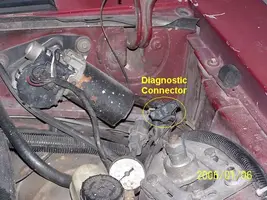
Here's the way to dump the computer codes with only a jumper wire or paper clip and the check engine light, or test light or voltmeter. I’ve used it for years, and it works great. You watch the flashing test lamp or Check Engine Light and count the flashes.
Post the codes you get and I will post 86-93 model 5.0 Mustang specific code definitions and fixes. I do not have a complete listing for 94-95 model 5.0 Mustangs at this time.
Be sure to turn off the A/C, and put the transmission in neutral when dumping the codes. On a manual transmission car, be sure to press the clutch to the floor.
Fail to do this and you will generate a code 67 and not be able to dump the Engine Running codes.
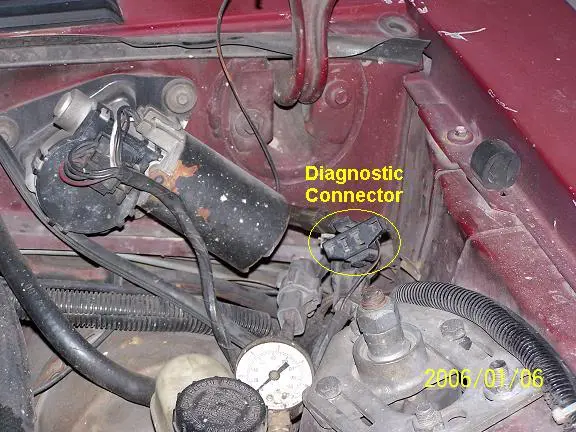
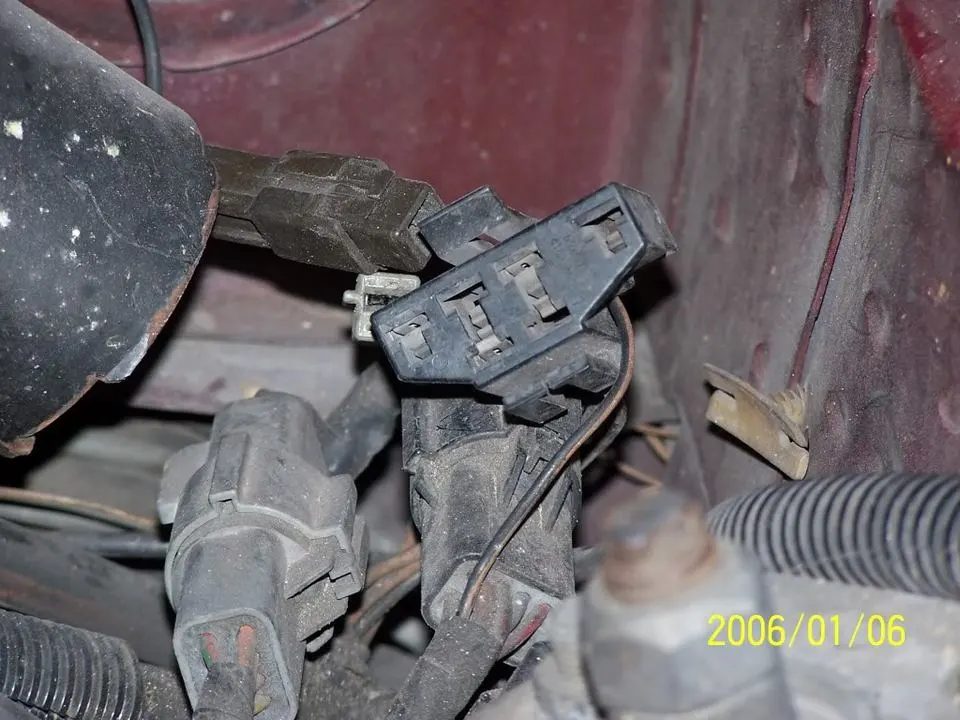
If your car is an 86-88 stang, you'll have to use the test lamp or voltmeter method. There is no functional check engine light on the 86-88's except possibly the Cali Mass Air cars.

The STI has a gray connector shell and a white/red wire. It comes from the same bundle of wires as the self test connector.
89 through 95 cars have a working Check Engine light. Watch it instead of using a test lamp.

The STI has a gray connector shell and a white/red wire. It comes from the same bundle of wires as the self test connector.
WARNING!!! There is a single dark brown connector with a black/orange wire. It is the 12 volt power to the under the hood light. Do not jumper it to the computer test connector. If you do, you will damage the computer.
What to expect:
You should get a code 11 (two single flashes in succession). This says that the computer's internal workings are OK, and that the wiring to put the computer into diagnostic mode is good. No code 11 and you have some wiring problems. This is crucial: the same wire that provides the ground to dump the codes provides signal ground for the TPS, EGR, ACT and Map/Baro sensors. If it fails, you will have poor performance, economy and driveablity problems
Some codes have different answers if the engine is running from the answers that it has when the engine isn't running. It helps a lot to know if you had the engine running when you ran the test.
Dumping the Engine Running codes: The procedure is the same, you start the engine with the test jumper in place. Be sure the A/C is off, and clutch (if present) is pressed to the floor, and the transmission is in neutral. You'll get an 11, then a 4 and the engine will speed up to do the EGR test. After the engine speed decreases back to idle, it will dump the engine running codes.
Trouble codes are either 2 digit or 3 digit, there are no cars that use both 2 digit codes and 3 digit codes.
Alternate methods:
For those who are intimidated by all the wires & connections, see Actron® for what a typical hand scanner looks like. Normal retail price is about $30 or so at AutoZone or Wal-Mart.
Or for a nicer scanner see Equus - Digital Ford Code Reader (3145) – It has a 3 digit LCD display so that you don’t have to count flashes or beeps.. Cost is $30.
Or for a nicer scanner see http://www.midwayautosupply.com/p-7208-equus-digital-ford-code-reader-3145.aspx– It has a 3 digit LCD display so that you don’t have to count flashes or beeps.. Cost is $30.
I hope that you have some automotive fixit smarts, 'cause I'm fixing to overflow your bucket if you don't.
Cold air intake that pulls air from the engine compartment is a problem. ALL cold air intakes need to pull air from the inner fenderwell. The air in the engine compartment isn't cold, it is hot. The turbulence from the fan causes airflow problems with the MAF, and that causes uneven changes in the air/fuel ratio. Car runs ragged and has odd spits and spurts.
There never has been a 70 MM Ford OEM MAF made to run with 30 LB injectors. Check the MAF housing and sensor for part numbers and post them
Check the injector colors against the following chart.
Fuel injector sizing & injector photos
Revised 20-May-2011 to add MAF and custom tune requirements for use with larger injectors
Injector HP ratings: divide flow rating by.5 and multiply the result by the number of injectors. This uses a 100% duty cycle. These ratings are for naturally aspirated engines at the flywheel.
Example:
19/.5 = 38, 38 x 8 = 304 HP
24/.5 = 48, 48 x 8 = 384 HP
30/.5 = 60, 60 x 8 = 480 HP
The preferred duty cycle is about 85% maximum, so for a safety factor multiply the final figure times .85.
19/.5 = 38, 38 x 8 = 304 HP x .85 = 258 HP
24/.5 = 48, 48 x 8 = 384 HP x .85 = 326 HP
30/.5 = 60, 60 x 8 = 480 HP x .85 = 408 HP
Remember that the above ratings are at 39 PSI. Increasing the pressure will effectively increase the flow rating. Example: a 19 lb injector will flow 24 lbs at 63 PSI, and a 24 lb injector will flow 30 lbs at 63 PSI.
See Automotive Performance Software / Interactive Calculators to get the calculators used in these examples.
Here's the duty cycle explanation. Duty cycle is how much of the time the intake is open the injectors are turned on. The 85% figure means that for 85% of the time the intake valve is open, the injectors are spraying. The idea is that you want some percentage of the duty cycle left over so that you have some room to grow the process.
If you are at 100% and you need more fuel, all you can do is turn up the fuel pressure. That means the whole fuel curve from idle to WOT is affected. Maybe you are already too rich at idle, and turning up the fuel pressure makes it worse. If you had some injector duty cycle left to play with, a custom tune could use that where it is needed. That would not over richen the whole range from idle to WOT.
With larger than stock injectors or higher that stock fuel pressure, you will need an aftermarket MAF that matches the injector size. The MAF ’lies” to the computer to get a fuel delivery schedule that meets the engine’s needs and isn’t too rich or too lean. The best strategy is an aftermarket MAF and a custom tune to insure the best air/fuel ratio over all the RPM range.
Don't forget to increase the fuel pump size with you increase injector size or significantly increase the fuel pressure
Diagram courtesy of Tmoss & Stang&2birds
See the following website for some help from Tmoss (diagram designer) & Stang&2Birds (website host) for help on 88-95 wiring Mustang FAQ - Wiring & Engine Info Everyone should bookmark this site.
Ignition switch wiring
http://www.veryuseful.com/mustang/tech/engine/images/IgnitionSwitchWiring.gif
Fuel, alternator, A/C and ignition wiring
http://www.veryuseful.com/mustang/tech/engine/images/fuel-alt-links-ign-ac.gif
Complete computer, actuator & sensor wiring diagram for 88-91 Mass Air Mustangs
http://www.veryuseful.com/mustang/tech/engine/images/88-91_5.0_EEC_Wiring_Diagram.gif
Vacuum diagram 89-93 Mustangs
http://www.veryuseful.com/mustang/tech/engine/images/mustangFoxFordVacuumDiagram.jpg
HVAC vacuum diagram
http://www.veryuseful.com/mustang/tech/engine/images/Mustang_AC_heat_vacuum_controls.gif
TFI module differences & pinout
http://www.veryuseful.com/mustang/tech/engine/images/TFI_5.0_comparison.gif
Fuse box layout
http://www.veryuseful.com/mustang/tech/engine/images/MustangFuseBox.gif
Dumping the computer diagnostic codes on 86-95 Mustangs
Revised 26-July-2011. Added need to make sure the clutch is pressed when dumping codes.
Here's the way to dump the computer codes with only a jumper wire or paper clip and the check engine light, or test light or voltmeter. I’ve used it for years, and it works great. You watch the flashing test lamp or Check Engine Light and count the flashes.
Post the codes you get and I will post 86-93 model 5.0 Mustang specific code definitions and fixes. I do not have a complete listing for 94-95 model 5.0 Mustangs at this time.
Be sure to turn off the A/C, and put the transmission in neutral when dumping the codes. On a manual transmission car, be sure to press the clutch to the floor.
Fail to do this and you will generate a code 67 and not be able to dump the Engine Running codes.
If your car is an 86-88 stang, you'll have to use the test lamp or voltmeter method. There is no functional check engine light on the 86-88's except possibly the Cali Mass Air cars.
The STI has a gray connector shell and a white/red wire. It comes from the same bundle of wires as the self test connector.
89 through 95 cars have a working Check Engine light. Watch it instead of using a test lamp.
The STI has a gray connector shell and a white/red wire. It comes from the same bundle of wires as the self test connector.
WARNING!!! There is a single dark brown connector with a black/orange wire. It is the 12 volt power to the under the hood light. Do not jumper it to the computer test connector. If you do, you will damage the computer.
What to expect:
You should get a code 11 (two single flashes in succession). This says that the computer's internal workings are OK, and that the wiring to put the computer into diagnostic mode is good. No code 11 and you have some wiring problems. This is crucial: the same wire that provides the ground to dump the codes provides signal ground for the TPS, EGR, ACT and Map/Baro sensors. If it fails, you will have poor performance, economy and driveablity problems
Some codes have different answers if the engine is running from the answers that it has when the engine isn't running. It helps a lot to know if you had the engine running when you ran the test.
Dumping the Engine Running codes: The procedure is the same, you start the engine with the test jumper in place. Be sure the A/C is off, and clutch (if present) is pressed to the floor, and the transmission is in neutral. You'll get an 11, then a 4 and the engine will speed up to do the EGR test. After the engine speed decreases back to idle, it will dump the engine running codes.
Trouble codes are either 2 digit or 3 digit, there are no cars that use both 2 digit codes and 3 digit codes.
Alternate methods:
For those who are intimidated by all the wires & connections, see Actron® for what a typical hand scanner looks like. Normal retail price is about $30 or so at AutoZone or Wal-Mart.
Or for a nicer scanner see Equus - Digital Ford Code Reader (3145) – It has a 3 digit LCD display so that you don’t have to count flashes or beeps.. Cost is $30.
Or for a nicer scanner see http://www.midwayautosupply.com/p-7208-equus-digital-ford-code-reader-3145.aspx– It has a 3 digit LCD display so that you don’t have to count flashes or beeps.. Cost is $30.
Attachments
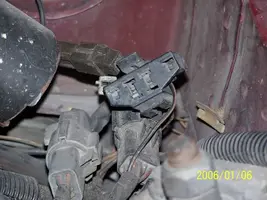
The MAF is a 70 MM unit designed to run on the following cars:
MAF & sensor interchange:
The 94-95 Mustang 5.0 MAF & sensor is also found on:
1995-94 Mustang 3.8L F2VF-12B579-A2A,
1994-92 Crown Victoria 4.6L F2VF-12B579-A2A,
1995-94 Mustang, Mustang Cobra 5.0L F2VF-12B579-A2A,
1994-92 Town Car 4.6L F2VF-12B579-A2A,
1994-92 Grand Marquis 4.6L F2VF-12B579-A2A,
Evidently the –A1A, -A2A, AA, etc. on the end of the part number is a minor variant that did not change the operating specs. You should be able to ignore it and have everything work good.
On 5.0 Mustangs the above MAF was used in conjuction with 19 LB injectors.
If you want or need 30 lb injectors, you will need an aftermarket MAF assembly. Plan on spending $250-$350 for a good MAF to match your combo.
MAF & sensor interchange:
The 94-95 Mustang 5.0 MAF & sensor is also found on:
1995-94 Mustang 3.8L F2VF-12B579-A2A,
1994-92 Crown Victoria 4.6L F2VF-12B579-A2A,
1995-94 Mustang, Mustang Cobra 5.0L F2VF-12B579-A2A,
1994-92 Town Car 4.6L F2VF-12B579-A2A,
1994-92 Grand Marquis 4.6L F2VF-12B579-A2A,
Evidently the –A1A, -A2A, AA, etc. on the end of the part number is a minor variant that did not change the operating specs. You should be able to ignore it and have everything work good.
On 5.0 Mustangs the above MAF was used in conjuction with 19 LB injectors.
If you want or need 30 lb injectors, you will need an aftermarket MAF assembly. Plan on spending $250-$350 for a good MAF to match your combo.
My buddy had the same motor and same problem but it was carb we went through hell figuring it out. We put a new distributor rebuilt the carb reringed it new bearings cause it sounded like a rattle in the bottom end. It turned out to be two inside springs in his double valve springs broke. Put new valve springs on and ran like a champ
My buddy had the same motor and same problem but it was carb we went through hell figuring it out. We put a new distributor rebuilt the carb reringed it new bearings cause it sounded like a rattle in the bottom end. It turned out to be two inside springs in his double valve springs broke. Put new valve springs on and ran like a champ
A vaccum gauge will often pick up indications of broken valve springs. Look for the vaccum gauge to sweep 5"-10" at 1000-1200 RPM.
i had the heads off it about a month ago and i look at them there are good. because the motor i have in there now is doin the same thing as the stock motor. i think it is the maf sensor beings that i had 30lb injectors with just a cam in the stock motor.
Similar threads
- Replies
- 41
- Views
- 842
Forced Induction
On3 Turbo Kit- Parts list NEEDED - 302 Stock Motor
- Replies
- 21
- Views
- 1K
- Replies
- 16
- Views
- 1K
- Replies
- 4
- Views
- 349

- Replies
- 6
- Views
- 353
