

You are using an out of date browser. It may not display this or other websites correctly.
You should upgrade or use an alternative browser.
You should upgrade or use an alternative browser.
Progress Thread Let's try this again...
- Thread starter Alldegree
- Start date

I think I did the test, hopefully I did it correctly.Voltage drop test on the starter cable.
I connected one multimeter lead to the starter post on the solenoid, and the other to the terminal on the starter motor.
The meter indicated continuity, so the connections were good, but there was no voltage with the key in any position.
There’s continuity between the posts on the solenoid and they read 12.7v even with the car turned off. The quick research I’ve done says that means the solenoid is good, so does that mean my starter is bad?
Edit: Actually, now I’m wondering if it’s my clutch switch, because the car behaves just like it would if somebody hadn’t depressed the clutch pedal all the way before turning the key. I’ll have to figure out how to check that.
Last edited:
you have to post something, which you have done, and it gets approved after a stringent background check and then you can move about the plane ahh, er, site and as you participate you get access to more 'doors'I am unable to read this article. It tells me:
"You do not have permission to read the full content..."
you should be good to go,
Let me ramble on a little here, if the cables are old or appear dark, replace, I'd replace the starter also or at least get it checked, don't know how old/used or even sized correctly (cable size).
A bad cable/connections will trash a starter really fast, same with a bad starter can trash a stock size cable in short order too.
Last edited:
Thanks for sharing that thread, I’ll check all that out next weekend.You want to see what voltage is reaching the starter through the cableyou have to post something, which you have done, and it gets approved after a stringent background check and then you can move about the plane ahh, er, site and as you participate you get access to more 'doors'I am unable to read this article. It tells me:
"You do not have permission to read the full content..."
you should be good to go,
Let me ramble on a little here, if the cables are old or appear dark, replace, I'd replace the starter also or at least get it checked, don't know how old/used or even sized correctly (cable size).
A bad cable/connections will trash a starter really fast, same with a bad starter can trash a stock size cable in short order too.
The starter and battery cables do look worse for wear, and I think are routed improperly, so I’ll take your advice and replace them next weekend. I have a new mini starter ready to install as well.
I’ve noticed that my fan controller isn’t getting power anymore either, so that’s also happening. I checked all the relevant fuses, replaced one that looked sketchy, and nothing changed. So I’ll be troubleshooting that next weekend as well.
I picked up a new solenoid at O’reilly just to see if that would make a difference. It didn’t.

I suspect sketchy wire connections. If that is what you discover, I want to show you these now:
The starter solenoid is a link in the power supply chain, they are pretty robust and rarely fail, when they do I've found that the battery, cables and starter are sketchy and abused.
I did the mechanical and some wiring on old junk years ago and I learned real quick about what low voltage supply can do to parts.
Oh, in the link at the bottom of my signature is my repair thread, it says 'progress ' thread although it's sloooow progress.
I detailed the starter cable upgrade with the mini starter.
I did the mechanical and some wiring on old junk years ago and I learned real quick about what low voltage supply can do to parts.
Oh, in the link at the bottom of my signature is my repair thread, it says 'progress ' thread although it's sloooow progress.
I detailed the starter cable upgrade with the mini starter.
Last edited:
Added to my wishlist, thanks. I used the crimp butt connectors with heat shrink, and I tried to really crimp the ends, but I guess I didn’t eat my wheaties that morning.I suspect sketchy wire connections. If that is what you discover, I want to show you these now:
That’s likely why I’ve been burning through solenoids, I’ll definitely replace the starter this weekend as well.The starter solenoid is a link in the power supply chain, they are pretty robust and rarely fail, when they do I've found that the battery, cables and starter are sketchy and abused.

Not much progress so far this weekend.
I pulled out the old starter, which was a pain in and of itself. Then I noticed water dripping on the floor and traced it to the thermostat housing.
I pulled off the housing and it looked like this:
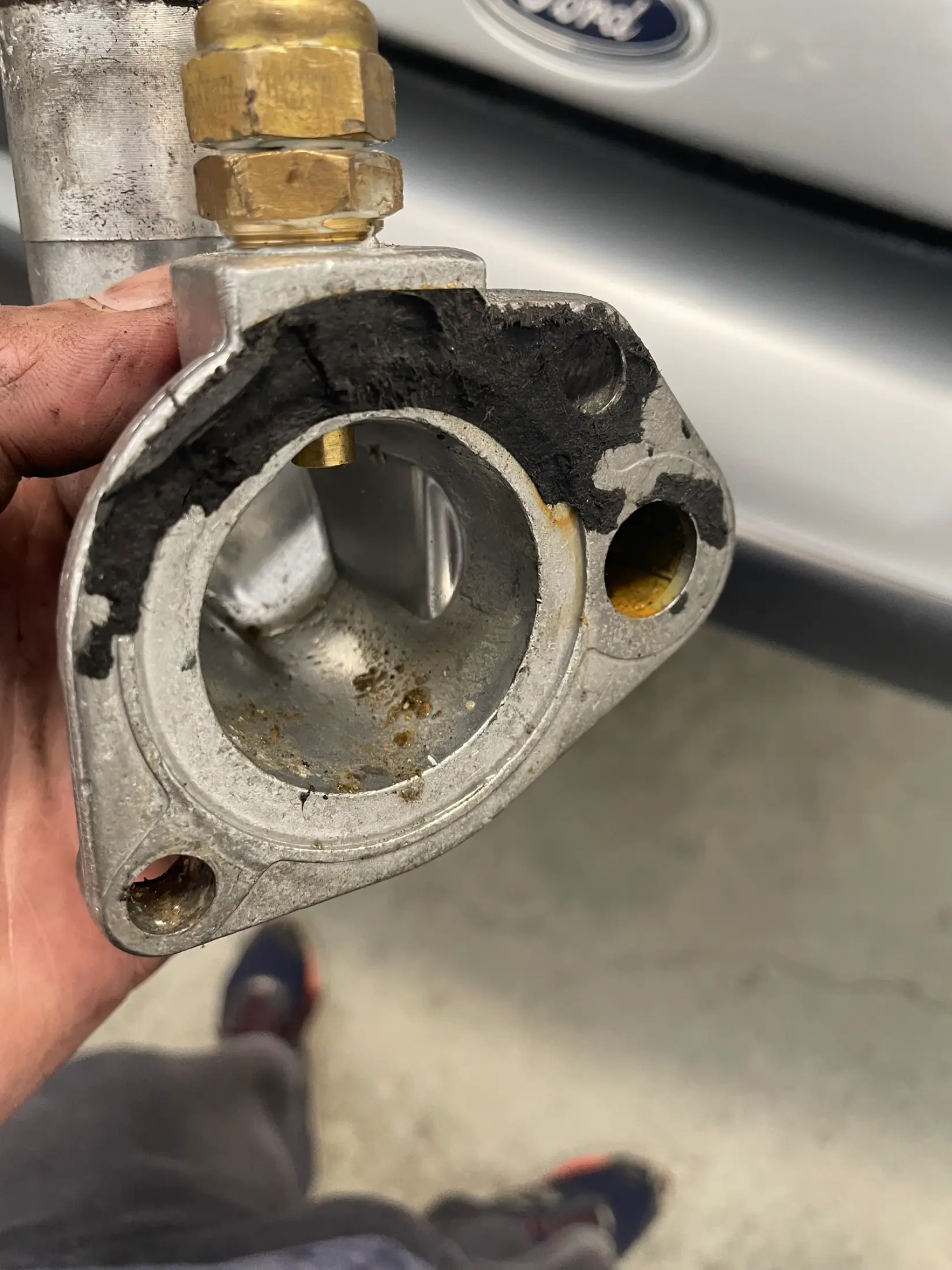
I think what happened is the thermostat fell down when I was installing it, which caused water to seep into the gasket and make it dissolve. Are these gaskets supposed to be made out of paper?
In any case, I scraped the remaining gasket off the manifold and housing and am now looking for a new gasket, and a way to keep the thermostat in place during installation. Some people recommend spraying an adhesive on the thermostat to make it stick to the housing surface, but that seems like it would make it hard to replace in the future. Others mentioned axel grease, but I don’t think I want that in the cooling system. I need something temporary that’s also water soluble, I think.
Also for the gasket, what should I look for? Oreilly only had Felpro and Murray and they both looked like paper gaskets. Mr gasket makes one that has a rubber insert which looks like it would seal better, but I’d have to order it. Ditto the one from Motorcraft.
I pulled out the old starter, which was a pain in and of itself. Then I noticed water dripping on the floor and traced it to the thermostat housing.
I pulled off the housing and it looked like this:
I think what happened is the thermostat fell down when I was installing it, which caused water to seep into the gasket and make it dissolve. Are these gaskets supposed to be made out of paper?
In any case, I scraped the remaining gasket off the manifold and housing and am now looking for a new gasket, and a way to keep the thermostat in place during installation. Some people recommend spraying an adhesive on the thermostat to make it stick to the housing surface, but that seems like it would make it hard to replace in the future. Others mentioned axel grease, but I don’t think I want that in the cooling system. I need something temporary that’s also water soluble, I think.
Also for the gasket, what should I look for? Oreilly only had Felpro and Murray and they both looked like paper gaskets. Mr gasket makes one that has a rubber insert which looks like it would seal better, but I’d have to order it. Ditto the one from Motorcraft.
Monkeybutt2000
Mustang Master
Two drops of super glue will hold the stat in place. I also like to use a light coating of the grey water pump/thermo housing rtv.

89ripper
Founding Member
I believe when I did my thermostat I didnt use paper gasket but used a bead of rtv sealant. Its been awhile someone else may have better recommendations.

Paper gaskets are the norm. The real issue is keeping the thermostat in the correct position while installing the housing. I did mine without using anything to keep the thermostat in place, but it’s really tedious.Not much progress so far this weekend.
I pulled out the old starter, which was a pain in and of itself. Then I noticed water dripping on the floor and traced it to the thermostat housing.
I pulled off the housing and it looked like this:
I think what happened is the thermostat fell down when I was installing it, which caused water to seep into the gasket and make it dissolve. Are these gaskets supposed to be made out of paper?
In any case, I scraped the remaining gasket off the manifold and housing and am now looking for a new gasket, and a way to keep the thermostat in place during installation. Some people recommend spraying an adhesive on the thermostat to make it stick to the housing surface, but that seems like it would make it hard to replace in the future. Others mentioned axel grease, but I don’t think I want that in the cooling system. I need something temporary that’s also water soluble, I think.
Also for the gasket, what should I look for? Oreilly only had Felpro and Murray and they both looked like paper gaskets. Mr gasket makes one that has a rubber insert which looks like it would seal better, but I’d have to order it. Ditto the one from Motorcraft.
Bill
Just smear a thin coat of blue RTV on the face of the housing, including the ridge for the T stat, orient the T stat in the ridge with the 'weep hole' at the top, slap a paper gasket on it and let it sit over night or at least a few hours, slap it on the engine.
I smear a thin coat of blue RTV on the intake side too just before I slap it together but that's just me, I hate leaks!!
I smear a thin coat of blue RTV on the intake side too just before I slap it together but that's just me, I hate leaks!!

I finally settled on the felpro gasket and used a couple drops of gorilla glue to hold the stat in place while I installed it. I checked the alignment in the housing with the scope, it looks good.
Tomorrow (or later today, I guess) I’ll work on replacing the starter and all the wires from it to the battery, as well as the battery cables, and troubleshoot why my fan controller isn’t working.
If I have time after all that, I’ll get back to flushing the cooling system, assuming I haven’t broken something else by then.
I think the bottle calls for one 15 minute cycle with water, then drain and refill with water and the detergent and drive around for a few hours before finally draining everything and refilling with coolant. I’ll double check tomorrow. I’ll probably need more drain containers.
Tomorrow (or later today, I guess) I’ll work on replacing the starter and all the wires from it to the battery, as well as the battery cables, and troubleshoot why my fan controller isn’t working.
If I have time after all that, I’ll get back to flushing the cooling system, assuming I haven’t broken something else by then.
I think the bottle calls for one 15 minute cycle with water, then drain and refill with water and the detergent and drive around for a few hours before finally draining everything and refilling with coolant. I’ll double check tomorrow. I’ll probably need more drain containers.
Ok, running into some little issues with installing the starter and wire.
I’m installing the SVE mini starter, and in the instructions it says to switch the starter cable to the same post on the solenoid as the positive battery cable. In some videos, it shows this being the left stud, in others (and mine) it shows it on the right. Does it not matter as long as it’s in contact with the positive wire?
I’m running out of room on that post, regardless.
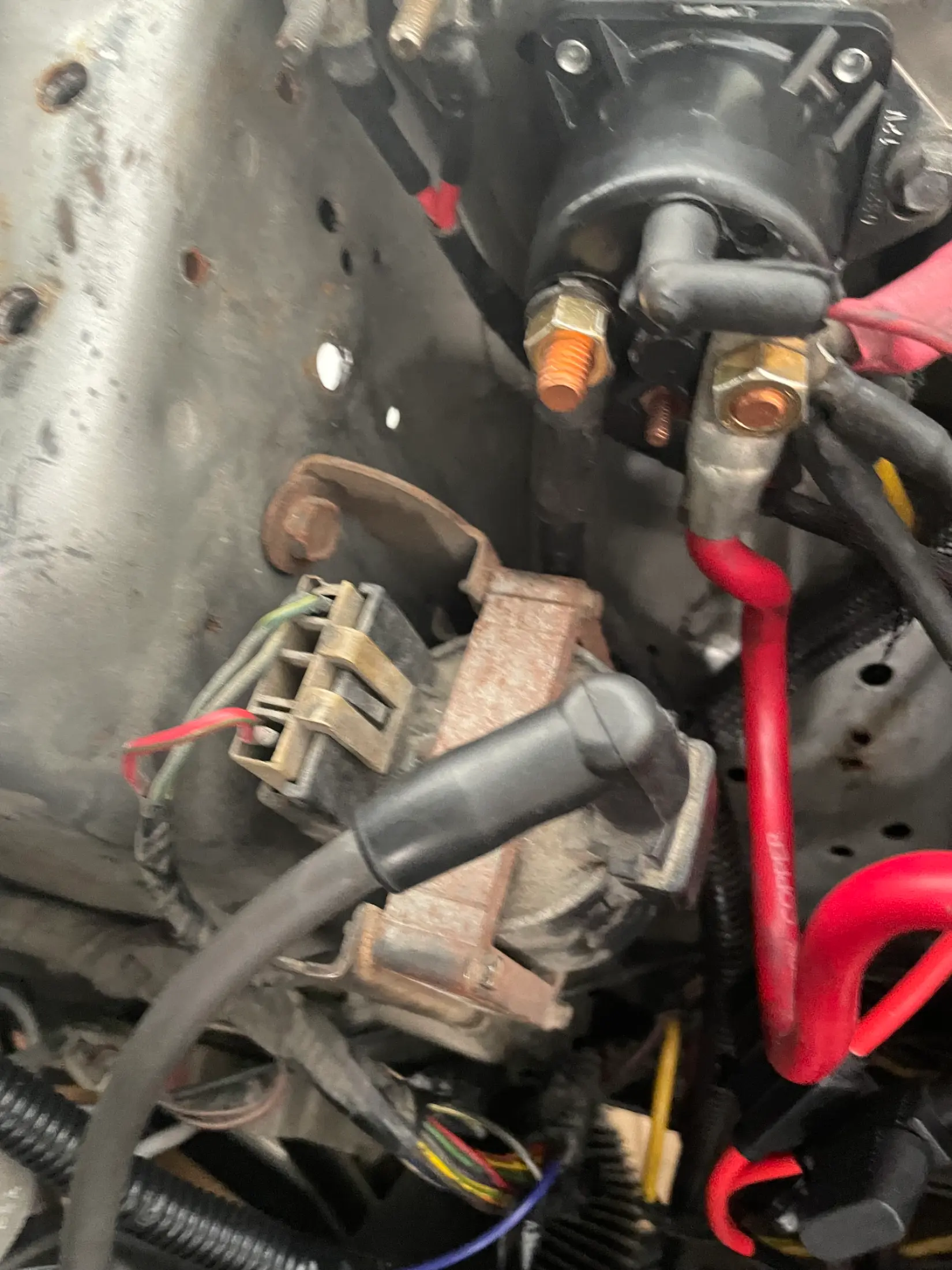
On the right post, I have:
-Positive batt. Cable
-2 30A fuses for the fan relays
-The alternator fuse cable
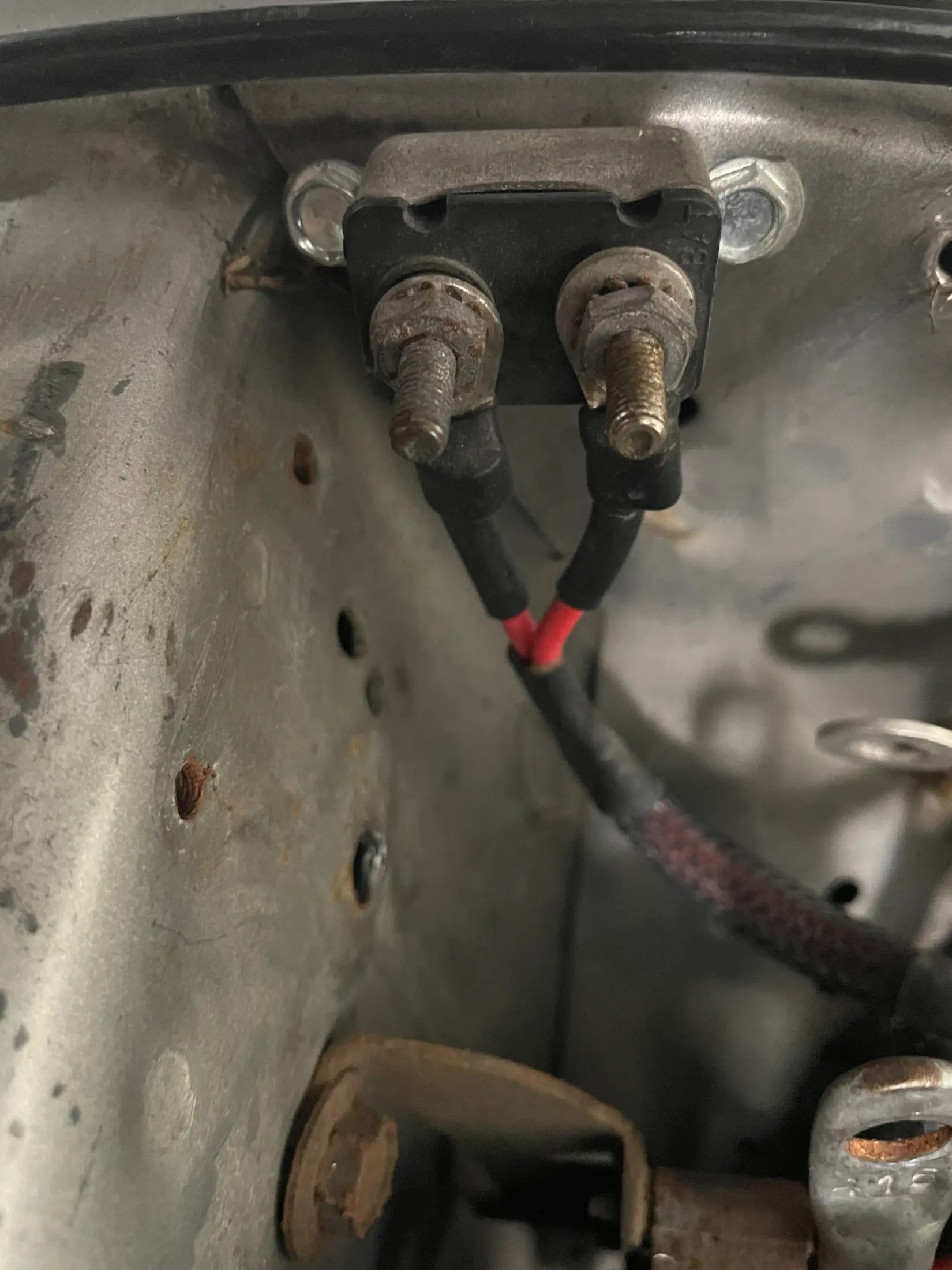
-A red wire that attaches to this circuit breaker for something:
-1 connector to three wires, one big and yellow, the other two small and black. The two black wires go into the fender, the yellow one disappears into the spaghetti mess that’s underneath my battery tray.
On the other post I have:
-starter cable
I’m looking at the “Start/Ignition” wiring diagram in the troubleshooting manual from ford, and I can’t make heads or tails of it. It looks like I’m supposed to have red and light blue wires coming out of it somewhere?
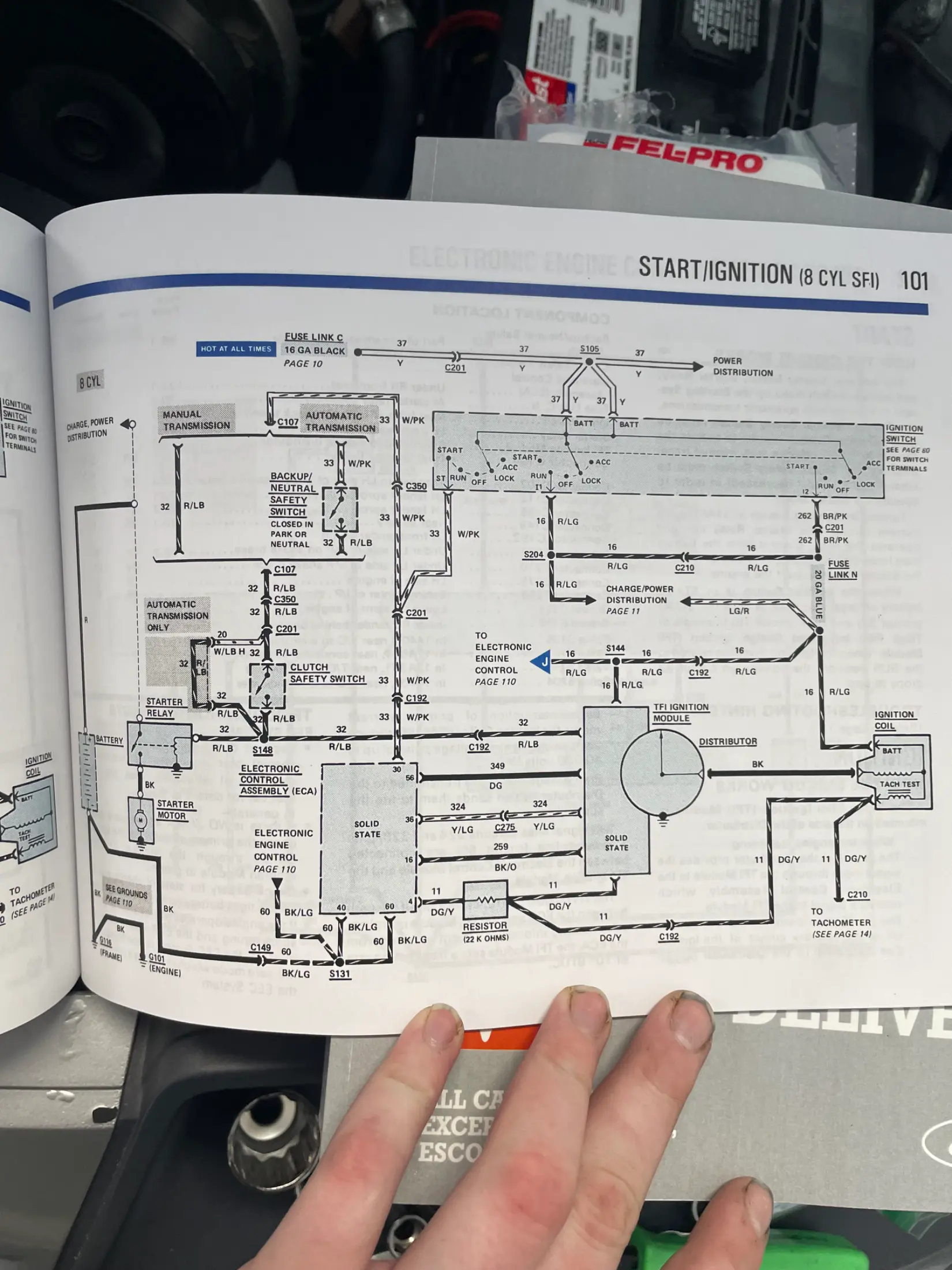
None of this may be accurate since the car is a combination of parts from different years.
Anyway, I’m thoroughly confused.
I’m installing the SVE mini starter, and in the instructions it says to switch the starter cable to the same post on the solenoid as the positive battery cable. In some videos, it shows this being the left stud, in others (and mine) it shows it on the right. Does it not matter as long as it’s in contact with the positive wire?
I’m running out of room on that post, regardless.
On the right post, I have:
-Positive batt. Cable
-2 30A fuses for the fan relays
-The alternator fuse cable
-A red wire that attaches to this circuit breaker for something:
-1 connector to three wires, one big and yellow, the other two small and black. The two black wires go into the fender, the yellow one disappears into the spaghetti mess that’s underneath my battery tray.
On the other post I have:
-starter cable
I’m looking at the “Start/Ignition” wiring diagram in the troubleshooting manual from ford, and I can’t make heads or tails of it. It looks like I’m supposed to have red and light blue wires coming out of it somewhere?
None of this may be accurate since the car is a combination of parts from different years.
Anyway, I’m thoroughly confused.
I replaced the starter cable and mounted the brackets in the correct spots, as my old one was dangling.
Speaking of dangling, that’s basically what the wiring harness for my exhaust o2 sensors are doing. Is there a correct way to restrain them?
To remove the negative battery cable, I had to remove the drivers side fender liner and the windshield washer tank to get to the other side of this bolt:
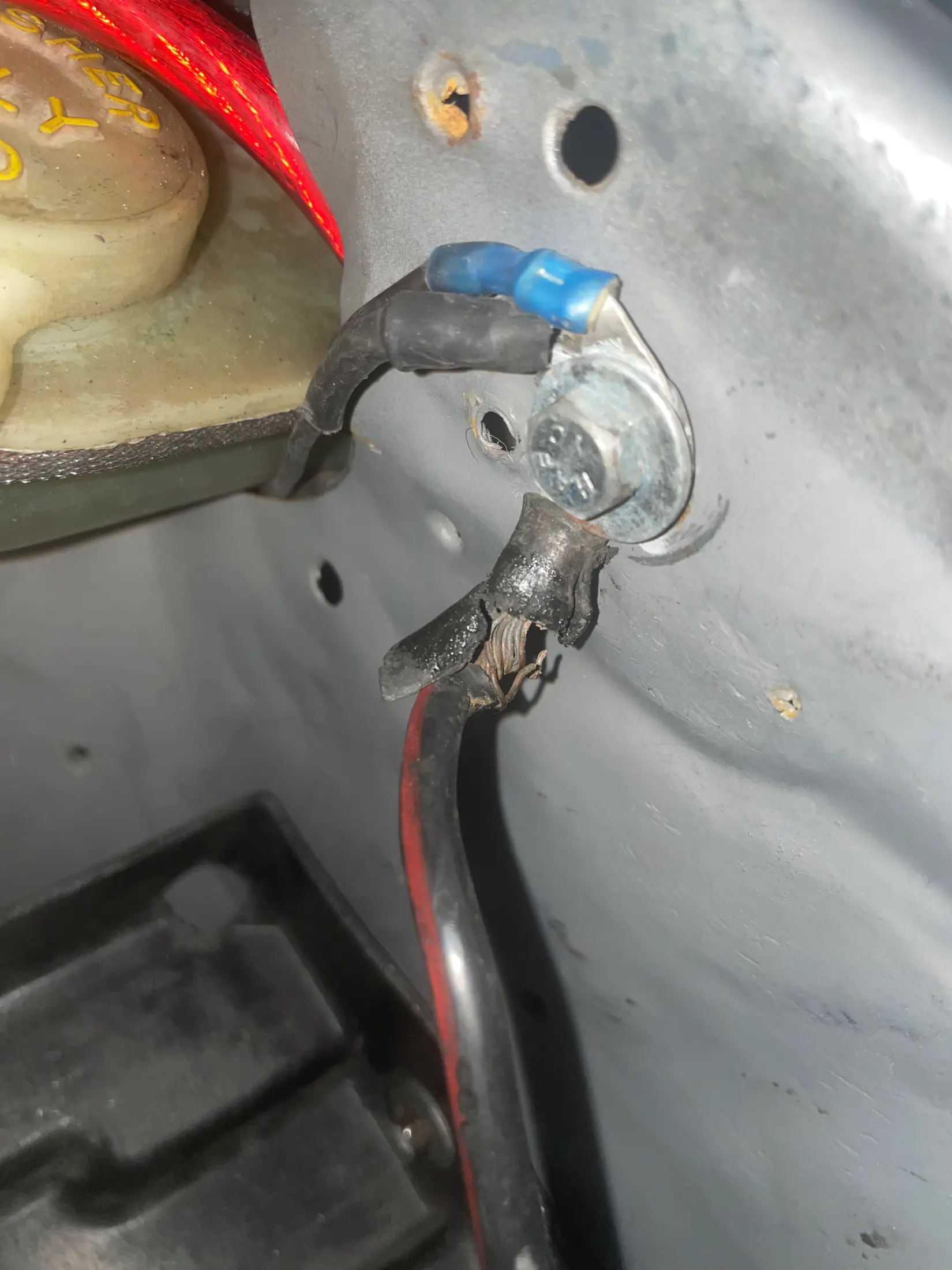
Which looked like this:
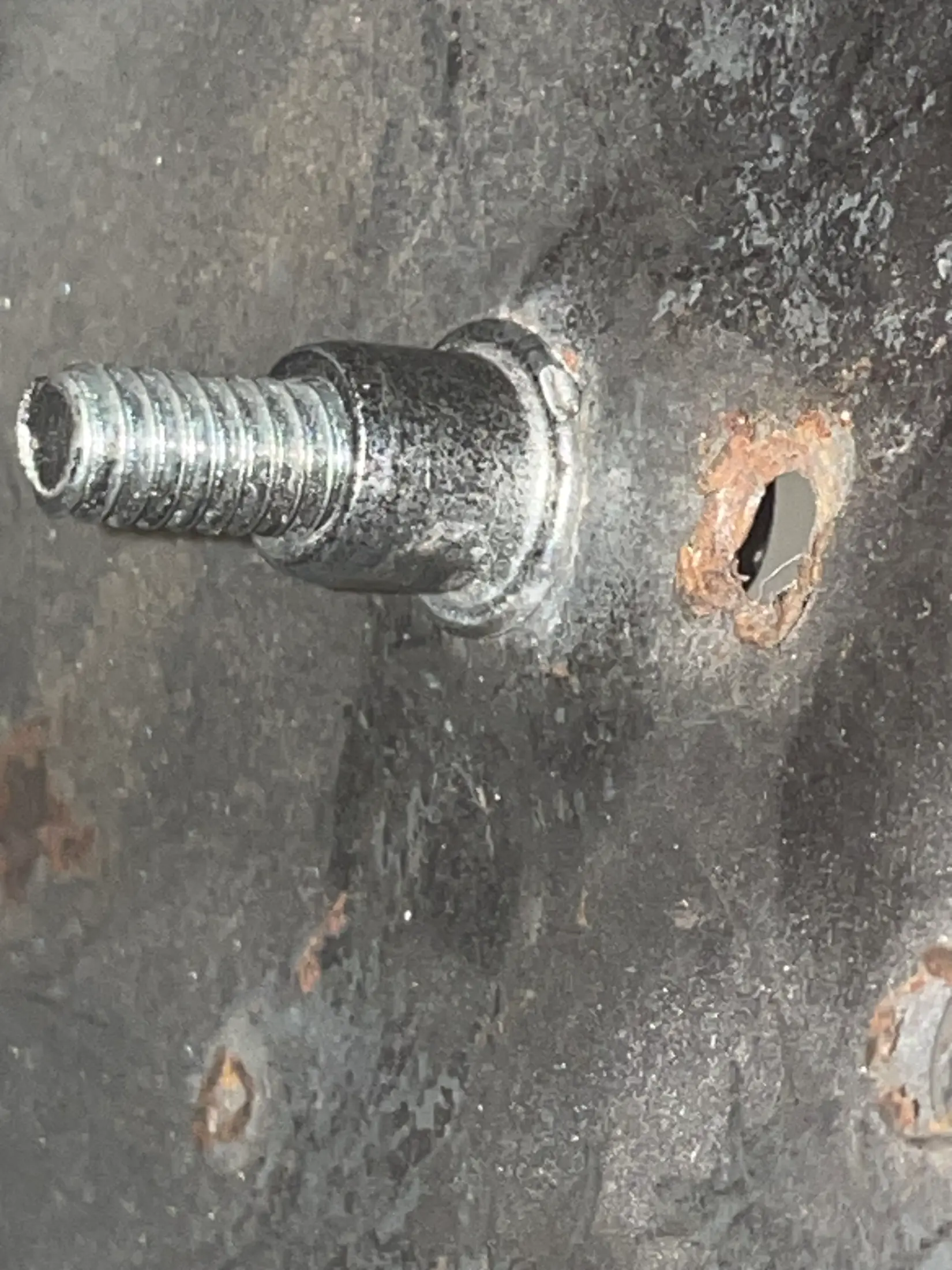
That cylindrical thing is loose, I think it was tack welded at some point but I had to use some pliers to keep it from spinning.
After freeing the cables, I found this:

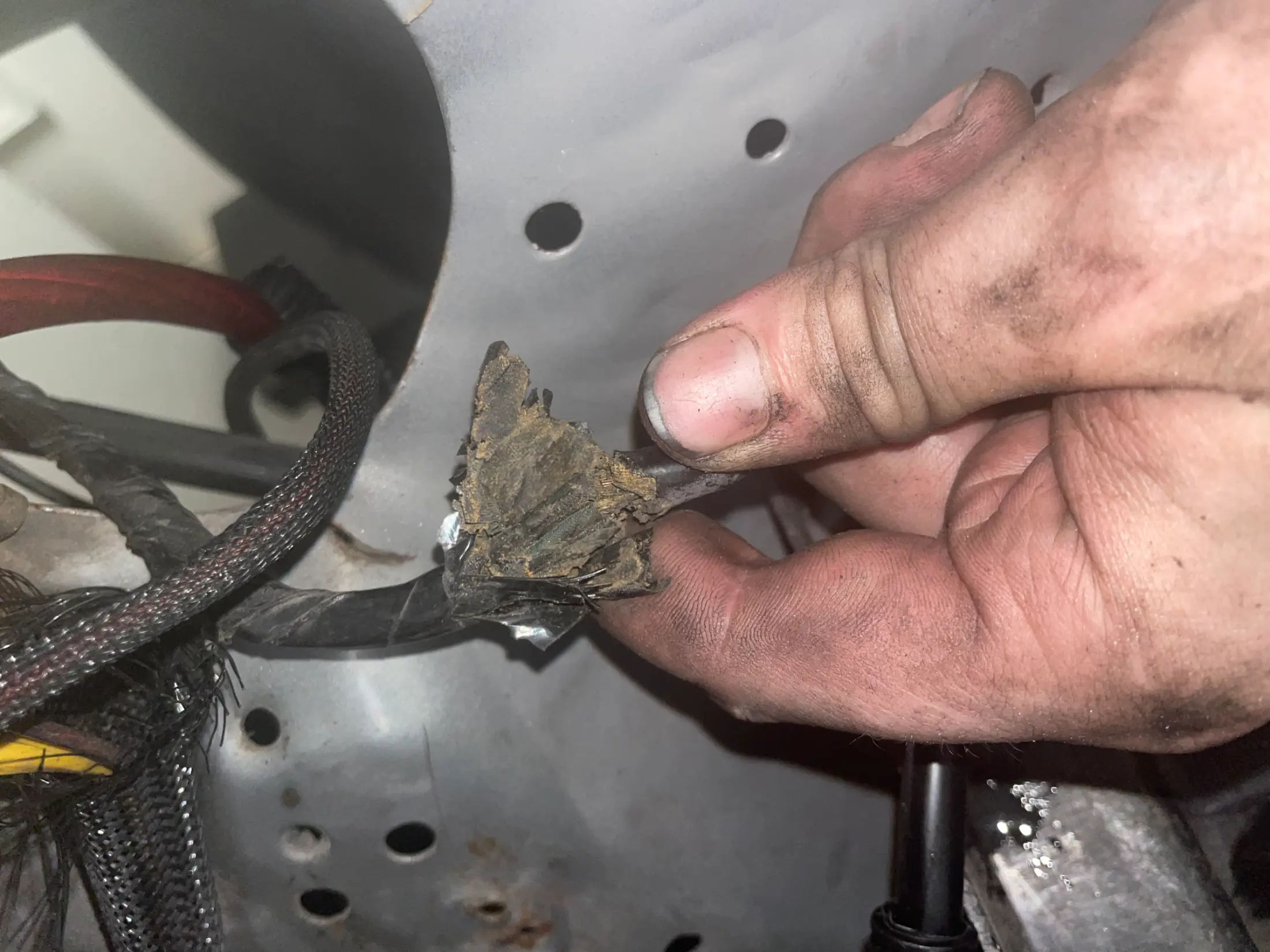
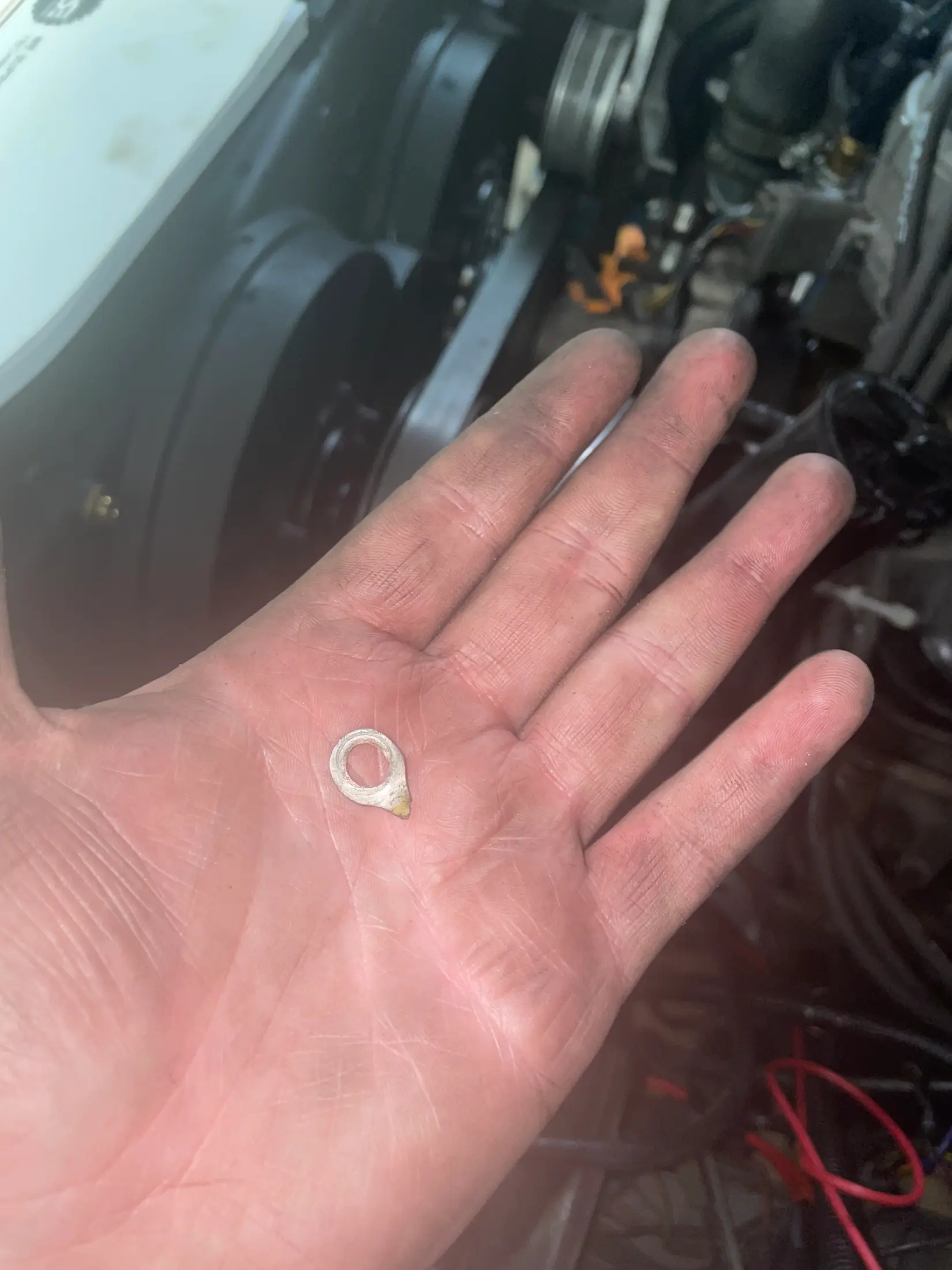
I have no idea what all these wires are for, or why they all converge into one wire. They all go into the fender and back into the interior, so my guess is they’re a ground for some interior electronics? I don’t think they’re supposed to look like that.
The broken terminal goes to a black wire that seems to follow the cluster back into the interior. I’ll have to get a new terminal connector for it. I’ll look some more in my books to see if I can figure out what this is all supposed to look like.
Anyway, that’s my update for this weekend. Car still doesn’t work, but I did get the starter and cable installed so that’s good, I guess.
Speaking of dangling, that’s basically what the wiring harness for my exhaust o2 sensors are doing. Is there a correct way to restrain them?
To remove the negative battery cable, I had to remove the drivers side fender liner and the windshield washer tank to get to the other side of this bolt:
Which looked like this:
That cylindrical thing is loose, I think it was tack welded at some point but I had to use some pliers to keep it from spinning.
After freeing the cables, I found this:
I have no idea what all these wires are for, or why they all converge into one wire. They all go into the fender and back into the interior, so my guess is they’re a ground for some interior electronics? I don’t think they’re supposed to look like that.
The broken terminal goes to a black wire that seems to follow the cluster back into the interior. I’ll have to get a new terminal connector for it. I’ll look some more in my books to see if I can figure out what this is all supposed to look like.
Anyway, that’s my update for this weekend. Car still doesn’t work, but I did get the starter and cable installed so that’s good, I guess.

gkomo
now i can hopefully expect to receive the shaft
That’s ok, I’m no help for my wiring issues either. I feel like I’m going to learn a lot, though.Progress is progress. I am no help for your wiring issues tho.
I believe that bolt is what the service manuals refer to as “Ground G116.” It’s the only connection I can see that makes sense in the diagrams. The problem is the manual lists it as being on the RH fender behind the battery, but obviously in my car (and every other 86 mustang and capri to my knowledge) it’s on the LH fender behind the battery.
That's not the only thing they screwed up. They don't indicate the position of G116 except "To Frame" in the diagram. And then, in the pictorial, they show G101 going to the frame but it's "To Engine" in the diagram.
In my 1989 manual however, it does indicate "Left Fender Well" for G101.
In my 1989 manual however, it does indicate "Left Fender Well" for G101.
This combined with the fact that so much of my car is frankensteined from other years makes me feel like getting the 1986 service manuals was kind of a waste of money. Didn’t the 85’s have the battery on the right? Maybe they just copied the previous year’s version for some systems and hoped their technicians could figure out the difference.That's not the only thing they screwed up. They don't indicate the position of G116 except "To Frame" in the diagram. And then, in the pictorial, they show G101 going to the frame but it's "To Engine" in the diagram.
In my 1989 manual however, it does indicate "Left Fender Well" for G101.
The illustrations are cool, though.
Similar threads

- Replies
- 6
- Views
- 218

- Replies
- 14
- Views
- 411

- Replies
- 5
- Views
- 242