

You are using an out of date browser. It may not display this or other websites correctly.
You should upgrade or use an alternative browser.
You should upgrade or use an alternative browser.
Build Thread Mustang5L5's Build Thread -
- Thread starter Mustang5L5
- Start date
- Status
- Not open for further replies.

You mean NiCopp?
Yeah,
But i ended up stopping at Autozone this AM for some other supplies and saw they had coated steel line. The same line I installed 10 years ago. I can rebend it up I guess.
I'll give it another shot trying to get these SS lines to seat. Read up on a few different methods so I'll try one more time. If they still don't seat i'm installing the coated steel line. I've wasted enough time on this.
If i can't get it to seat I will just bend up and install the steel line and move on
Last edited:

Was doing some reading. Interesting study on rear axle bind.
The meat of the thread
While bind is only one of many parameters determining the handling characteristics of a suspension system, it is useful information, and has been a subject of great debate on these message boards. As part of the research we did in developing our rear suspension system, MM has actually done quite a bit of roll-bind testing. I can offer some hard numbers for everyone to consider. I will define ‘bind’ to be any resistance to wheel movement in a roll situation that is not from the spring or sway bar.
Let me say that this information is not intended to be negative toward any particular system, but should be used to gain understanding of the way cars with different setups feel/handle. This information can help everyone to optimize whatever setup they may have.
Of the tests we have done, following are the tests relating to the rear suspension systems most often discussed. All tests are with the sway bar disconnected, cycling one wheel through 3” bump/droop as if in a roll situation. The results are organized in order from least bind to the most bind.
1) 4 Link - LCA with spherical bearings or rod ends at both ends / Stock UCA’s
6lb/in Linear
This shows the stock upper arms introduce 6 lb/in of wheel rate.
2) 4 Link – MM LCA 3 piece poly, spherical bearing / Stock UCAs
9lb/in Linear
This shows an additional 3 lb/in resistance from our 3 piece urethane compared to a rod end.
3) MMTA/PB – LCA with spherical bearings or rod ends at both ends
10lb/in Linear
Here we removes the 6lb/in from the UCAs, but adds 10lb/in due to lateral deflection of the TA during roll (see above post).
4) 4 Link – Stock LCA / Stock UCAs
11lb/in Linear
This shows that the stock LCA adds 5 lb/in of wheel rate, which is actually more than our LCA of case 2.
5) MMTA/PB – MM LCA 3 piece poly, spherical bearing
13lb/in Linear
Again illustrating an additional 3lb/in additional resistance of our 3 piece urethane compared to the rod ends in case 3.
6) 4 Link – LCA with 3 Piece Urethane at both ends / Stock UCAs
26lb/in Linear
Case 6 shows that the 3 piece poly (or any LCA) works best with a spherical bearing at one end. 17lb/in is added over case 2. Note that the effect of adding a 3 piece urethane at only one end adds 3lb/in. Add it at BOTH ends and the increase is 17lb/in… NOT 6 lb/in as one might expect.
7) 4 Link - LCA with delrin, spherical bearing / Stock UCAs
30lb/in Linear
This shows that delrin does not allow necessary angular deflection resulting in an additional 21lb/in over case 2.
8) 4 Link With PB - Stock LCA / Stock UCA
In the first 1” travel 47lb/in
Between 2-3” of travel 30lb/in Decreasing Rate
In case 8 & 9 the Panhard bar defining a new lower roll center is forcing control arms to travel a new path of higher resistance.
9) 4 Link With PB – MM LCA / Stock UCA
In the first 1” travel 50lb/in
Between 2-3” of travel 30lb/in Decreasing Rate
10) 4 Link – Stock LCA / UCA with rod end at chassis, stock rubber at axle
In the first 1” travel 63lb/in
Between 1-2” travel 39lb/in
Between 2-3” travel 20lb/in Decreasing Rate
Case 10 represents trying to locate the axle with a stiffer bushing configuration on the upper control arms. Since the upper arms need to have an effective length change, the rod end in this case actually creates MORE bind.
11) 4 Link – LCA with urethane at both ends / Stock UCA’s
67lb/in Linear
Case 11 is similar to case 6, but shows that a standard poly/poly control arm does not allow much angular change.
Keep in mind that the above information is with no cornering force on the axle. Therefore, there is a huge gap in this information if you are trying to correlate this data to how these systems would feel in use. I would say that the Torque-arm in case 3 & 5 outperforms any other case shown, although it does not have the least amount of bind in this test. We have begun to build a fixture that loads the axle laterally, as if in a corner, to THEN see how the bind behaves. Any system with a Panhard bar should have no significant increase in bind over what is already shown here. This predictability that a PB provides is why we recommend it on a 4 link (with the correct control arms) for people on a budget, or Solo II Street Prepared cars (not allowed to remove uppers). True, you are inducing bind in this situation, but that bind should not significantly change as you load the suspension laterally. When driving the car, the effective added spring rate (from bind) balances well with the new lower RC, and the improved stability and predictability. YES this is a compromise, but I feel it beats trying to locate the axle laterally with stiffer bushings. Obviously, if the pocket book or rulebook permits, the best thing to do is add a Torque-arm and remove the upper control arms. All this binding is also why you are able to add at least 50lb/in wheel rate to the rear when you add a Torque-Arm and remove the UCAs.
Jon- the barrel shaped bushing was designed to maximize contact area and minimize resistance to angular motion. When cycling the suspension in straight bump and droop, its effect is immeasurable.
Ehren VanSchmus
MM Design Engineer
[email protected]
Searched hard, no luck...Ehren's bind study...where?
Can anyone point me to the study of bind levels of various rear end setups? I have searched my ass off and I can't find it. Thanks.
www.corner-carvers.com
The meat of the thread
While bind is only one of many parameters determining the handling characteristics of a suspension system, it is useful information, and has been a subject of great debate on these message boards. As part of the research we did in developing our rear suspension system, MM has actually done quite a bit of roll-bind testing. I can offer some hard numbers for everyone to consider. I will define ‘bind’ to be any resistance to wheel movement in a roll situation that is not from the spring or sway bar.
Let me say that this information is not intended to be negative toward any particular system, but should be used to gain understanding of the way cars with different setups feel/handle. This information can help everyone to optimize whatever setup they may have.
Of the tests we have done, following are the tests relating to the rear suspension systems most often discussed. All tests are with the sway bar disconnected, cycling one wheel through 3” bump/droop as if in a roll situation. The results are organized in order from least bind to the most bind.
1) 4 Link - LCA with spherical bearings or rod ends at both ends / Stock UCA’s
6lb/in Linear
This shows the stock upper arms introduce 6 lb/in of wheel rate.
2) 4 Link – MM LCA 3 piece poly, spherical bearing / Stock UCAs
9lb/in Linear
This shows an additional 3 lb/in resistance from our 3 piece urethane compared to a rod end.
3) MMTA/PB – LCA with spherical bearings or rod ends at both ends
10lb/in Linear
Here we removes the 6lb/in from the UCAs, but adds 10lb/in due to lateral deflection of the TA during roll (see above post).
4) 4 Link – Stock LCA / Stock UCAs
11lb/in Linear
This shows that the stock LCA adds 5 lb/in of wheel rate, which is actually more than our LCA of case 2.
5) MMTA/PB – MM LCA 3 piece poly, spherical bearing
13lb/in Linear
Again illustrating an additional 3lb/in additional resistance of our 3 piece urethane compared to the rod ends in case 3.
6) 4 Link – LCA with 3 Piece Urethane at both ends / Stock UCAs
26lb/in Linear
Case 6 shows that the 3 piece poly (or any LCA) works best with a spherical bearing at one end. 17lb/in is added over case 2. Note that the effect of adding a 3 piece urethane at only one end adds 3lb/in. Add it at BOTH ends and the increase is 17lb/in… NOT 6 lb/in as one might expect.
7) 4 Link - LCA with delrin, spherical bearing / Stock UCAs
30lb/in Linear
This shows that delrin does not allow necessary angular deflection resulting in an additional 21lb/in over case 2.
8) 4 Link With PB - Stock LCA / Stock UCA
In the first 1” travel 47lb/in
Between 2-3” of travel 30lb/in Decreasing Rate
In case 8 & 9 the Panhard bar defining a new lower roll center is forcing control arms to travel a new path of higher resistance.
9) 4 Link With PB – MM LCA / Stock UCA
In the first 1” travel 50lb/in
Between 2-3” of travel 30lb/in Decreasing Rate
10) 4 Link – Stock LCA / UCA with rod end at chassis, stock rubber at axle
In the first 1” travel 63lb/in
Between 1-2” travel 39lb/in
Between 2-3” travel 20lb/in Decreasing Rate
Case 10 represents trying to locate the axle with a stiffer bushing configuration on the upper control arms. Since the upper arms need to have an effective length change, the rod end in this case actually creates MORE bind.
11) 4 Link – LCA with urethane at both ends / Stock UCA’s
67lb/in Linear
Case 11 is similar to case 6, but shows that a standard poly/poly control arm does not allow much angular change.
Keep in mind that the above information is with no cornering force on the axle. Therefore, there is a huge gap in this information if you are trying to correlate this data to how these systems would feel in use. I would say that the Torque-arm in case 3 & 5 outperforms any other case shown, although it does not have the least amount of bind in this test. We have begun to build a fixture that loads the axle laterally, as if in a corner, to THEN see how the bind behaves. Any system with a Panhard bar should have no significant increase in bind over what is already shown here. This predictability that a PB provides is why we recommend it on a 4 link (with the correct control arms) for people on a budget, or Solo II Street Prepared cars (not allowed to remove uppers). True, you are inducing bind in this situation, but that bind should not significantly change as you load the suspension laterally. When driving the car, the effective added spring rate (from bind) balances well with the new lower RC, and the improved stability and predictability. YES this is a compromise, but I feel it beats trying to locate the axle laterally with stiffer bushings. Obviously, if the pocket book or rulebook permits, the best thing to do is add a Torque-arm and remove the upper control arms. All this binding is also why you are able to add at least 50lb/in wheel rate to the rear when you add a Torque-Arm and remove the UCAs.
Jon- the barrel shaped bushing was designed to maximize contact area and minimize resistance to angular motion. When cycling the suspension in straight bump and droop, its effect is immeasurable.
Ehren VanSchmus
MM Design Engineer
[email protected]

Managed to get the caliper end to seal up with the SS line. But was still leaking at center junction.
Got frustrated with it so Took the parts store coated steel line, bent it up. Cut and flared one end with the correct size fitting. Came out pretty nice for $7
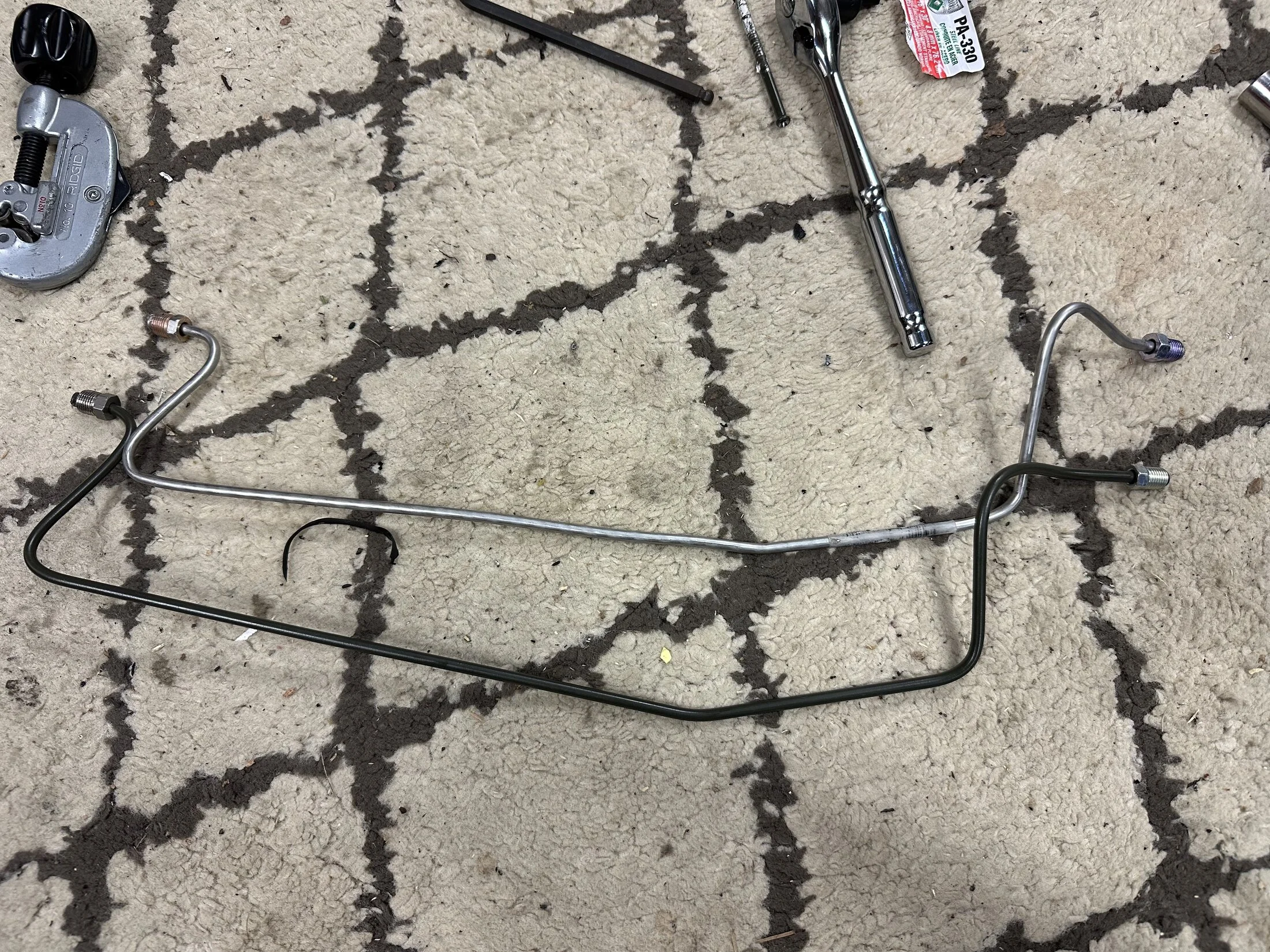
Installed it and my flared end sealed nicely, and the factory end at the center junction leaked!!
At this point three lines have leaked. Gotta be an issue with the center block. Removing it tomorrow to inspect.
Got frustrated with it so Took the parts store coated steel line, bent it up. Cut and flared one end with the correct size fitting. Came out pretty nice for $7
Installed it and my flared end sealed nicely, and the factory end at the center junction leaked!!
At this point three lines have leaked. Gotta be an issue with the center block. Removing it tomorrow to inspect.
Last edited:

That sucks man. Hopefully it’s the center block and you can move on. Seems like every time I get into a brake project that involves new lines I have an issue with a fitting or flare.
Pulled it off, which is a PiTA with the axle in the car.
Looks fine, and my junk line and fitting thread in fine.
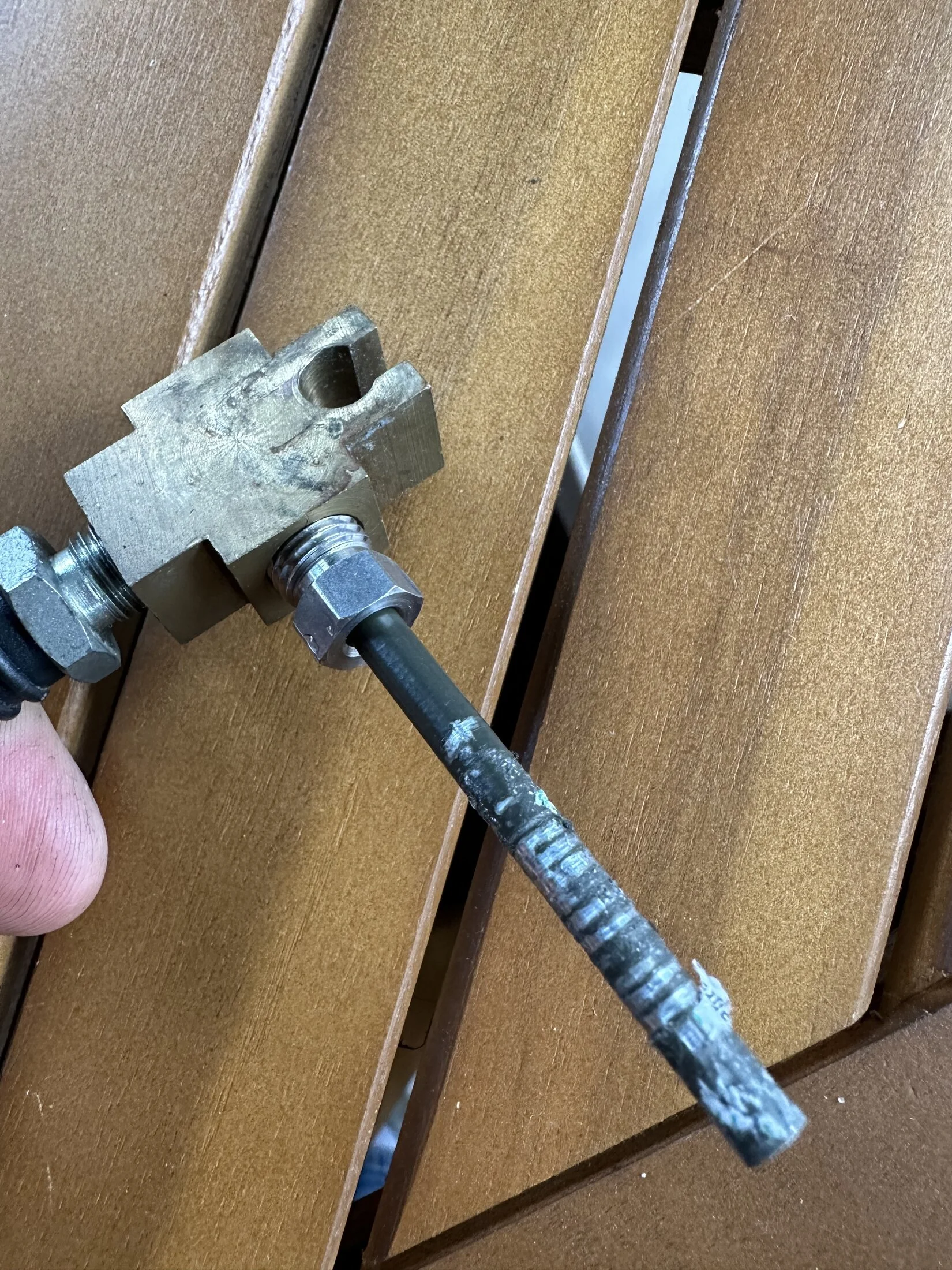
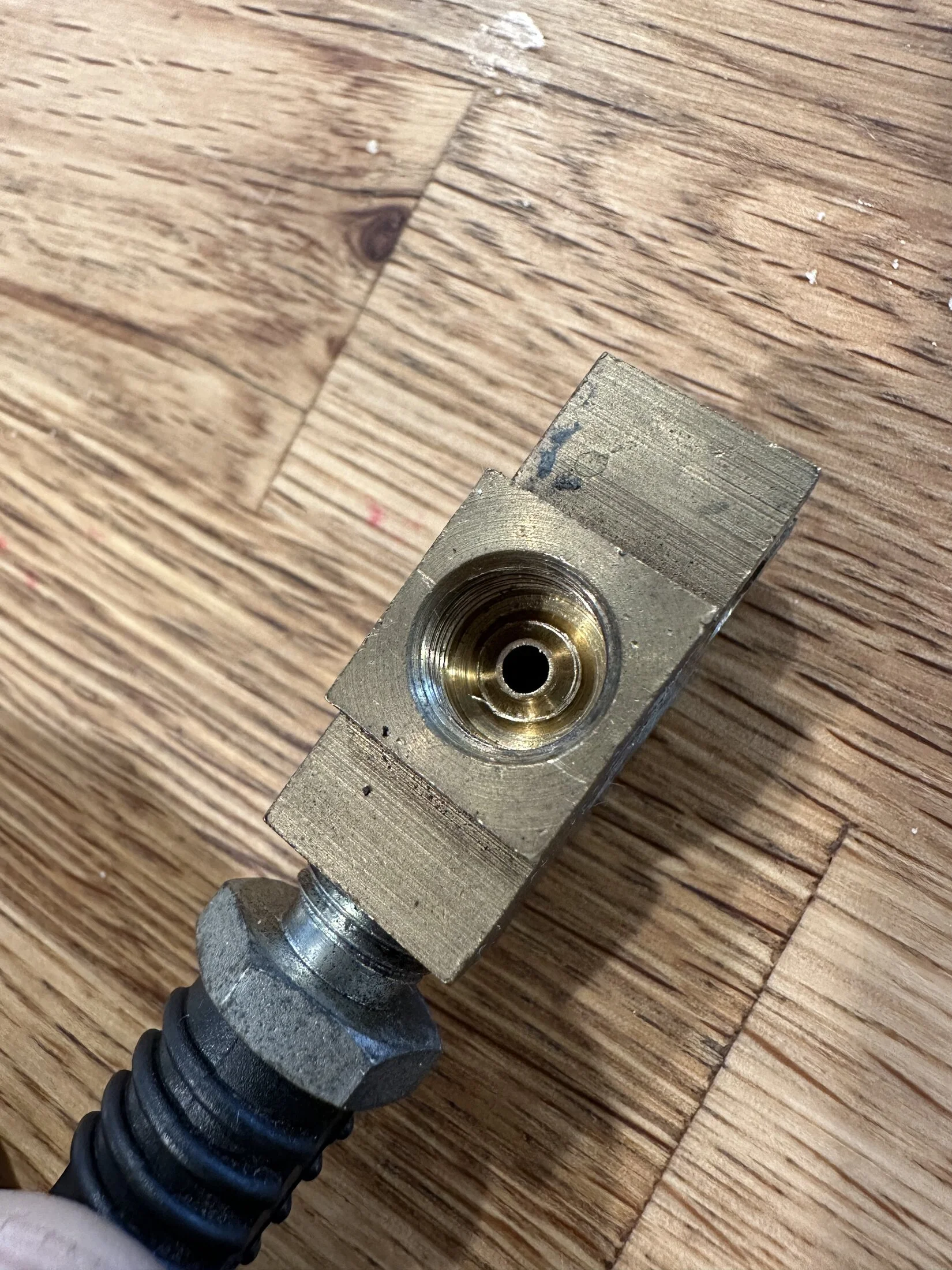
But three different lines did not seal on this side. I might send MM an email tomorrow asking them about this and see what they say. I’ll also see if they will sell me just the block.
The entire line is $70 plus shipping but if the block costs me $40 plug shipping I might as well get a new line.
I also feel like I’ve seen those types of blocks before and it’s an off-the shelf part. I need to hit up Lord google.
Also took a sponge and water to my axle to get all the brake fluid off…. Grrr
Looks fine, and my junk line and fitting thread in fine.
But three different lines did not seal on this side. I might send MM an email tomorrow asking them about this and see what they say. I’ll also see if they will sell me just the block.
The entire line is $70 plus shipping but if the block costs me $40 plug shipping I might as well get a new line.
I also feel like I’ve seen those types of blocks before and it’s an off-the shelf part. I need to hit up Lord google.
Also took a sponge and water to my axle to get all the brake fluid off…. Grrr
Last edited:
This might be it. Need to pull the SS line off to confirm what size fitting that is
Earl's 972050ERL Brake Adapter https://a.co/d/6H8cDGN
Here’s a cheaper one but I trust the Earls brand
Crown Auto-J0637432 Brake Tee https://a.co/d/5YWVAOo
Earl's 972050ERL Brake Adapter https://a.co/d/6H8cDGN
Here’s a cheaper one but I trust the Earls brand
Crown Auto-J0637432 Brake Tee https://a.co/d/5YWVAOo
Last edited:

Looks like right here the threads are getting stripped. Maybe one just didn’t go in right, and now none of them seal.This might be it. Need to pull the SS line off to confirm what size fitting that is
Earl's 972050ERL Brake Adapter https://a.co/d/6H8cDGN

I agree. On closer look, it looks damaged. You can clearly see it when you compare the side that had the SS line on it. The two outlet connections look like the old lines seated and crushed and the new lines aren’t matching up.
Pulled the SS line off and it’s just another inverted flare. Should be easy to find.
Ended up ordering the Eaton fitting. Should work nicely.
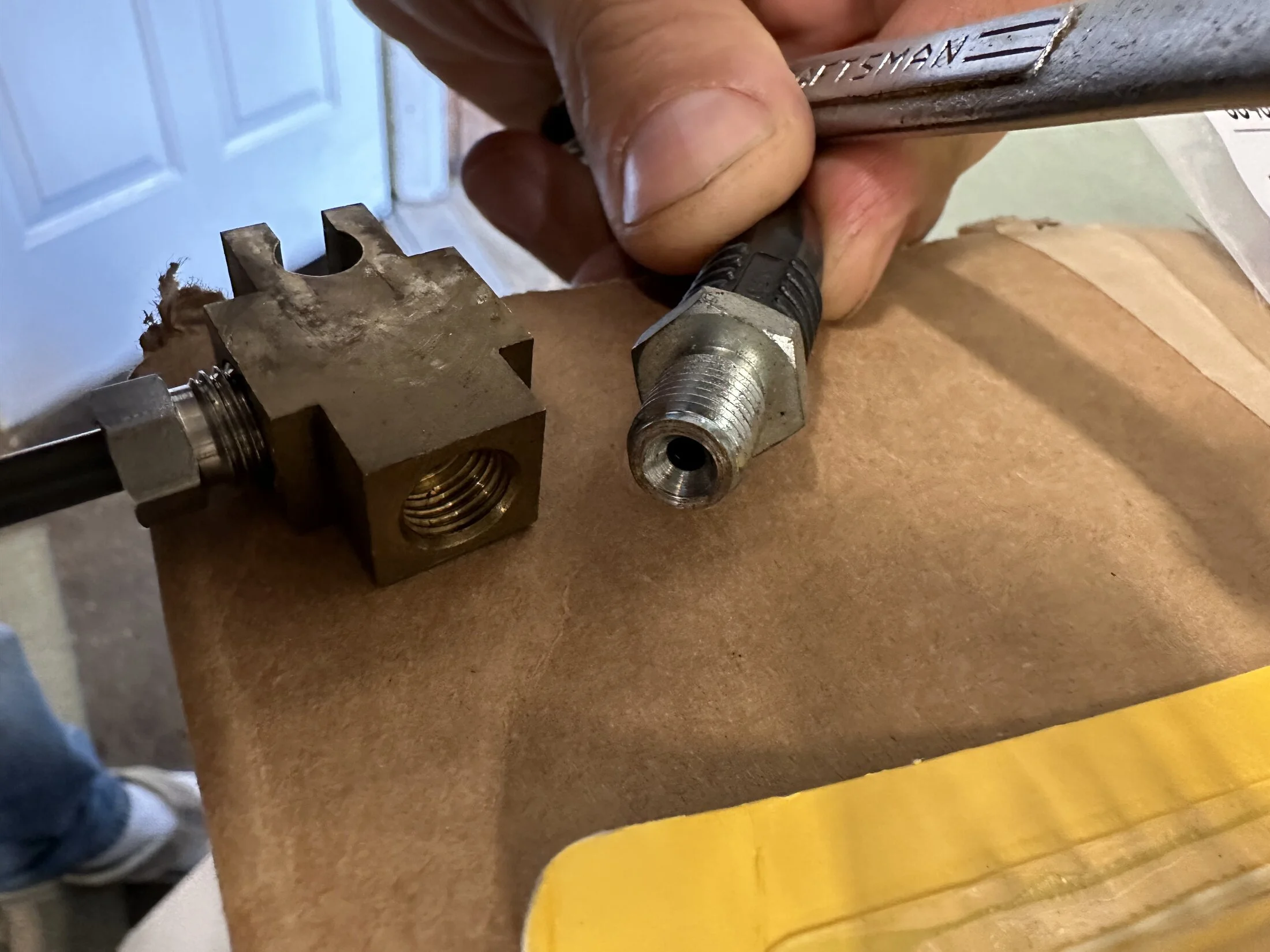
Pulled the SS line off and it’s just another inverted flare. Should be easy to find.
Ended up ordering the Eaton fitting. Should work nicely.
Last edited:
Found a compatible bolt. Double nutted it and used a brass brake line crush washer and inserted it into the port for the rear soft line to axle. Will test to see if that holds pressure.
Unfortunately unless I wanted to spend another $20 in shipping, I have to wait til next week to get the fitting.
If my banjo blocker bolt holds, I may just leave it that way so I can put the car down on the ground and fire it up and back out the driveway. Front 13” brakes should be more than enough brake capacity for a drive around the block at 15mph.
Unfortunately unless I wanted to spend another $20 in shipping, I have to wait til next week to get the fitting.
If my banjo blocker bolt holds, I may just leave it that way so I can put the car down on the ground and fire it up and back out the driveway. Front 13” brakes should be more than enough brake capacity for a drive around the block at 15mph.
Also. Torque Arm specific springs arrived.
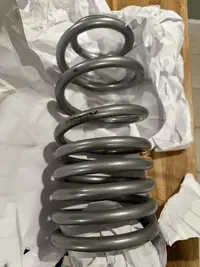
Will set those on my parts shelf along with the panhard bar link. I’ll prob wait until later this summer to order the TA.
Will set those on my parts shelf along with the panhard bar link. I’ll prob wait until later this summer to order the TA.
So i wanted to confirm that this fitting was the culprit, so i took it to work to look under magnification.
Using a Stereo microscope, I can see on the good side that there is a 360* witness mark of where the brake flare crused into the copper cone.
Good side
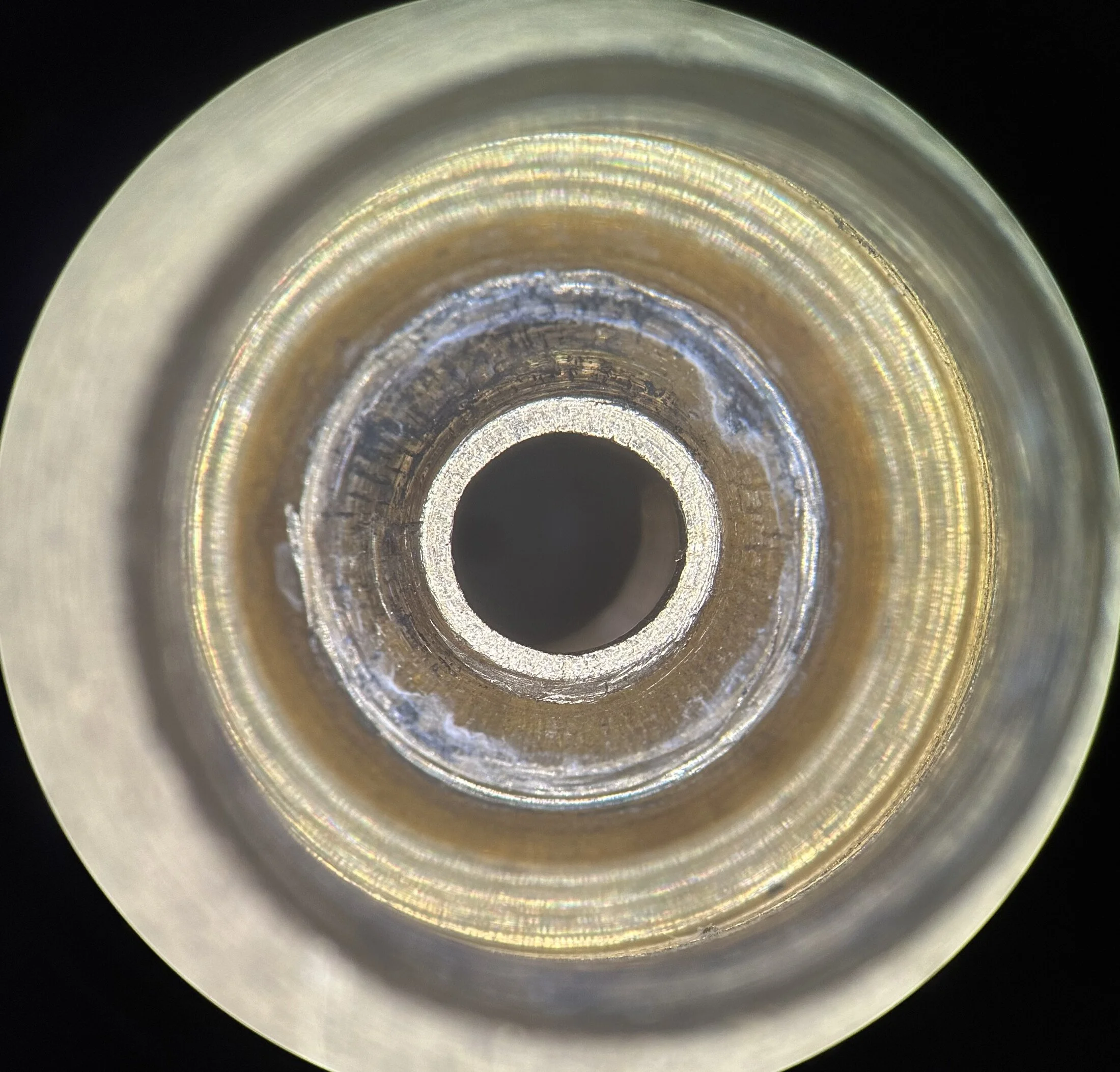
On the bad side, it looks like i might have tightened the fitting down slightly offset. When i crushed it down, it created an offset witness mark. You can see there is no sealing at the 6 oclock position. Once this deformation occured, there was no going back. This fitting is junk.
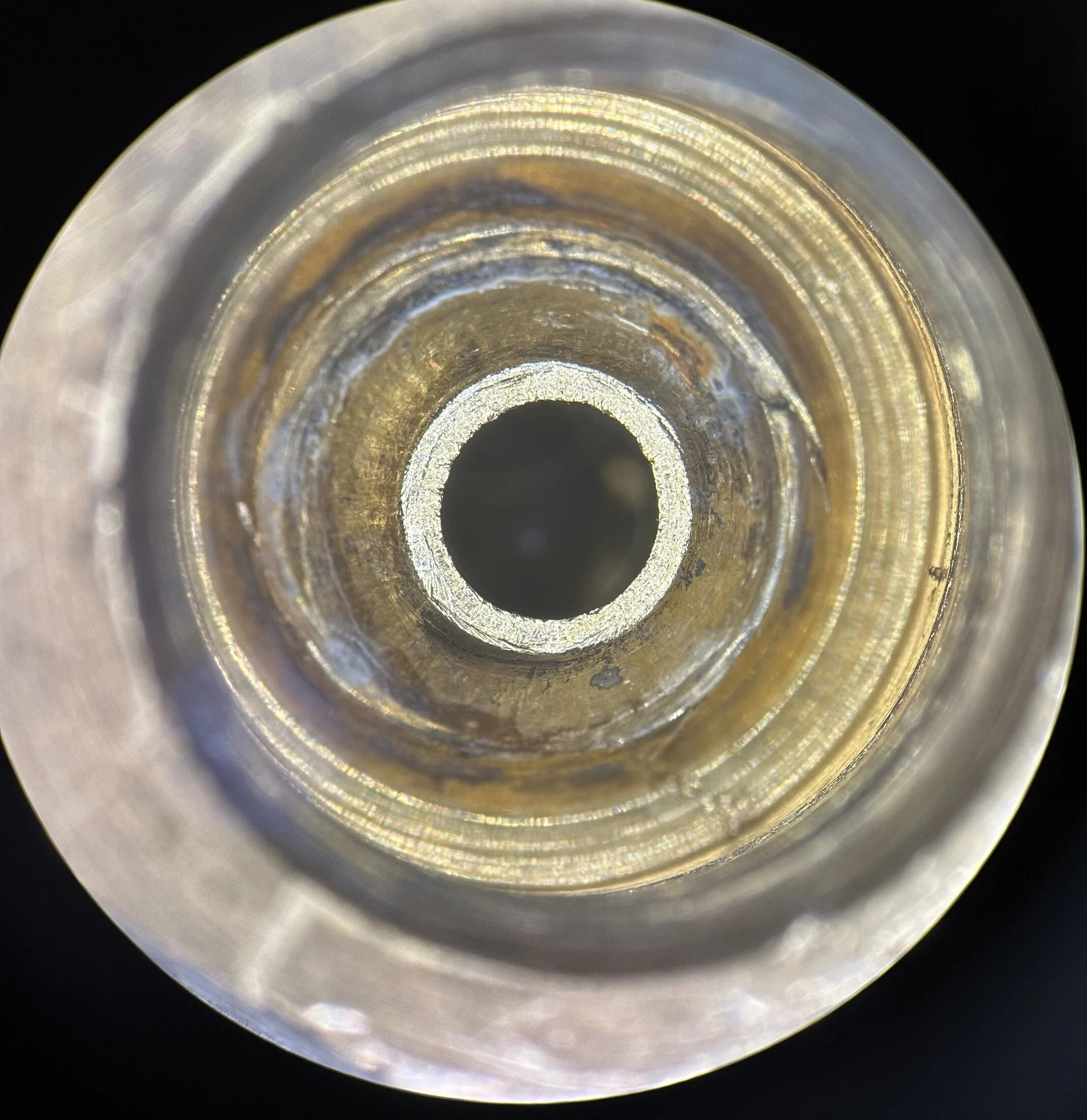
New one on the way. Kudos to LMR for sending me a second set of lines no questions asked, but it looks like the fault was on my end. I need to be very careful when i install the lines to make sure the brake lines are straight and centered before tightening them up.
Using a Stereo microscope, I can see on the good side that there is a 360* witness mark of where the brake flare crused into the copper cone.
Good side
On the bad side, it looks like i might have tightened the fitting down slightly offset. When i crushed it down, it created an offset witness mark. You can see there is no sealing at the 6 oclock position. Once this deformation occured, there was no going back. This fitting is junk.
New one on the way. Kudos to LMR for sending me a second set of lines no questions asked, but it looks like the fault was on my end. I need to be very careful when i install the lines to make sure the brake lines are straight and centered before tightening them up.
Waited over a week fgor this fitting...
and it's the wrong one.
Looks like it's only 3/8-24 IF on two sides, not three. One side is straight thread.
Back to the drawing board. Guess i'll dig around a bit more
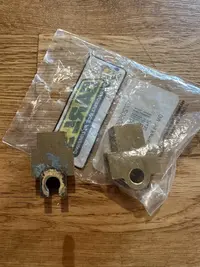
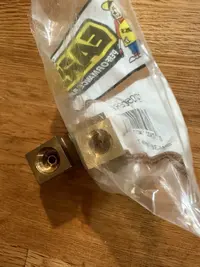
and it's the wrong one.
Looks like it's only 3/8-24 IF on two sides, not three. One side is straight thread.
Back to the drawing board. Guess i'll dig around a bit more
Found it! Same part as original.
Crossing fingers it’s in my hands before the weekend so I can get the car off the jackstands
Crossing fingers it’s in my hands before the weekend so I can get the car off the jackstands
Finally…the correct fitting.
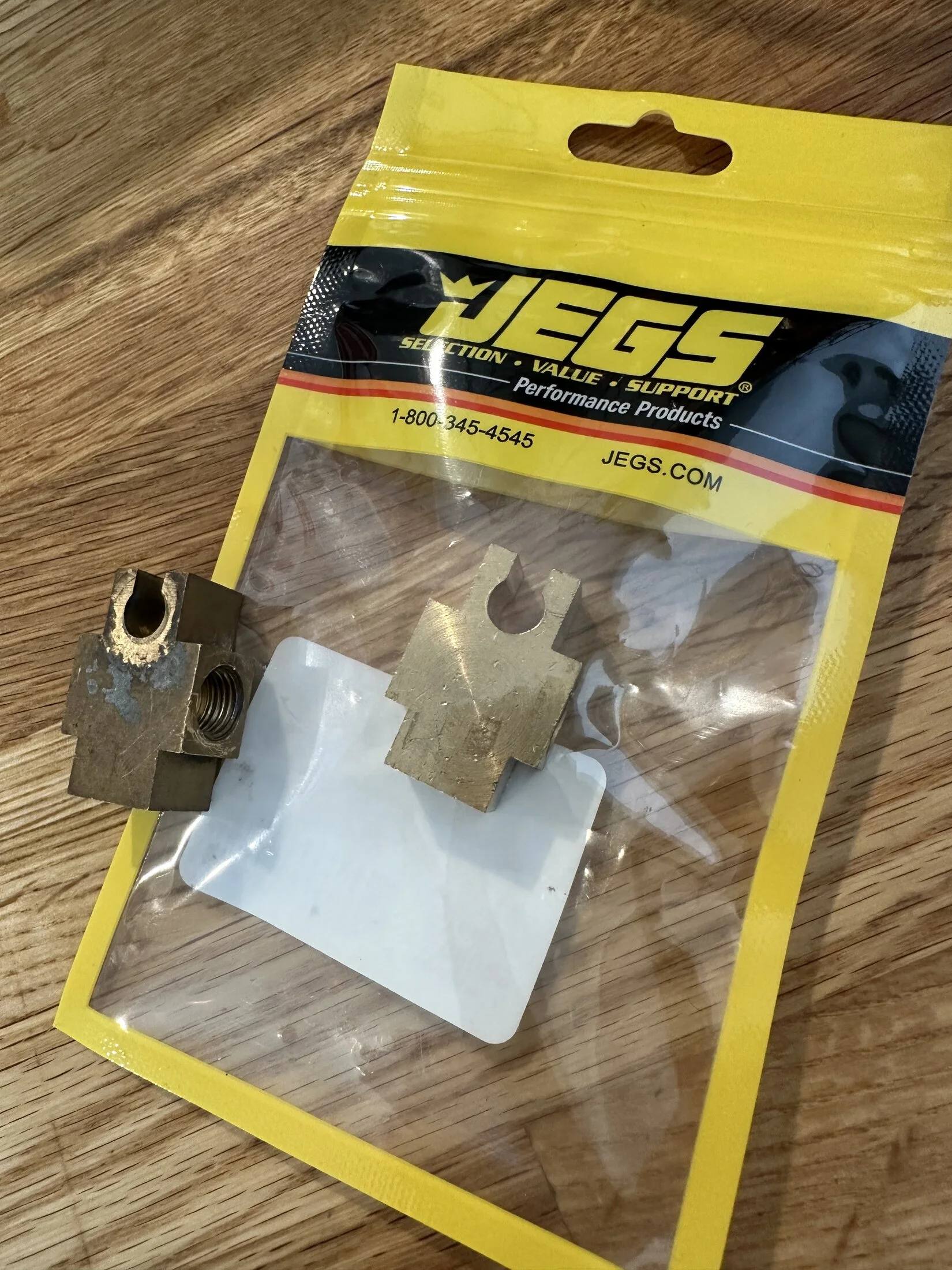
Took a personal day for Friday. Need to get the brake lines on and bled and the car down so I can hear those Borlas
Took a personal day for Friday. Need to get the brake lines on and bled and the car down so I can hear those Borlas

Brakes done. It was as easy as it should have been. Took me 20 mins to install and bleed. Ugh.
Anyway. Fired it up and backed it out. She sounds good. I’ll give impressions later. I did take DB readings before and after, so curious to see how much quieter it is.
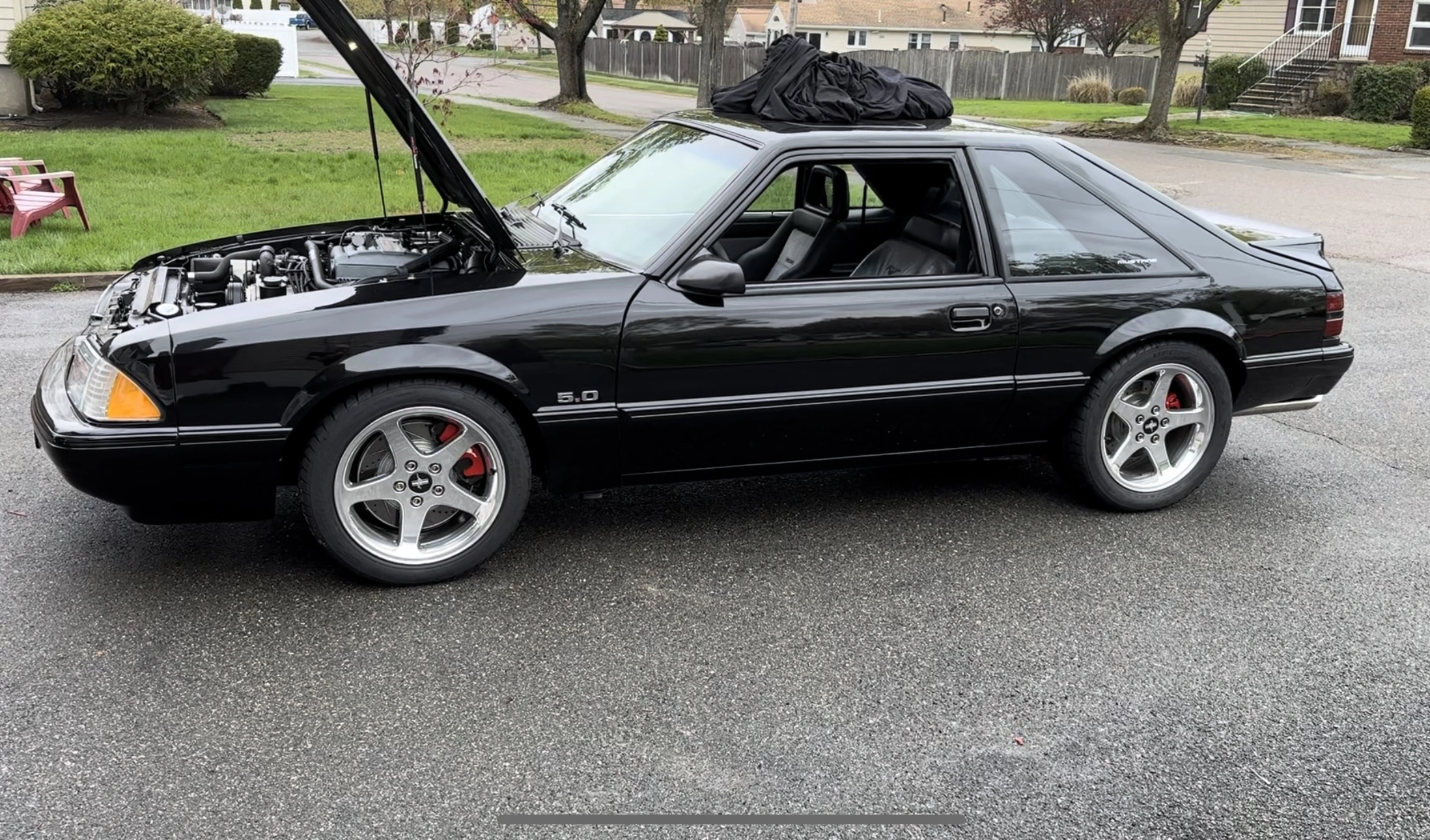
Anyway. Fired it up and backed it out. She sounds good. I’ll give impressions later. I did take DB readings before and after, so curious to see how much quieter it is.
Last edited:

85GTStangGuy
5 Year Member

Awesome! Can’t wait to hear the feedback on the Bassani cats.Brakes done. It was as easy as it should have been. Took me 20 mins to install and bleed. Ugh.
Anyway. Fired it up and backed it out. She sounds good. I’ll give impressions later. I did take DB readings before and after, so curious to see how much quieter it is.
Now get that drivers Recaro bolted back in and you’ll be good to go!!! Lol
- Status
- Not open for further replies.
Similar threads
- Replies
- 512
- Views
- 38K

- Replies
- 14
- Views
- 262

- Replies
- 140
- Views
- 16K
- Replies
- 12
- Views
- 10K

