

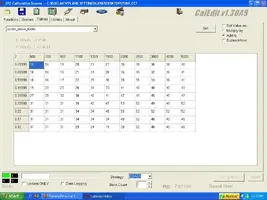
I am somewhat confused on how far I should take my spark tables. I have my base spark table set rather high at the higher end rpm's. I have around 40 at 5000. I can post an image of my table in a while. Should I have my timign set this high? I am not getting any pinging yet. I am running 9.5:1 compression too.
You are using an out of date browser. It may not display this or other websites correctly.
You should upgrade or use an alternative browser.
You should upgrade or use an alternative browser.
questions about base spark table
- Thread starter jruppert
- Start date

a_k
New Member
Have you changed any of the other spark tables or just this one? I'm pretty sure the EEC uses the lowest values between the tables, someone correct me if I am wrong. To add to that I have no idea about spark so I shouldn't have posted. I'm going to have my hands full getting a solid tune then i'll move on to spark...
I'm going to have my hands full getting a solid tune then i'll move on to spark...Originally, I had the altitude spark the same as the base, the bdln all 55's, and the MBT to somewhat mimic the alt + base. Last night I changed all of these tables to 55. I have yet to try anything. I am sure I have way too much spark though.

This info is for NA only 
I null out borderline, altitude, and mbt tables with 55 in all cells
and use only the base table.
In the base table I use the top or greatest load row for WOT conditions.
A rule of thumb is .............
Have maximum advance in by 2500 rpm and that amount will depend
upon the what the combo likes ... or if you hear ping ...
it don't like
You will find the best WOT performance with maximum values in a range of
32 to 38 degrees.
Iron heads usually like less than Aluminum
When you arrive at your best value for WOT performance .........
Use that value in your tip_in_ retard scalar to kill it
The most important thing to check for is ..........
what you call for in your base spark table is seen in your datalog
Then and only then you know for certain you got it like it should be
Don't forget ... Dizzy at 10
and
DO NOT use the global adder thing
Grady
I null out borderline, altitude, and mbt tables with 55 in all cells
and use only the base table.
In the base table I use the top or greatest load row for WOT conditions.
A rule of thumb is .............
Have maximum advance in by 2500 rpm and that amount will depend
upon the what the combo likes ... or if you hear ping ...
it don't like
You will find the best WOT performance with maximum values in a range of
32 to 38 degrees.
Iron heads usually like less than Aluminum
When you arrive at your best value for WOT performance .........
Use that value in your tip_in_ retard scalar to kill it
The most important thing to check for is ..........
what you call for in your base spark table is seen in your datalog
Then and only then you know for certain you got it like it should be
Don't forget ... Dizzy at 10
and
DO NOT use the global adder thing
Grady
Thanks for your advice. I have killed those tables with 55's. I will have to do some experimenting. I have since back off the timing from the original values. I was talking to my dad and he expained how the workings of timing actually does. It was then I realized that 47 was probably too high.
I do have the AFR 185's and have heard they like a little more timing so I will have to see where I come up with.
final5-0, you said..
"When you arrive at your best value for WOT performance .........
Use that value in your tip_in_ retard scalar to kill it"
What is the difference between 'that value' and just using 0 for the tip in retard? Is this the same scalar that reduces timing between shifts? If so, stock is -15 and I set mine at 0. If this is not the same then can you let me know? Thanks
I do have the AFR 185's and have heard they like a little more timing so I will have to see where I come up with.
final5-0, you said..
"When you arrive at your best value for WOT performance .........
Use that value in your tip_in_ retard scalar to kill it"
What is the difference between 'that value' and just using 0 for the tip in retard? Is this the same scalar that reduces timing between shifts? If so, stock is -15 and I set mine at 0. If this is not the same then can you let me know? Thanks

blksn955.o
Founding Member
Thanks for your advice. I have killed those tables with 55's. I will have to do some experimenting. I have since back off the timing from the original values. I was talking to my dad and he expained how the workings of timing actually does. It was then I realized that 47 was probably too high.
I do have the AFR 185's and have heard they like a little more timing so I will have to see where I come up with.
final5-0, you said..
"When you arrive at your best value for WOT performance .........
Use that value in your tip_in_ retard scalar to kill it"
What is the difference between 'that value' and just using 0 for the tip in retard? Is this the same scalar that reduces timing between shifts? If so, stock is -15 and I set mine at 0. If this is not the same then can you let me know? Thanks
Look at the tuning page on my site for specific details
Here is something you may wanna try that allows you to not only
understand how it works but ... You can see it happen as well
This is really all about tipping in the throttle
and
NOT about shifting ... but ... typically it does happen when you shift at WOT
You can see the retard in action by simply setting up a cruise in 2nd or 3rd
gear at about 15 mph with the throttle barely cracked open and the rpm at
around say 1500.
When you go all the way to the floor .................
You tip in the throttle and the retard will be seen at that very moment
So ... You see ... shifting is not really necessary
It will be in place for around 1/2 of a second or just a few data events as seen
on your data log.
Grady
ok, I know exactly what your referring to. Thanks for the heads up. I will check out your site too. btw, I am finding that my PLX is not reading the same as the AFR on calcon. I understand this has to do with the transfer rate. So how do you go about editing this? I have EA and see that there is a tab for it. However, I have EA registered on my desktop and use my laptop to datalog then come back to the desktop to analyze. It seems to be a good whole number off. Example, plx will read 14.6 and calcon will read 15.6
blksn955.o
Founding Member
go by the wideband not cal-con. You prob. need to get your maftranfer and such dialed in if your reading too much diff. from your W/B and logs (or atleast your commanded).
blksn955.o
Founding Member
are you running the filter in EA on your logs? The data spikes (depending on the version) could be sque-ing the data?
Are you logging the WB threw the tweecer? You may have the voltage conversion off alittle too and that would show an incorrect WB reading.
Are you logging the WB threw the tweecer? You may have the voltage conversion off alittle too and that would show an incorrect WB reading.
I am almost 100% positive that its the conversion on my wideband. It is off like I mentioned almost all the time when driving. I am trying to find my plx file to edit but am unable to. Is it located in C:\Program Files\STKR 1.30A\Data ?
blksn955.o
Founding Member
I dont know as I STILL dont have a WB...yet. so I dont know the details of setting one up.
migh get better luck on the eectuning forum if its back up, you will prob. get more WB model specific details over there.
so I dont know the details of setting one up.migh get better luck on the eectuning forum if its back up, you will prob. get more WB model specific details over there.
Similar threads
- Replies
- 1
- Views
- 130
- Replies
- 49
- Views
- 2K
- Replies
- 49
- Views
- 2K

